
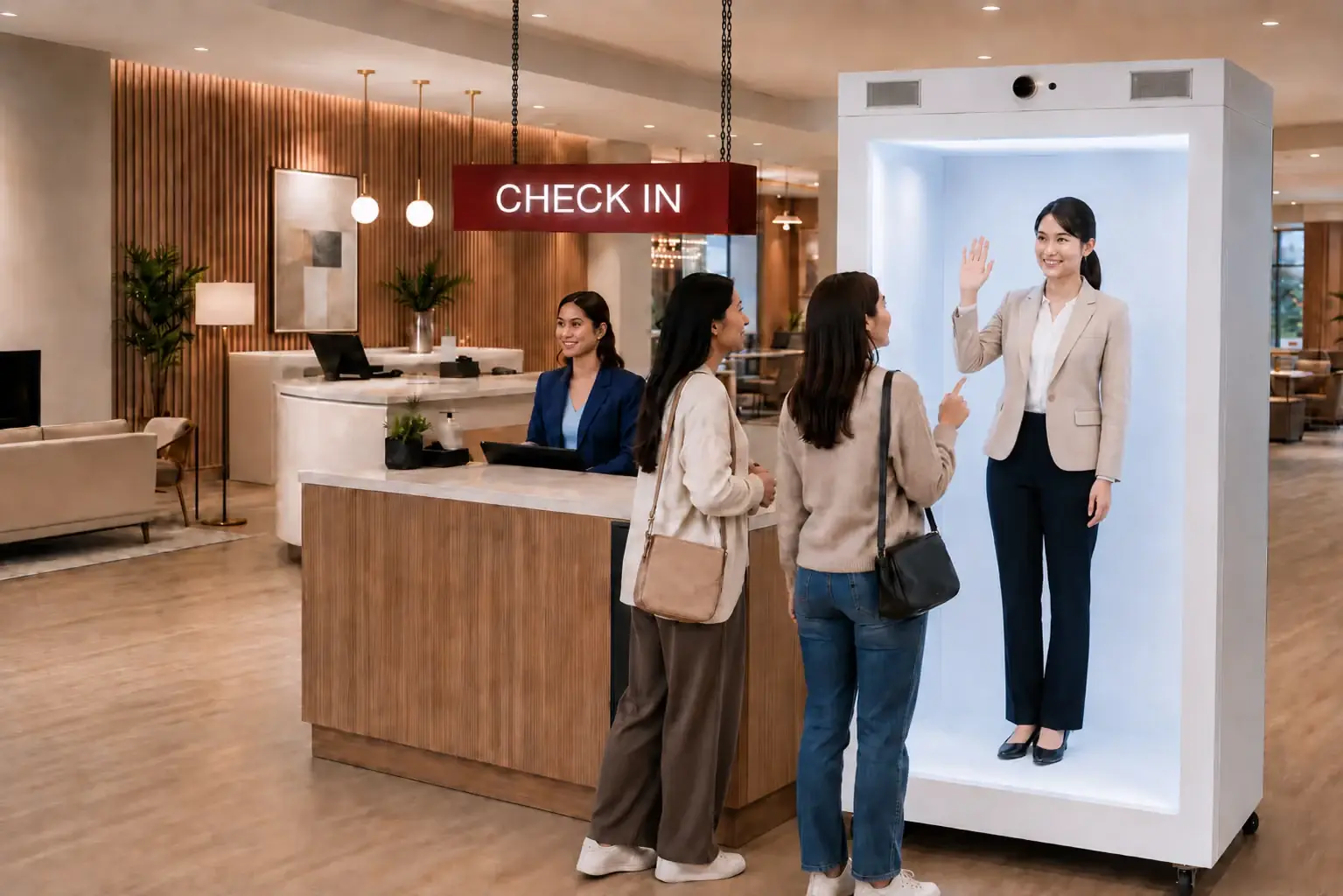
Another company's example, not a Metaverse911 project. The HoloBox in this story was supplied by Holoconnects. This page does not say that the hotel used HoloBox 911, and we have no evidence that it did. The operator has published no results, so none are given here. See our case studies for our own work.
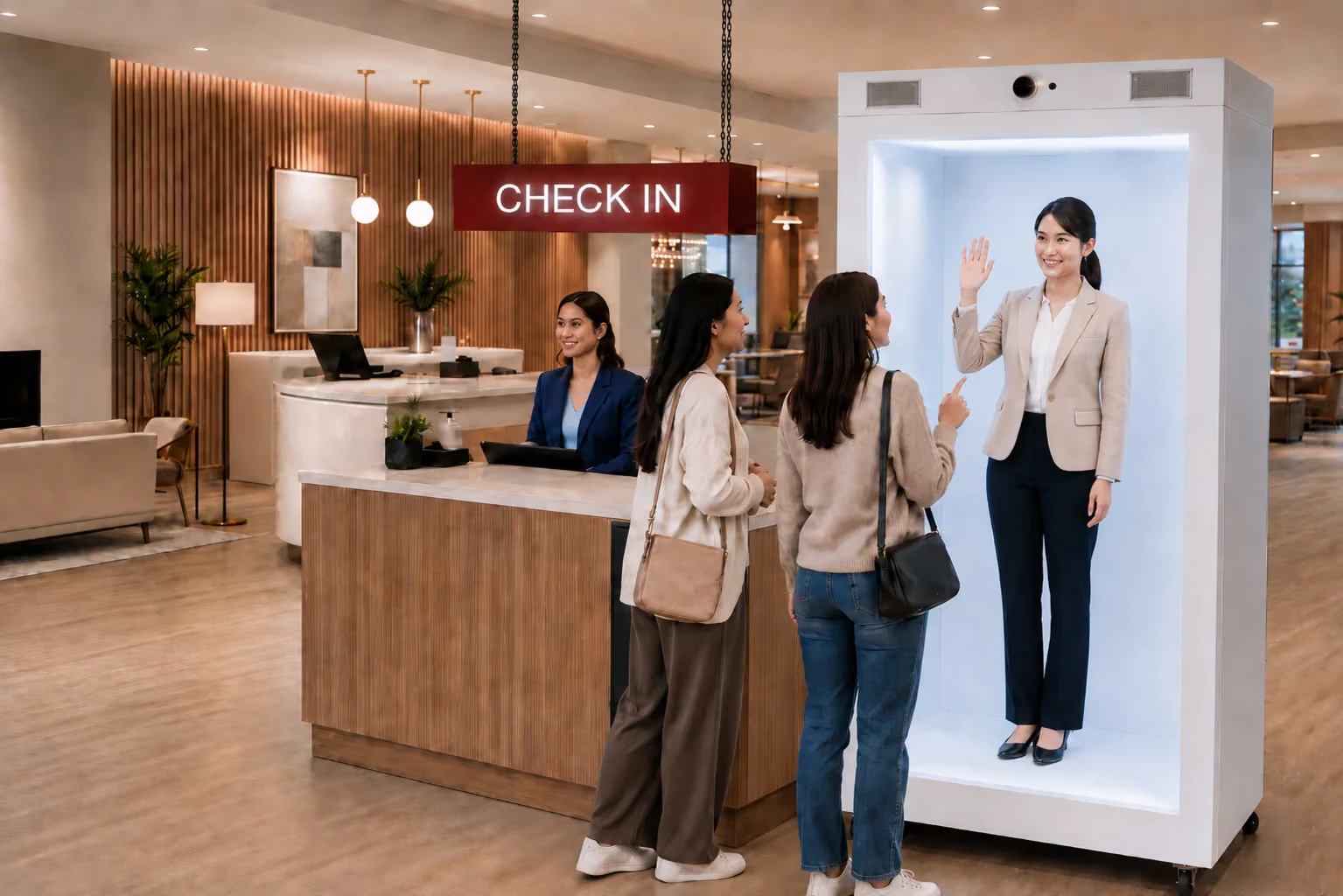
The situation: a front desk under pressure
Hotel check-in has long been a single transaction: queue, paperwork, key. It often comes at the end of a long journey, delivered by a front-desk team stretched across early starts, late nights and unpredictable arrival peaks.
Travellers now expect the convenience of their phone and the warmth of a concierge at the same time. Owners and operations directors must control labour costs, keep service consistent across a growing portfolio and make arrivals memorable enough to justify premium rates. Another self-service kiosk does not solve that. The industry needed a way to make automation feel human.
What they did: an AI receptionist with a human backup
A Nordic hotel operator, part of the wider BWH Hotels group, launched an AI-powered holographic receptionist at its hotel in Lolland, Denmark. It worked with three partners:
- Holoconnects, the holographic display maker, which supplied the HoloBox.
- RAVATAR, the AI avatar platform, which supplied the conversational digital human.
- Mews, the cloud hospitality system, which lets the avatar complete real tasks.
The result is a life-size, 4K holographic greeter that guests simply talk to. It checks guests in and out, generates room keys, books extra rooms, arranges dinner and spa reservations, and answers everyday questions. The launch was set up as an early pilot to gather feedback from guests and staff and to add features over time.
How it works
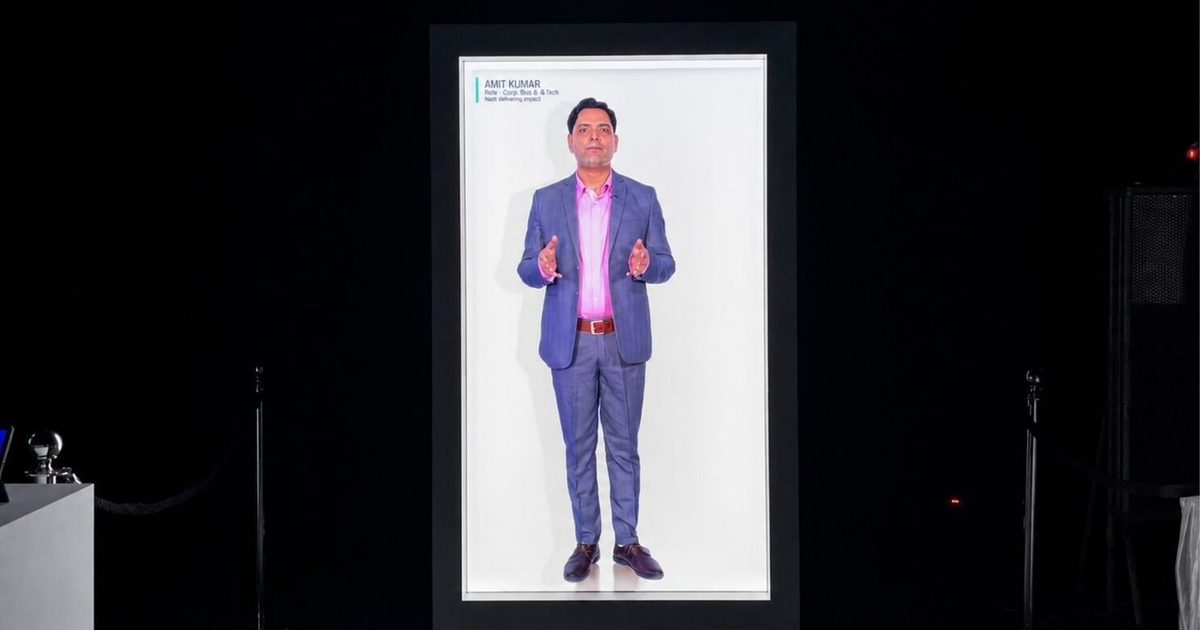
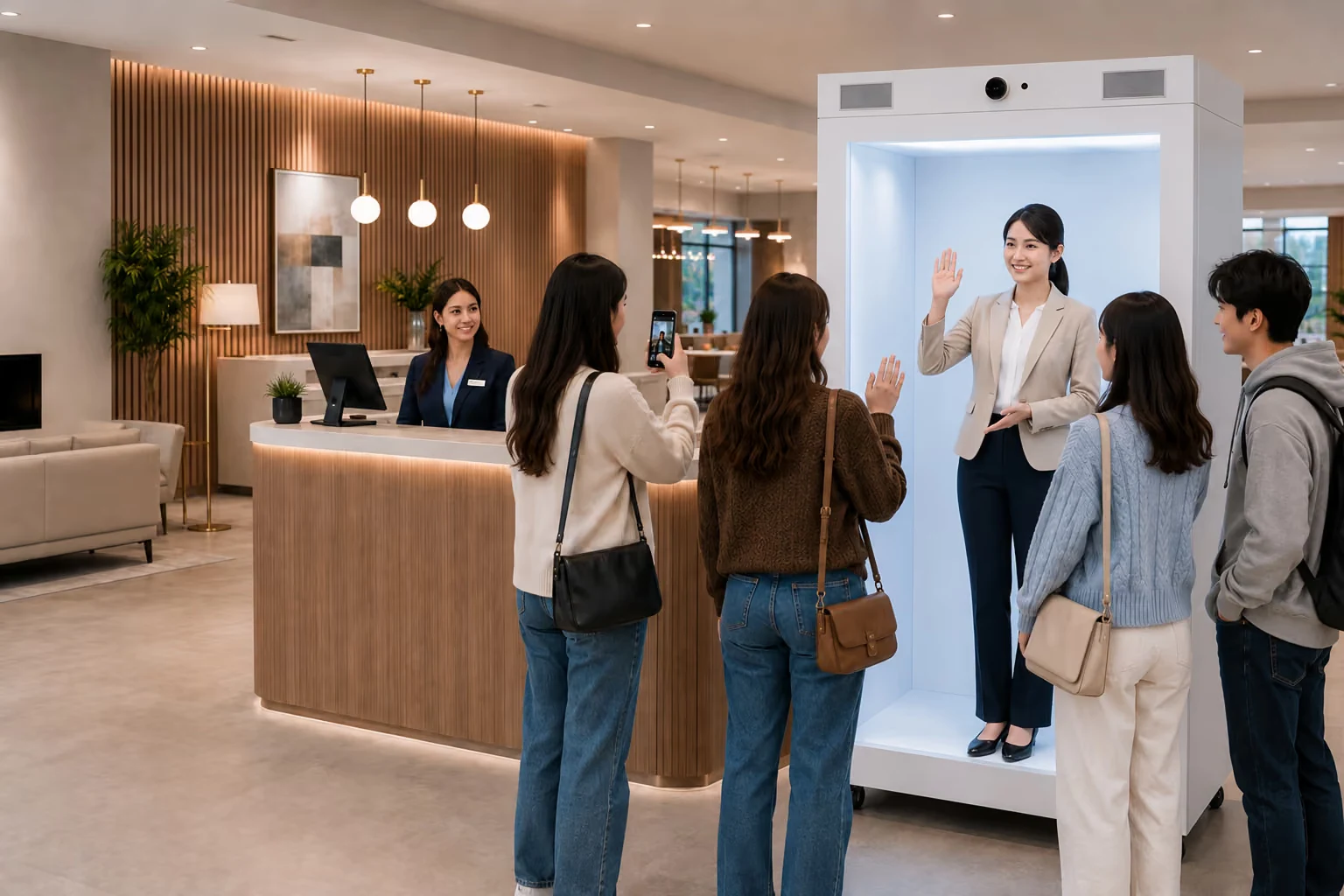
The HoloBox is a standalone, self-contained transparent enclosure, about two metres tall. A high-brightness display inside shows a life-size, 4K, lifelike 3D figure behind glass. There is no stage, foil or truss. The box is placed in the lobby and connected to power and a stable internet link.
Service runs on two layers:
- The AI avatar handles routine arrivals from start to finish in natural spoken conversation. Because it is linked to Mews, it can actually process a check-in, issue a digital key or take a booking.
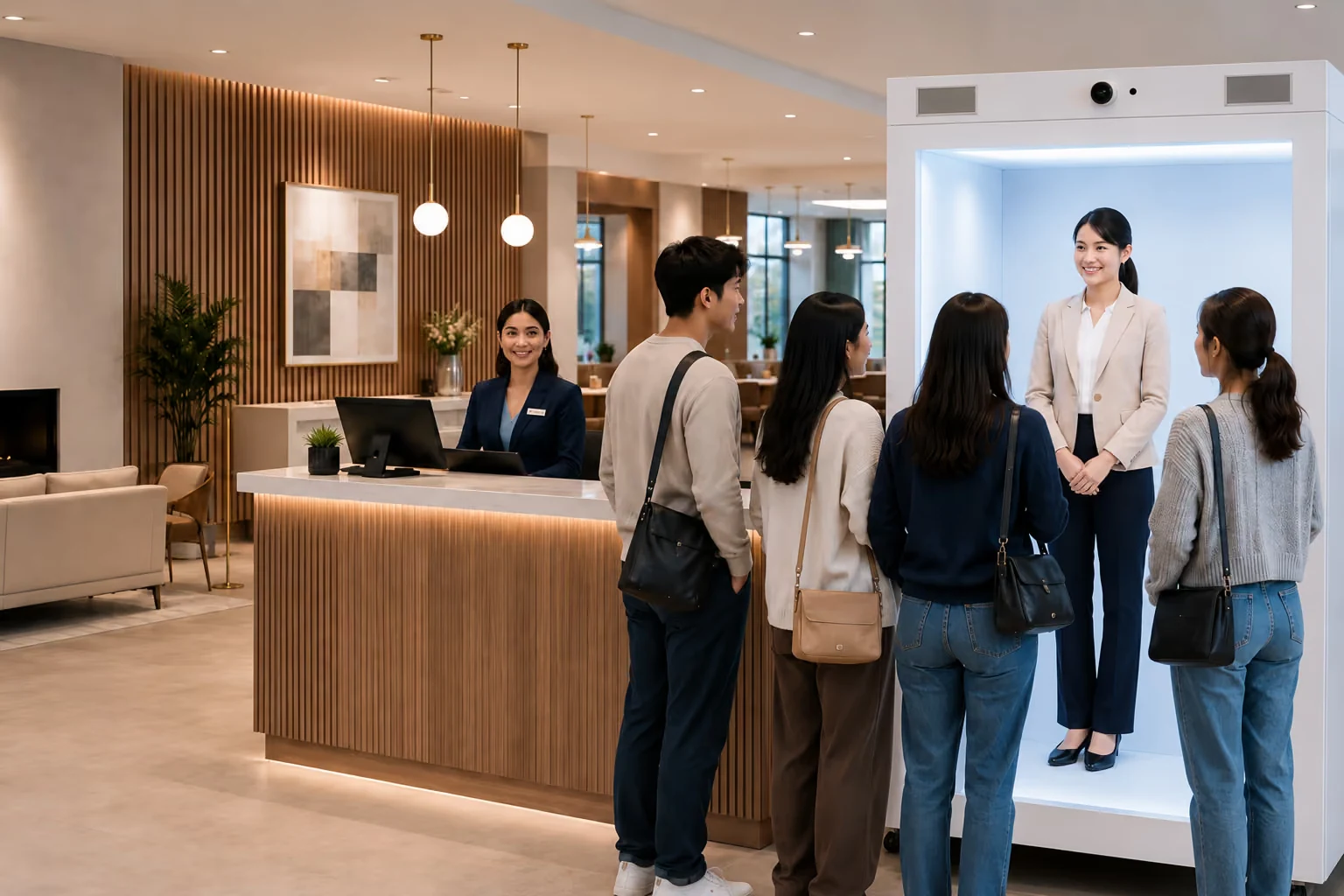
- A live member of staff takes over when a request is beyond the avatar. The guest connects to a real employee based remotely in Oslo, who appears as a life-size 4K hologram in the same box.
This means one remote team can support reception at several hotels, stepping in only when a person is really needed.
Results
The operator has not published performance figures. These are the expected benefits by team.
Front office and operations: night shifts, absences and arrival peaks no longer set the headcount at each property. The AI handles routine check-ins, check-outs and keys, and a central team of multilingual staff covers escalations across several hotels.
Guest experience and brand: every guest meets the same polished welcome, which is hard to achieve across managed and franchised hotels. The hologram also draws press coverage and social sharing.
Revenue: because the avatar is connected to the booking system and already in conversation with the guest, it can offer a room upgrade, a spa slot or a dinner booking at the right moment.
Typical measures for this kind of deployment are front-desk labour cost, especially on night shifts and off-peak hours, arrival experience scores, conversion on upgrades and add-ons, and earned media and social reach. These are common measures, not figures published by the operator.
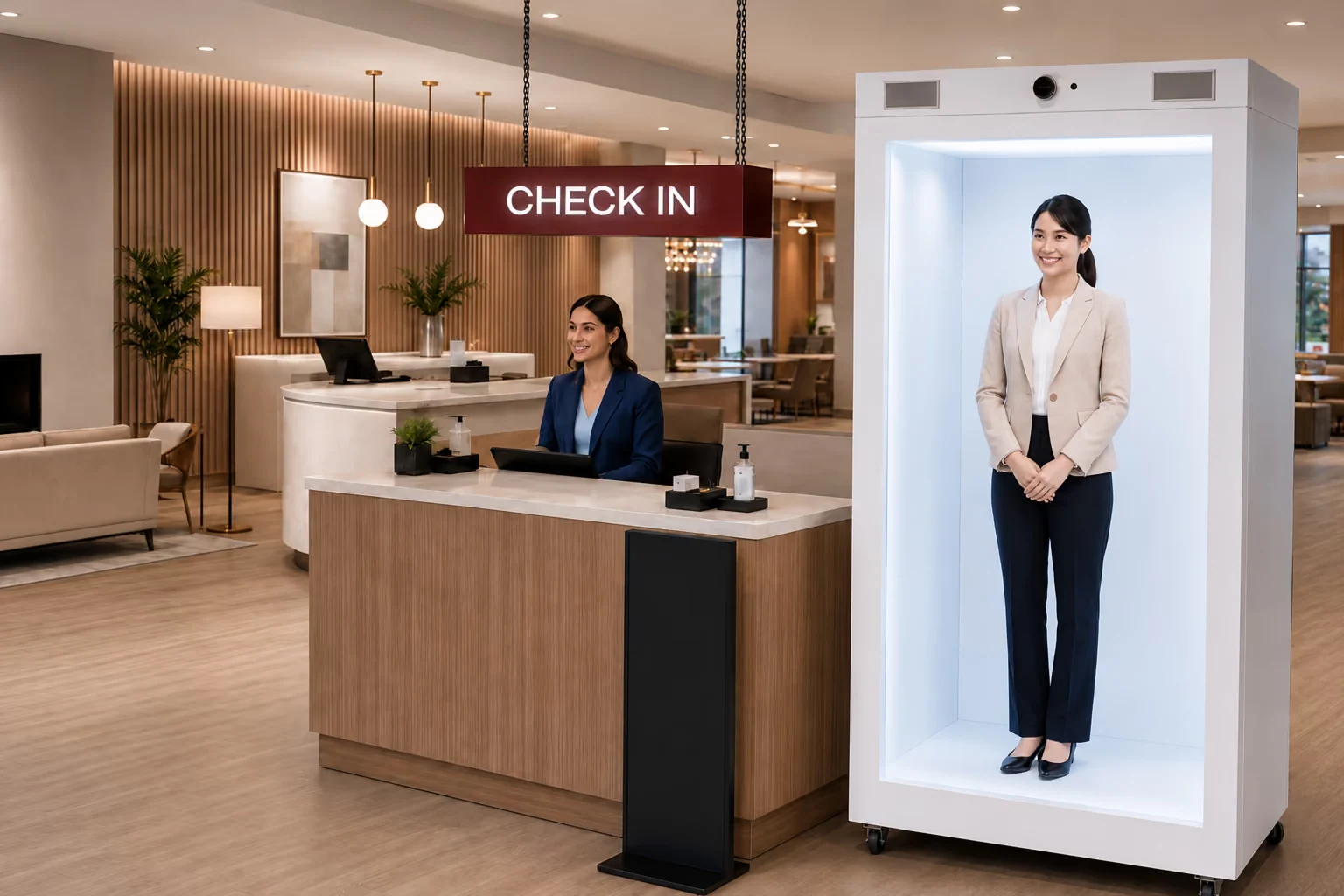
A second example: a hologram concierge in a hotel lobby
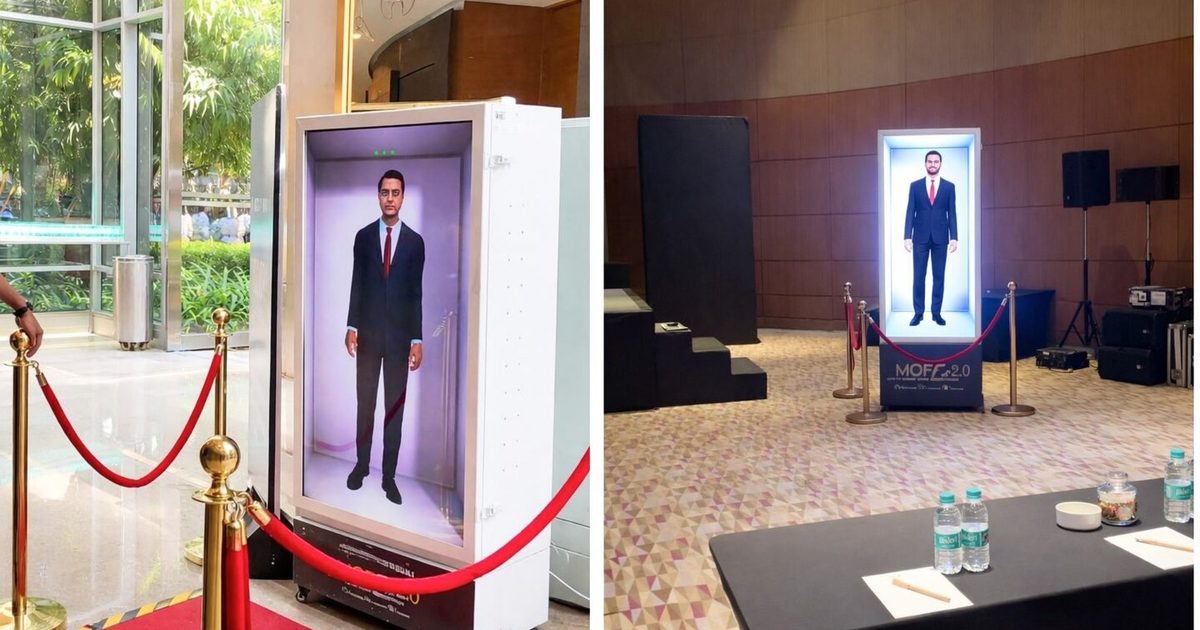
A large hotel, which is not named in the material we used, has put a life-size, AI-driven hologram concierge in its main lobby. Guests talk to it and get information at once, so the front desk is freed for complex requests. The hotel uses it as a working tool, not a one-off attraction.
An AI engine links the avatar's voice, expressions and body language to a database of hotel information, local attractions and service standards. The unit has two-way audio with discreet microphones and cameras, so the avatar can see and hear arriving guests and answer in real time. One AI engine can serve several units, so a resort or a chain can give the same branded information everywhere. The unit is wheeled into the busiest part of the lobby and plugged into standard power and a wired internet connection.
No figures have been published for this hotel. The expected benefits are a 24/7 first point of contact for routine questions, the same welcome for every guest, and suggestions for the restaurant, spa or late checkout during the conversation.
What it means for manufacturers
The model of an AI avatar for routine questions, with a live expert who can appear in the same box when needed, applies well beyond hotels. A manufacturer could use it at a plant reception, a visitor center or an exhibition stand: the avatar handles common questions and registration, and a product specialist joins remotely as a hologram when a visitor needs more.
The key lesson is integration. The hotel avatar is useful because it is connected to the system that does the work. A manufacturer's avatar would be most useful when connected to its visitor management, lead capture or CRM systems.
To look at a hologram unit for a plant reception, showroom or stand, see HoloBox 911 or HoloBox rental. Rental starts from ₹75,000 a day for the unit only, plus GST. Purchase is by enquiry. You can also talk to our team.
More on HoloBox use cases
 Insight · HoloBox
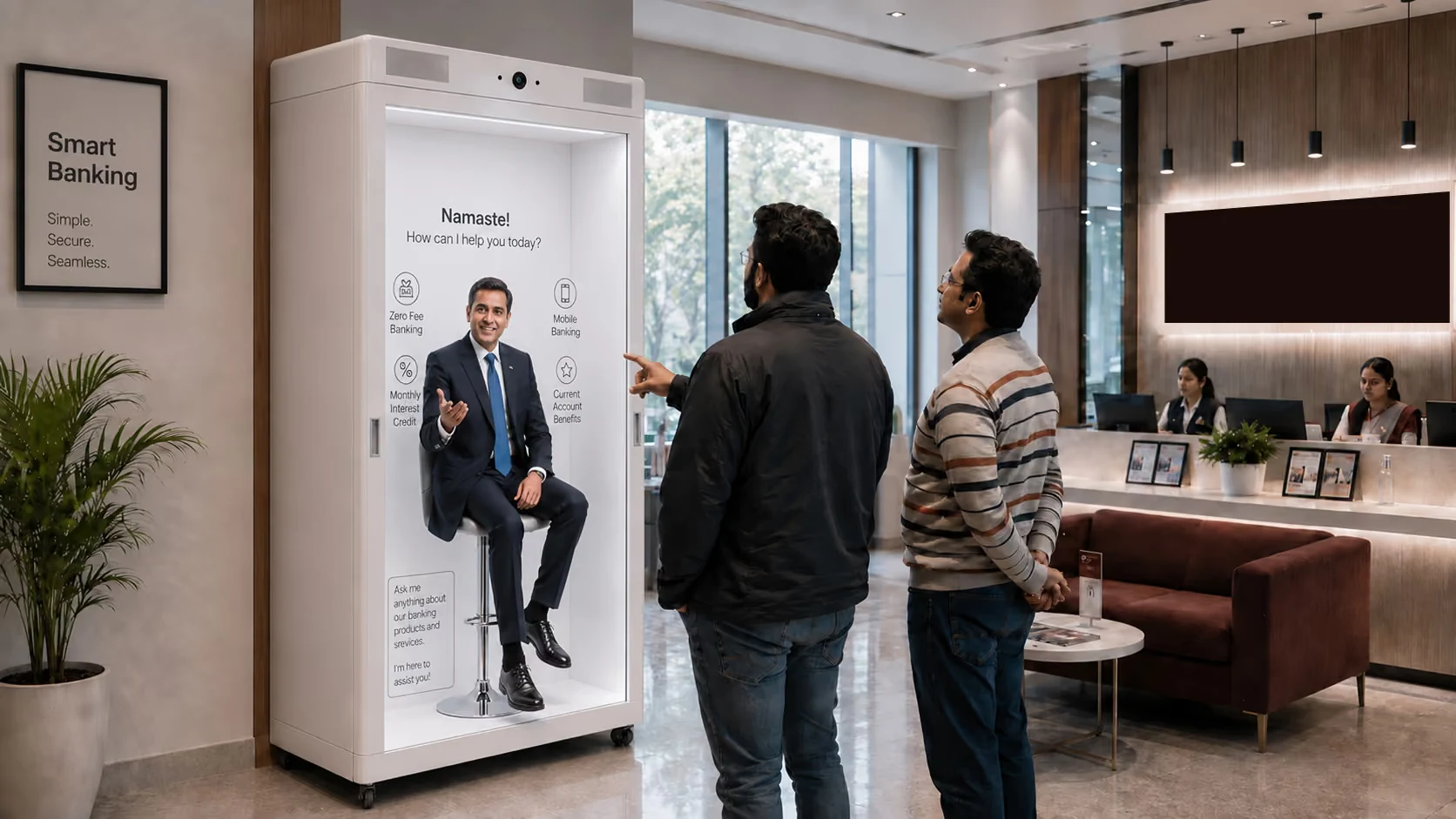
How a bank uses an AI hologram avatar to explain products in its branch
How a bank put a life-size AI hologram ambassador in a Mumbai branch, and how companies use holograms to tell their history.
Read the article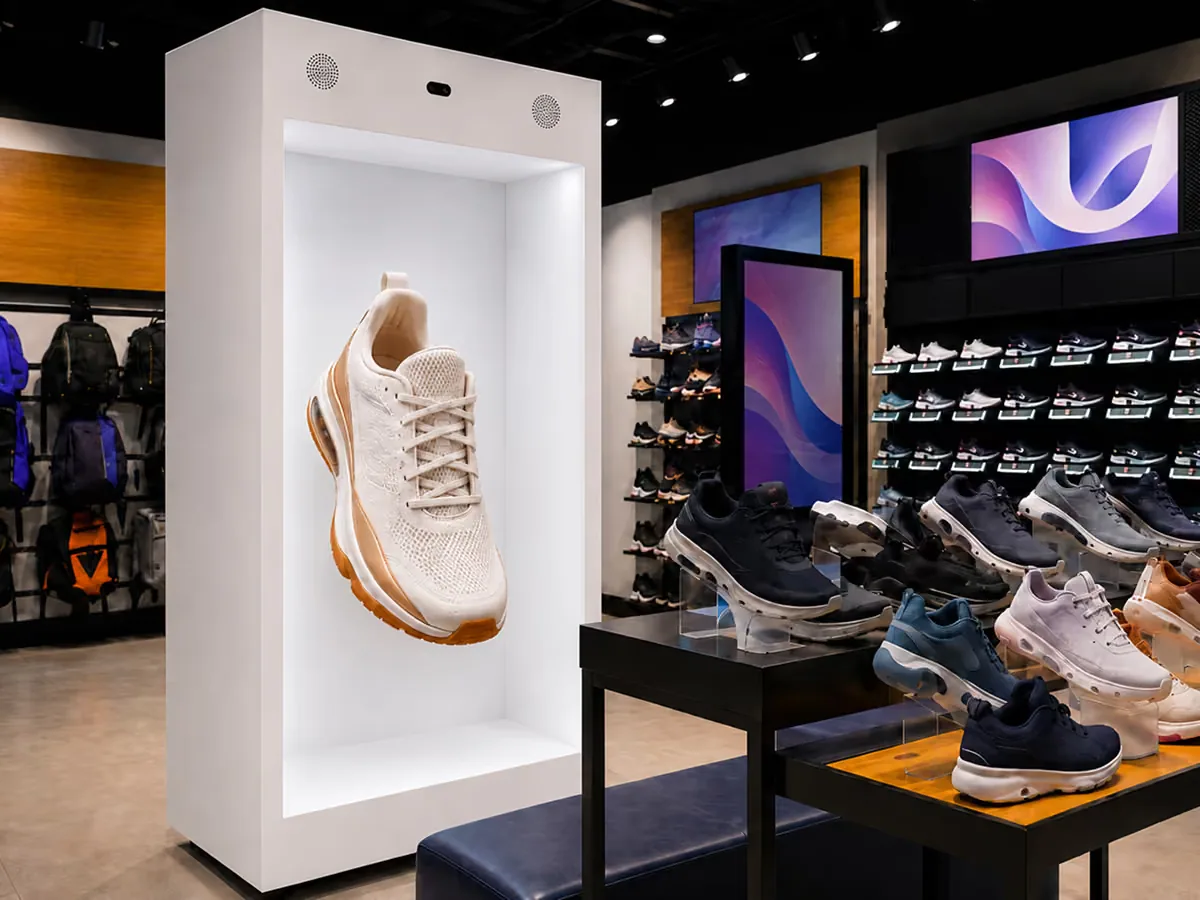 Insight · HoloBox
How retailers use life-size hologram displays to show products
How a footwear flagship and a US mall operator used life-size hologram displays, touch screens and QR codes to show products.
Read the article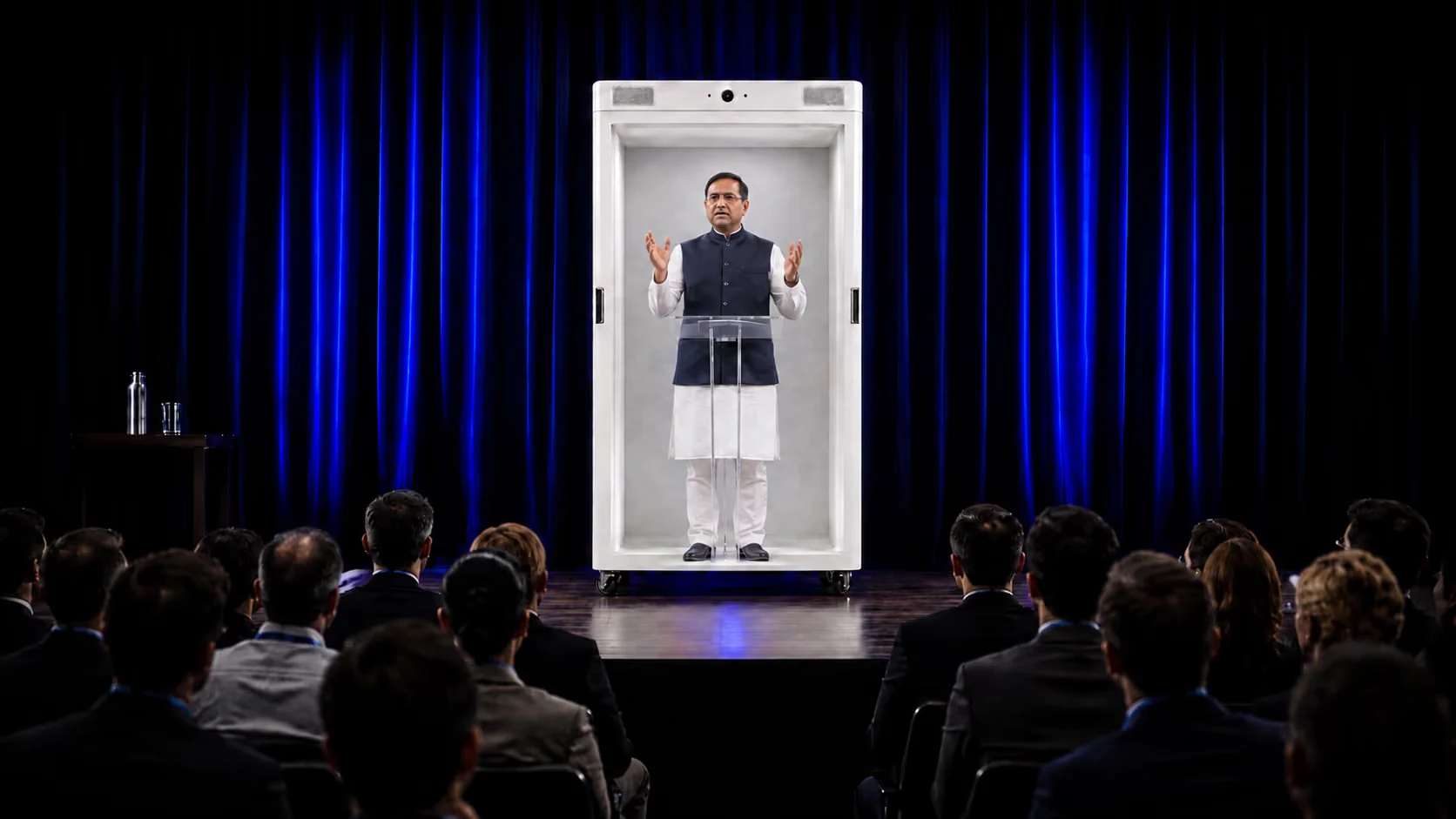 Insight · HoloBox
How holograms are used at live events in India, from stage rigs to HoloBox
How holograms at Indian events moved from stage-sized foil rigs to standalone units, and how HoloBox works at conferences and summits.
Read the article