What anamorphic content does for your brand
Your brand looks bigger
A 3D object that appears to leave the wall makes even a compact stand feel like the largest on the floor.
People stop in the aisle
The illusion pulls passing visitors across the aisle to your booth, which is its one job at an exhibition.
Visitors film and share it
People record the effect on their phones, which carries your booth well beyond the show floor.
A long story in a short loop
Company history, product breakdowns and launches told in a 30 to 90 second film that loops all day.
Anamorphic films we have made
Built for real booths at India's largest trade shows and at Chemspec Europe in Germany.
Which LED wall suits your booth
Your booth footprint and the way visitors walk past decide the shape. We advise on it at the first meeting.
L-shape corner
The most used shape for high-impact stands. The 90-degree corner gives the strongest sense of depth.
Flat fascia
For linear booths where visitors see the wall only from the front.
U-shape
Three walls of content that surround visitors, for storytelling.
Curved arc
A flowing look that suits luxury and architectural exhibitors.
Double-sided island
For island booths where visitors arrive from opposite aisles.
Hybrid
A combination for irregular booths where one shape will not fit.
Where anamorphic content works
Trade shows and events
Aisle-facing walls, outside fascia hoardings, stages and demo zones. This is where most of our work runs.
Product launches
A reveal moment on stage or on the booth, built around the product itself.
Digital out-of-home billboards
The same naked-eye 3D technique on outdoor screens, built for that screen's shape and viewing angle.
Retail and malls
Brand walls in stores, lobbies and mall atriums, where people stop and film.
From plan to show day
Three weeks before
We survey the booth: dimensions, ceiling height, hall lighting and the main angle visitors approach from.
Two weeks before
The LED panels are bench-tested for dead pixels and the film is rendered for the confirmed viewing angle.
Build day
Panels are assembled, the film is mapped to the wall and brightness is matched to the actual hall lights.
Before opening
We test the illusion from three positions on the visitor approach path.
What is included
- A film built from your CAD files, product photos and brand story.
- Content sized to the exact LED wall at your venue.
- A film of 30 to 90 seconds, looped for the show.
- Site survey, rendering, mapping, calibration and on-site testing.
The hardware we specify
When the closest visitors stop less than 5 metres from the wall, we usually use P2.5 or P3 pixel pitch panels. A P4 panel costs less but visibly pixelates the illusion at close range. A media server handles 3D playback, pixel mapping and synchronisation across the panels.
Case studies
PI Industries
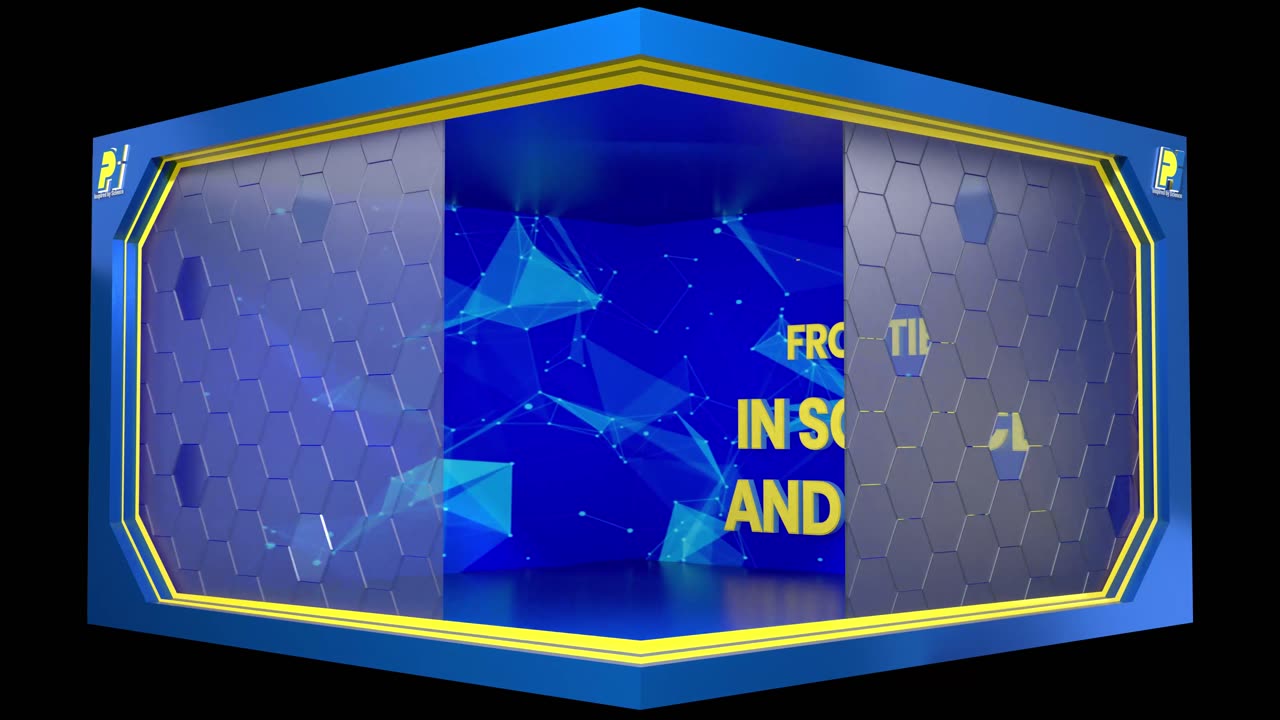
PI Industries tells 80 years of innovation on an L-shaped anamorphic display at Chemspec Europe 2025
Read the case study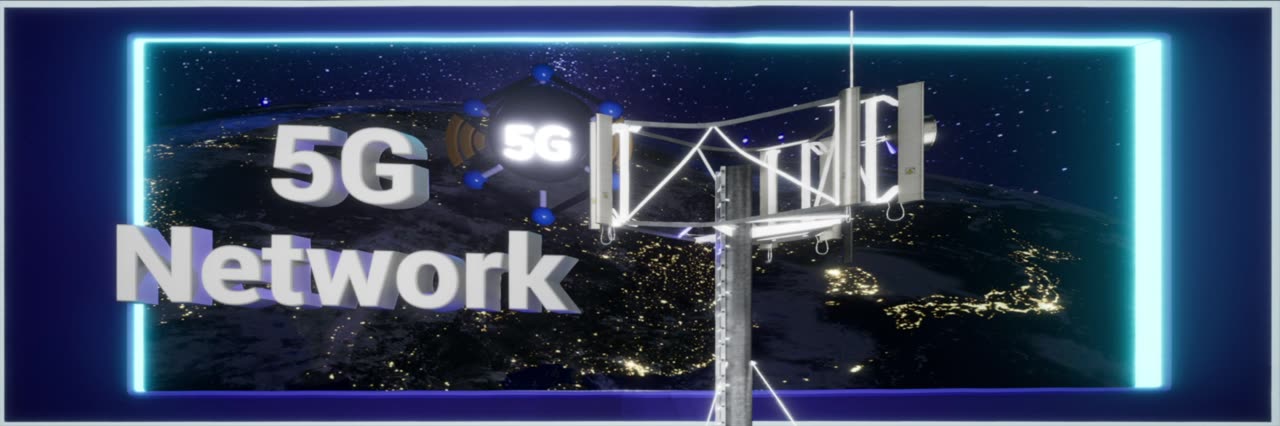
C-DOT
An L-shaped anamorphic LED display for C-DOT at India Mobile Congress 2025
Read the case study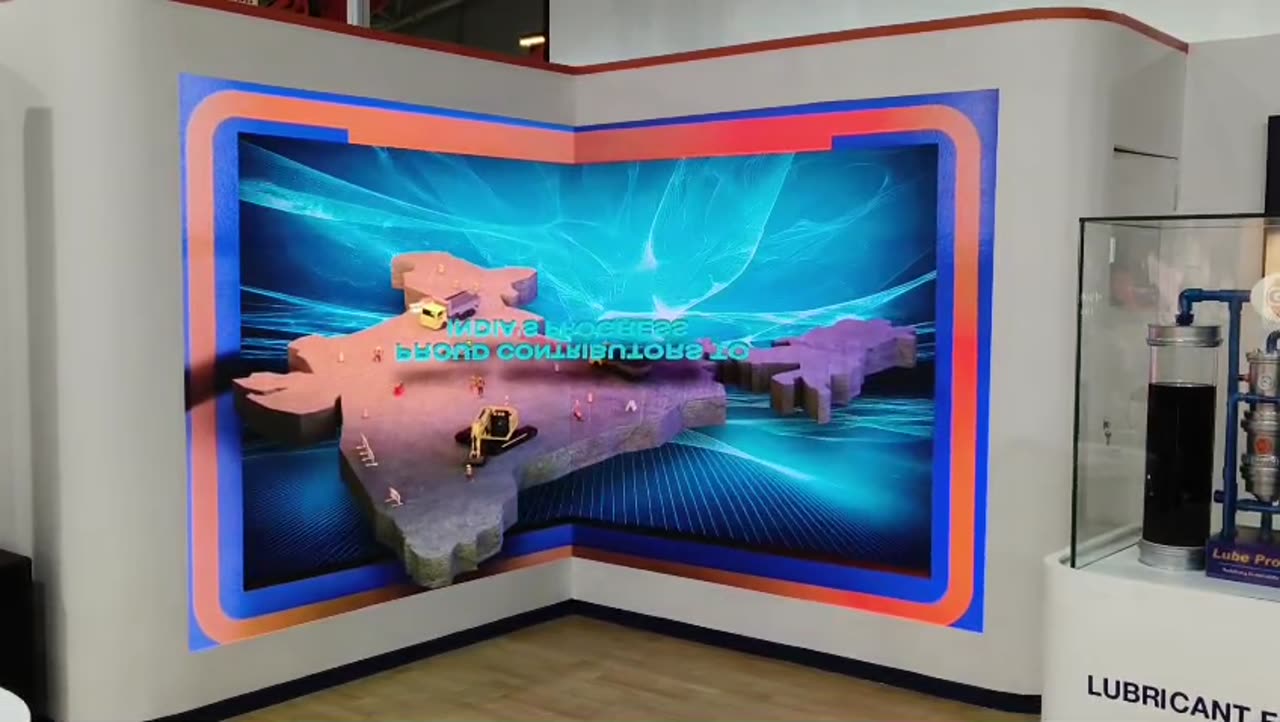
Gulf Oil
An L-shape anamorphic 3D display for Gulf Oil at EXCON 2025
Read the case study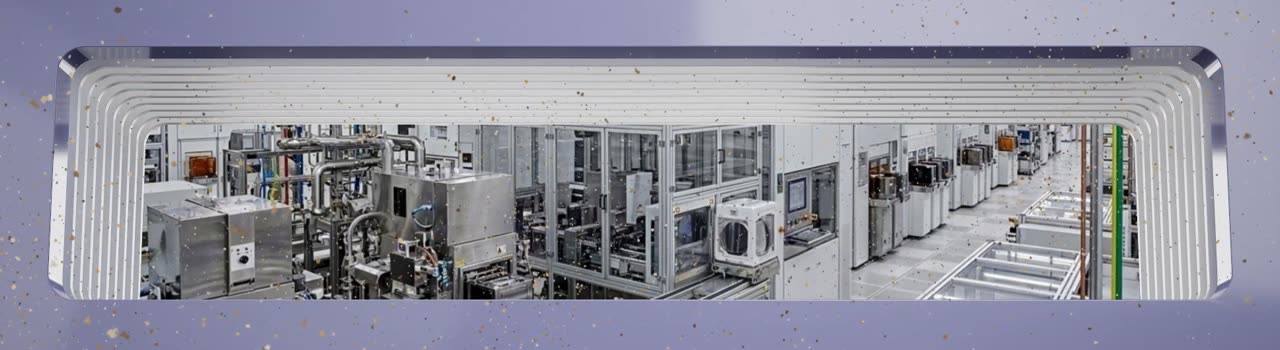
Avantec
Flat facia anamorphic content for Avantec Aircon at ACREX 2026
Read the case study
Experian
A 10×10 ft anamorphic LED wall for Experian at Global Fintech Fest 2025
Read the case study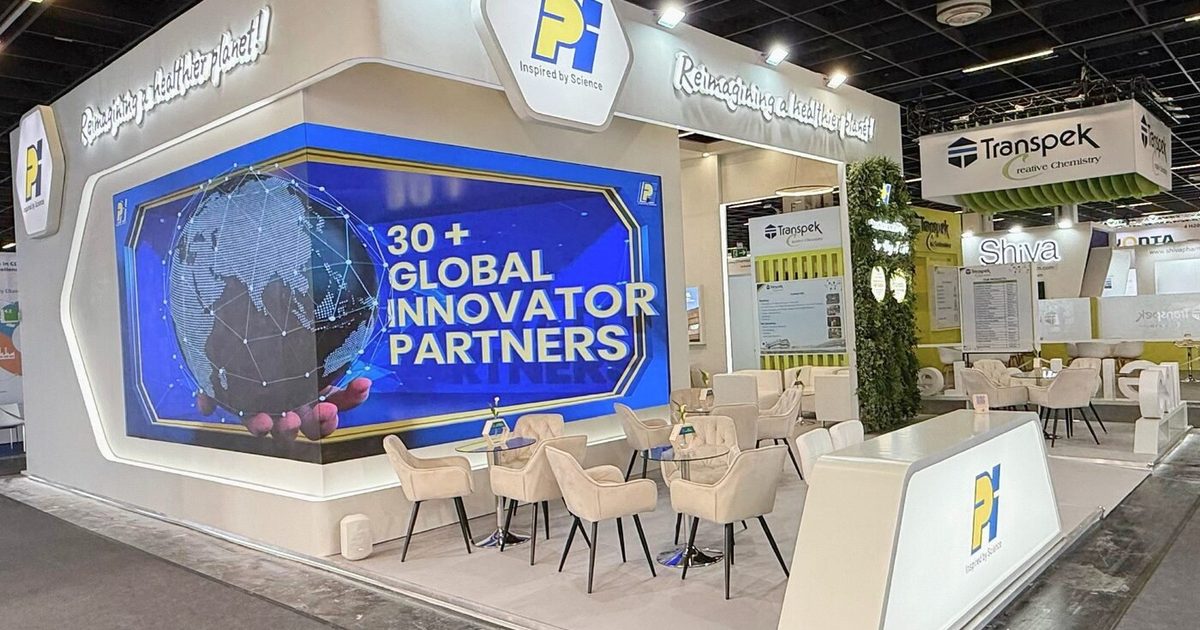
Novopor
Novopor tells 30 years of speciality chemistry on an anamorphic LED wall at Chemspec Europe 2025
Read the case study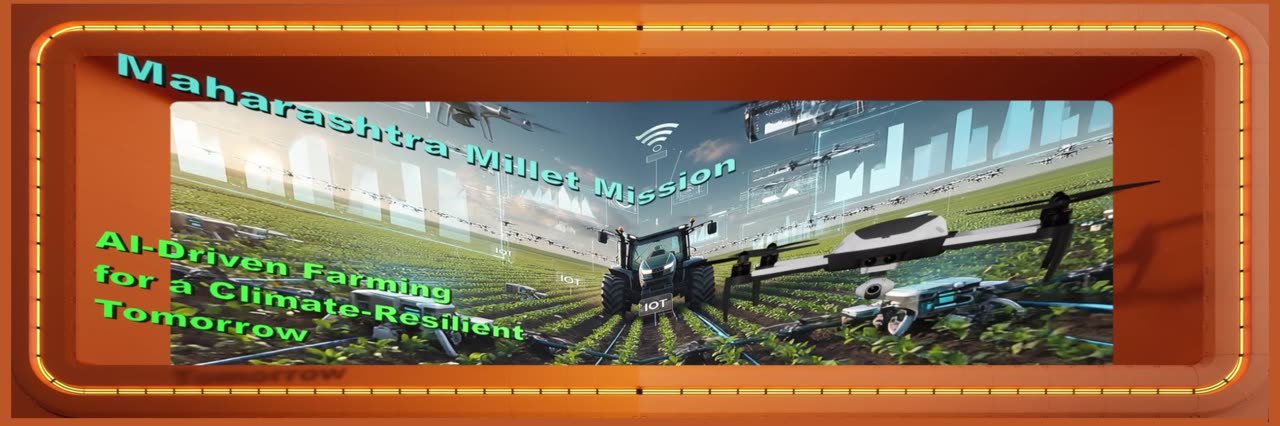
Government of Maharashtra
An L-shape anamorphic 3D LED display for the Government of Maharashtra at India AI Impact Summit 2026
Read the case studyMore exhibition solutions
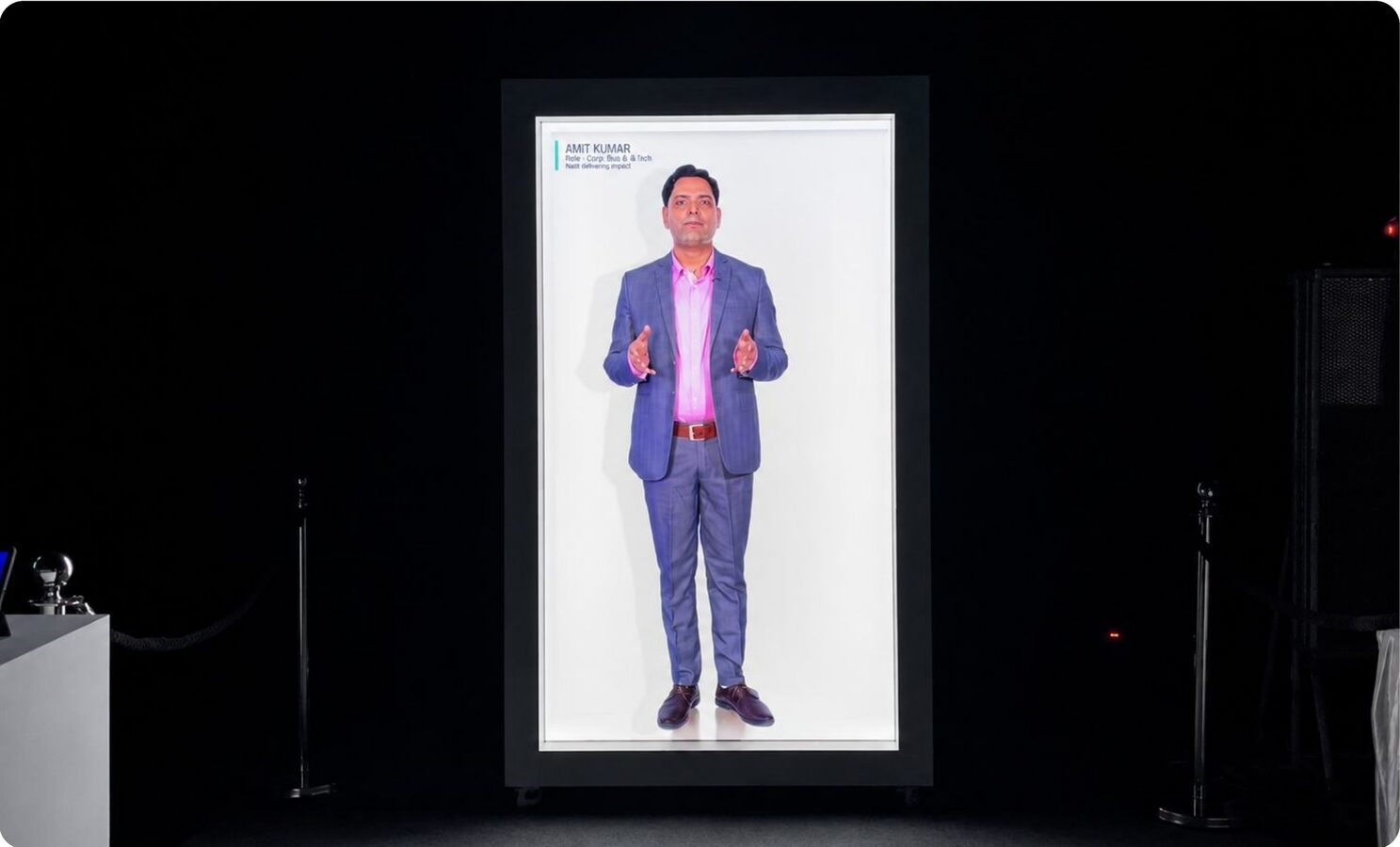 Flagship product
HoloBox: life-size hologram display
See the solution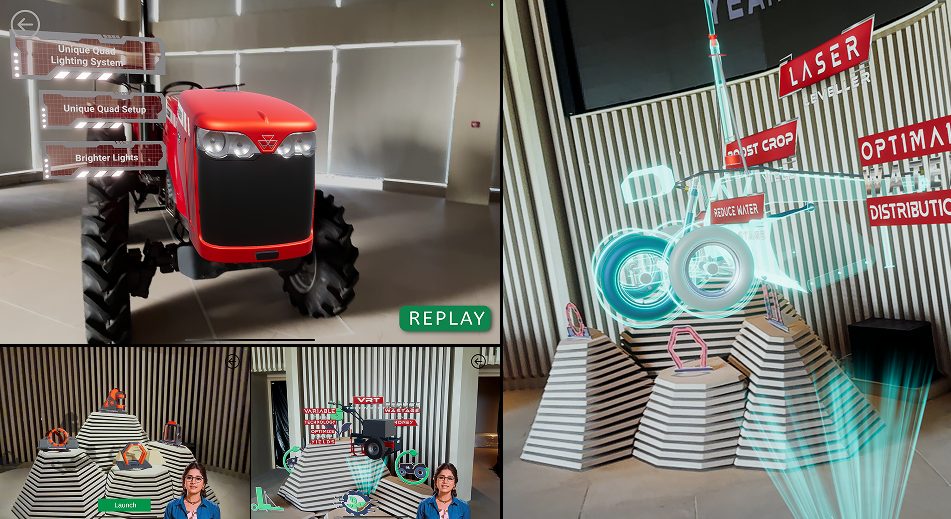 Compact booths
Holographic displays and HoloCube
See the solution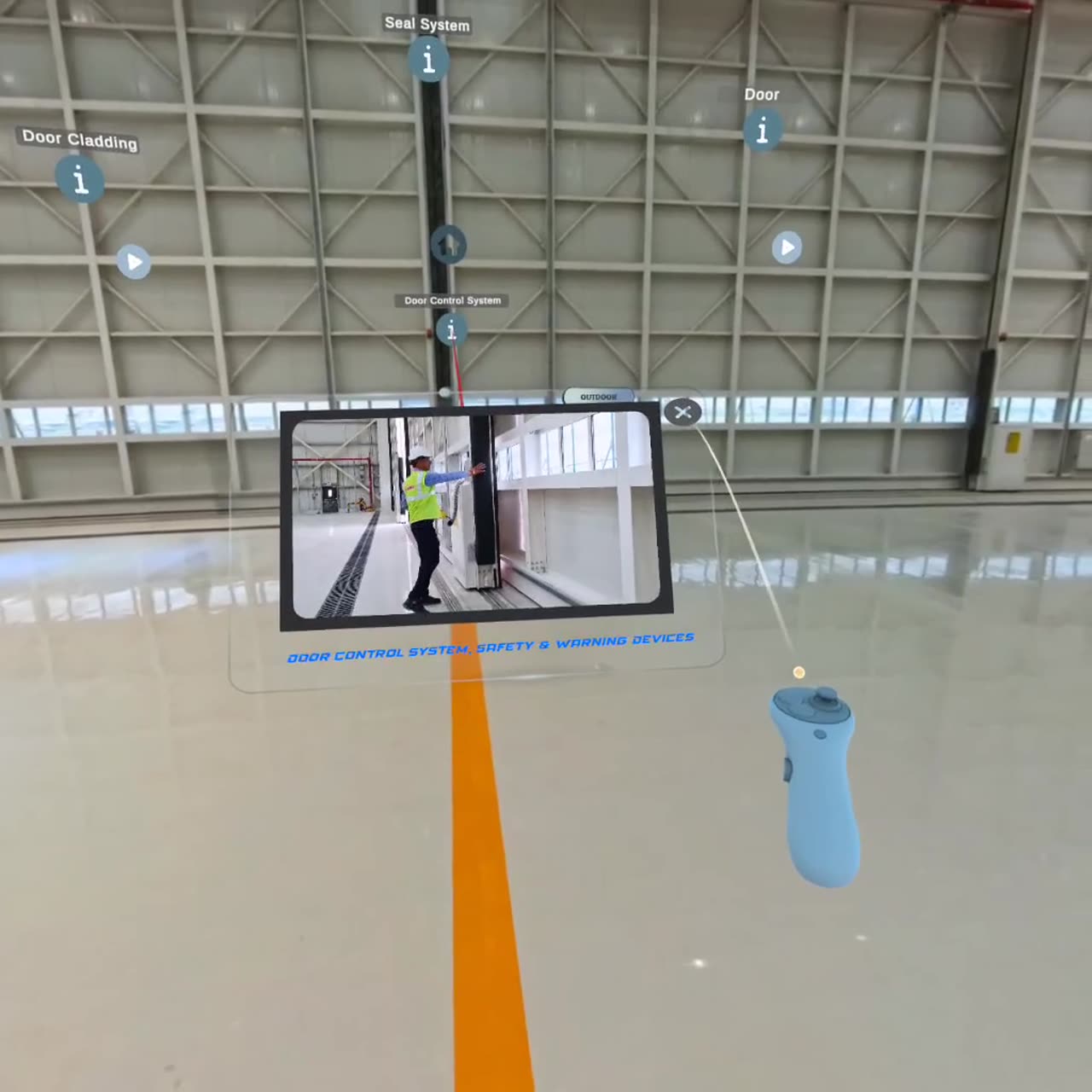 Heavy machinery
Machine visualisation in VR and mixed reality
See the solution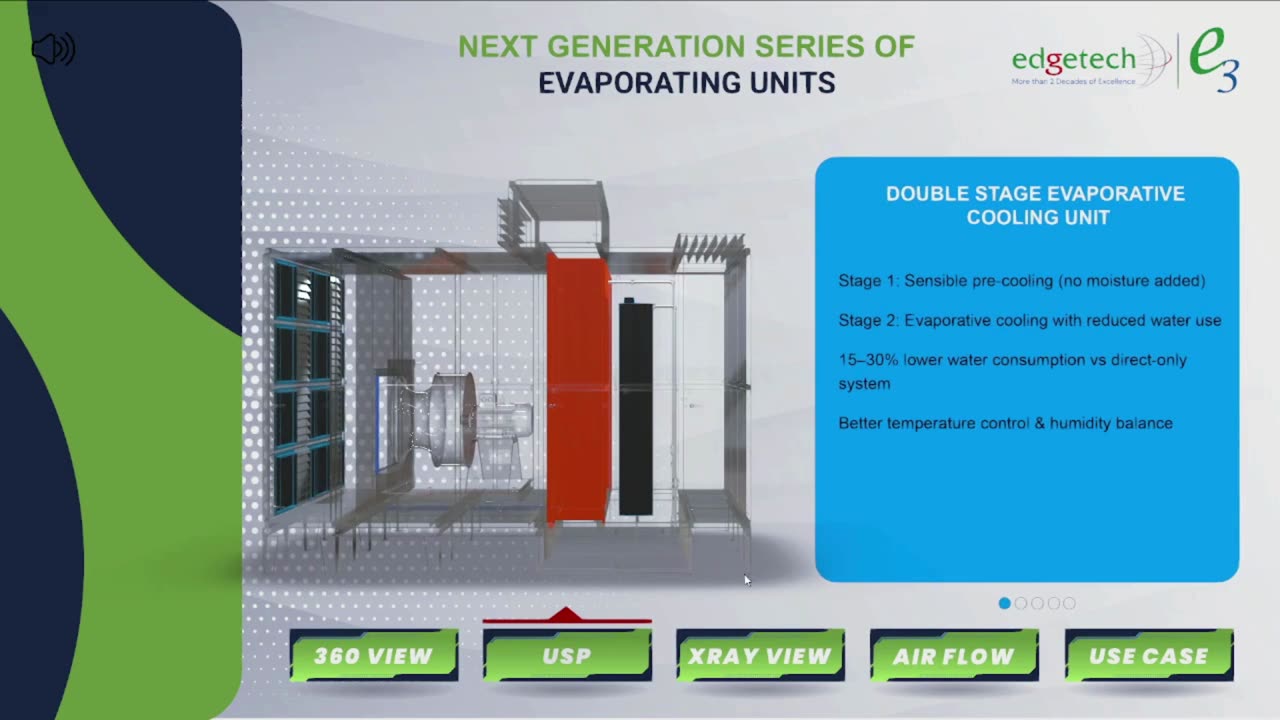 Sales teams
Product visualisation in AR
See the solution Lead capture
3D product configurators
See the solution Remote buyers & audits
360 virtual factory tours
See the solutionFrequently asked questions
What is an anamorphic display?
An anamorphic display is an LED wall that plays video built with forced perspective. From the main viewing angle, 3D objects seem to break out of the screen, float in the air or move towards the audience, and people see the effect without glasses. It is also called a naked-eye 3D display.
What does anamorphic content mean?
Anamorphic content is the film itself: 3D animation rendered for the exact shape of one LED wall and the angle people will see it from. Shadows, highlights, scale and motion are calculated so the object appears to leave the frame. The same file will not work on a different wall, so we build each film for its venue.
How much does an anamorphic LED display cost?
The cost depends on the size and shape of the wall, the pixel pitch, the length of the film and how much 3D modelling your product needs. Finer P2.5 or P3 panels cost more than P4, but P4 pixelates the illusion when visitors stand close. We share a quote after a short call about your booth and show.
Is anamorphic display available in India?
Yes. We create anamorphic content in India and have run it at India Mobile Congress in New Delhi, ACREX in Mumbai, EXCON in Bengaluru, Global Fintech Fest and India AI Impact Summit, as well as at Chemspec Europe in Germany.
How is a 3D anamorphic video made?
We survey the booth and the main viewing angle, build the 3D scene from your CAD files and product photos, and render the film for that angle. On build day the film is mapped to the wall and calibrated to the hall lighting, and we test the illusion from three positions before the show opens. All of this is done in-house.
Which LED wall shape gives the best 3D effect?
The L-shape corner gives the strongest sense of depth, which is why it is the most used shape for high-impact stands. Flat fascia, U-shape, curved, double-sided and hybrid walls also work, depending on your booth footprint and visitor flow.
Can the same content run on an anamorphic billboard?
The technique is the same, but each film is rendered for one screen's shape and viewing angle. A booth film can be adapted for an outdoor or mall screen, and we plan the new angle and size before we render it.
How long is a typical anamorphic film, and when should we start?
A typical film runs 30 to 90 seconds and loops for the whole show. Our process starts three weeks before the show opens, with the booth survey.