
“We took our Dojo principles out of the slides. In one workshop, our people learned by doing, across nine experiences in AR and VR.”
Spark Minda
Read the Spark Minda case study

A dojo room is where new operators learn the basics before going to the line. Our Digital Dojo turns it into a modular training center with VR stations, 3D-printed models, touch screens, sensor-based exercises and AI trainers. Trainees learn by seeing, doing and getting instant feedback.
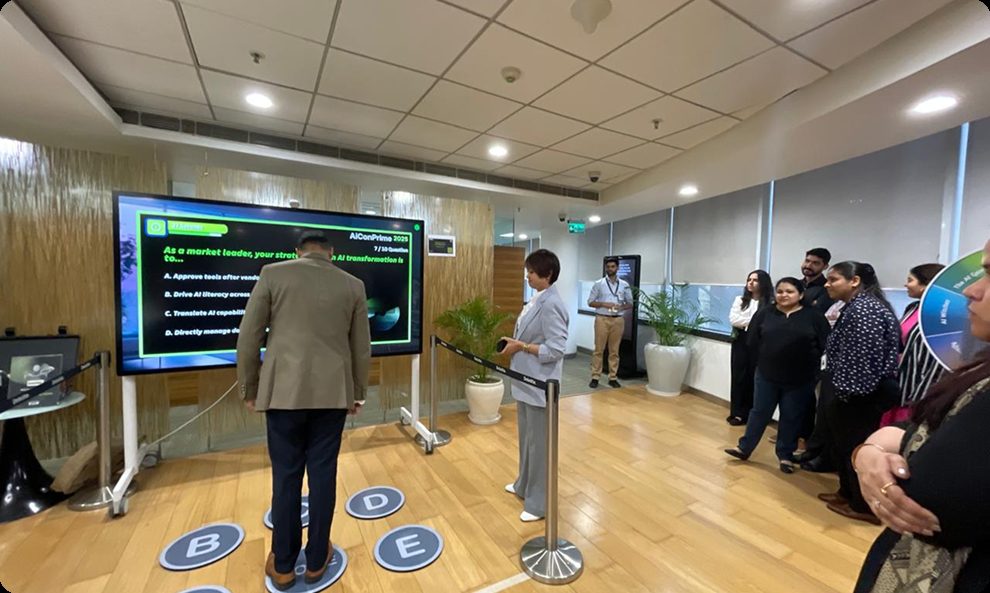
Case study: We ran a one-day Digital Dojo workshop at Spark Minda that turned all nine Smart Dojo principles into hands-on AR and VR zones.
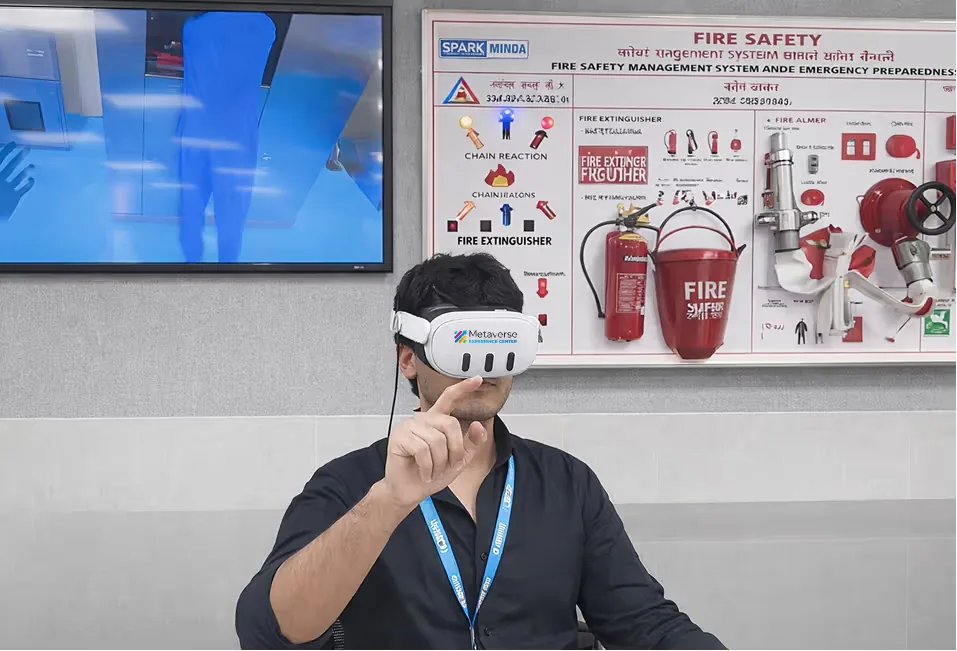
Traditional dojo rooms depend heavily on trainers, track progress by hand and struggle to hold trainees' attention. The Digital Dojo keeps the dojo idea but changes how it is delivered. Trainees move between VR headsets, AR tablets, kiosks, LED screens and sensor-based stations, and learn by doing rather than by listening.
Behind the stations sits the DOJO M911 platform. It records every session, assessment and skill score automatically, so plant and L&D teams can see who has been trained, on what, and how well.
Modules also cover the standard dojo topics of safety, quality, 5S, tools and assembly, with VR simulations of your actual machines and processes.
Each trainee is enrolled and logs in with a PIN at every kiosk, VR, AR and MR station. Every training and assessment attempt is recorded with the trainee's ID, score, time taken and completion status. The platform tracks:
The platform can run on-premise, on a private cloud or cloud-hosted. Content and learner records can stay on your own infrastructure, connect to your LMS and follow your IT and data security policies.
The Digital Dojo is offered as Training as a Service, an operating-cost subscription. Plants do not buy and manage hardware, software and content separately. The subscription covers:
Your team focuses on trained associates, safety scores and skill coverage, while we handle the technology, upgrades and scale.
We ran a one-day Digital Dojo workshop at Spark Minda that turned all nine Smart Dojo principles into hands-on AR and VR zones.
“We took our Dojo principles out of the slides. In one workshop, our people learned by doing, across nine experiences in AR and VR.”
Spark Minda
Read the Spark Minda case study
“We opened our Vendor Conference with a life-size AI avatar on HoloBox, in front of 600+ vendors. It answered from our own project records, so what people heard was specific to their work.”
Maruti Suzuki
Read the Maruti Suzuki case study
“Our operators now train on a 1:1 copy of the shop floor in VR before they touch the line. Across six plants, customer PPM came down from 329 to 100.”
Tata AutoComp
Read the Tata AutoComp case study
“We wanted our collection seen at full height without shipping every sample. On a HoloBox, a model walked our garments at true scale, in a fully lit hall, all day.”
Shahi Exports
Read the Shahi Exports case study
“A data platform is hard to make exciting on a show floor. The anamorphic wall did it: over 4,000 visitors came to our booth in two days.”
Experian
Read the Experian case study
“We had a long story to tell in the few seconds a visitor gives a booth. The L-shaped display carried our science, our people and our sustainability work in a way that made people stop in Cologne.”
PI Industries
Read the PI Industries case study
“The L-shape display linked our products to India's landmark infrastructure projects, and that story stopped visitors on a very crowded show floor.”
Gulf Oil
Read the Gulf Oil case study
“The Starflex is 24 metres long, so we could never bring it to a booth. With the touchscreen configurator, buyers build it themselves, and our sales team now uses it as their main way of explaining the machine.”
NBG
Read the NBG case study
“You cannot photograph the scale of a hangar door. With 360° VR, buyers stand inside our installations from the booth, and we use the same experience at every show.”
Gandhi Automation
Read the Gandhi Automation case study
“Having our tractors in 3D, with AR stories for each model, gave our experience centre far more to show than a physical line-up ever could.”
TAFE
Read the TAFE case study
“An air handling unit is large and technical. The 3D printed model, AR and touch kiosk let visitors see inside it in a few minutes, and they kept coming back to the booth.”
Edgetech
Read the Edgetech case study
“The holographic wall shows our partner logos floating in mid-air and blends into the Experience Centre's interiors, so it feels part of the space.”
IBM
Read the IBM case studyA dojo is the training area where new operators learn the basics, such as safety, quality, 5S, tools and assembly, before they go to the line. It is a common practice in automotive and component plants.
Hands-on practice of safety, quality, 5S, tools and assembly in a dedicated room, before operators go to the line. The idea is taken from Japanese practice.
The physical space where this practice happens. A Digital Dojo adds VR headsets, AR tablets, kiosks, LED screens and sensor-based stations, and the DOJO M911 platform records every session, assessment and skill score automatically.
No. Under the Training as a Service model, headsets, tablets, sensors, kiosks and media players are part of the subscription.
Yes. It can be set up inside your plant or as a mobile dojo.
Every attempt is logged with the trainee's ID, score, time and completion status. Dashboards show completion rates, time per module, scores and accuracy, and repeat attempts.
Yes. It can run on-premise, on a private cloud or cloud-hosted, integrate with your LMS and follow your IT and data security policies.