
Another company's example, not a Metaverse911 project. We did not work on it. We have left out figures we cannot trace to a named, published source. See our case studies for our own work.
The situation: complex assembly run from paper drawings
The Eurofighter Typhoon is a multi-role combat aircraft built from thousands of components, from avionics to jet engines. On an aircraft like this, a misaligned bracket, a wrongly torqued bolt or a misplaced wire is a serious defect, so accuracy matters at every step.
At the Warton/Samlesbury facility, skilled technicians were spending more time reading dense 2D engineering drawings and cross-checking paper manuals than building the aircraft. They had to translate layered drawings into 3D in their heads. That is slow, tiring and a common source of human error, and it put quality and the production schedule in constant tension.
Paper also slowed down design changes. Each update meant printing, distributing and checking new drawings, which led to version control problems and production delays. The manufacturer decided the paper-based workflow could not keep up and started a programme to digitise its manufacturing process.
What they did: 3D work instructions on rugged tablets
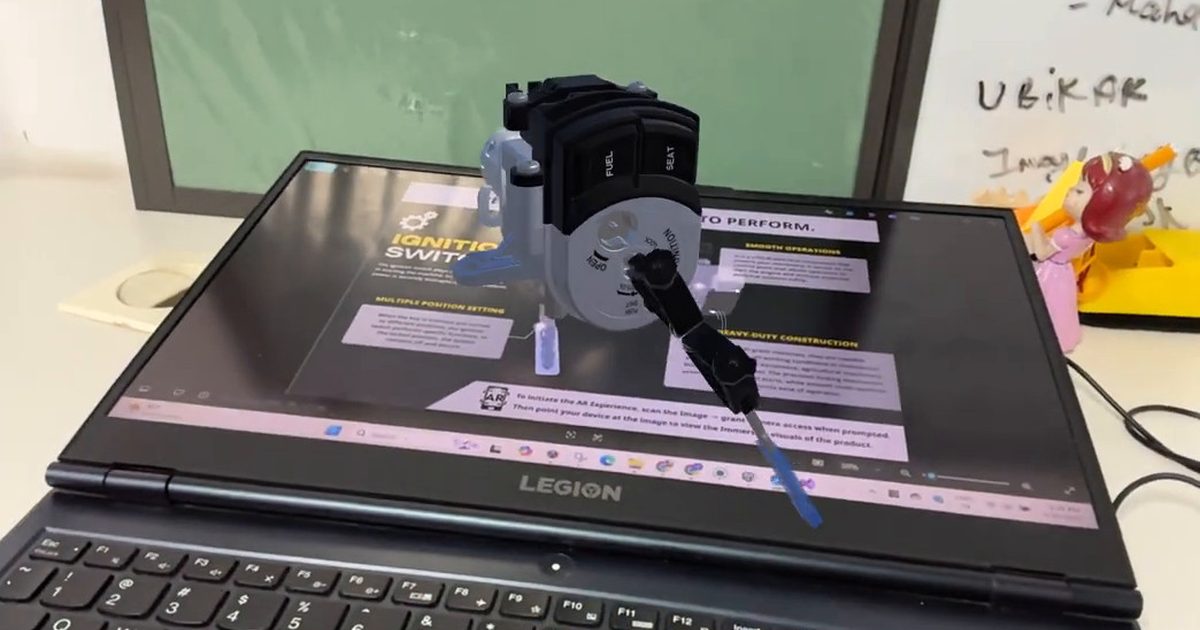
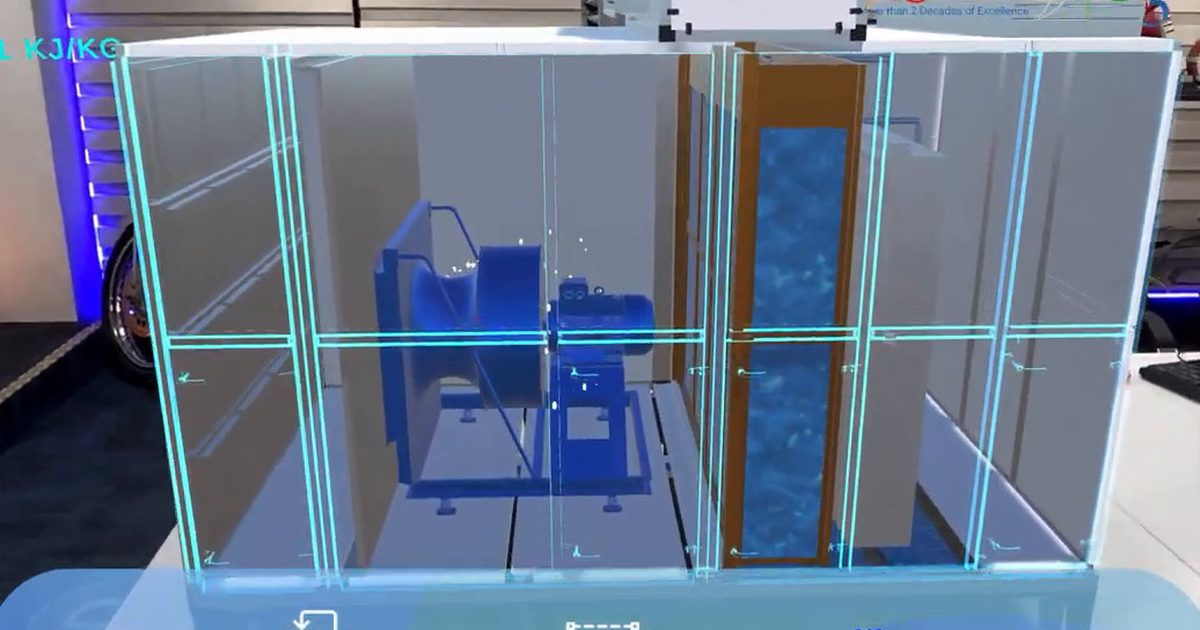
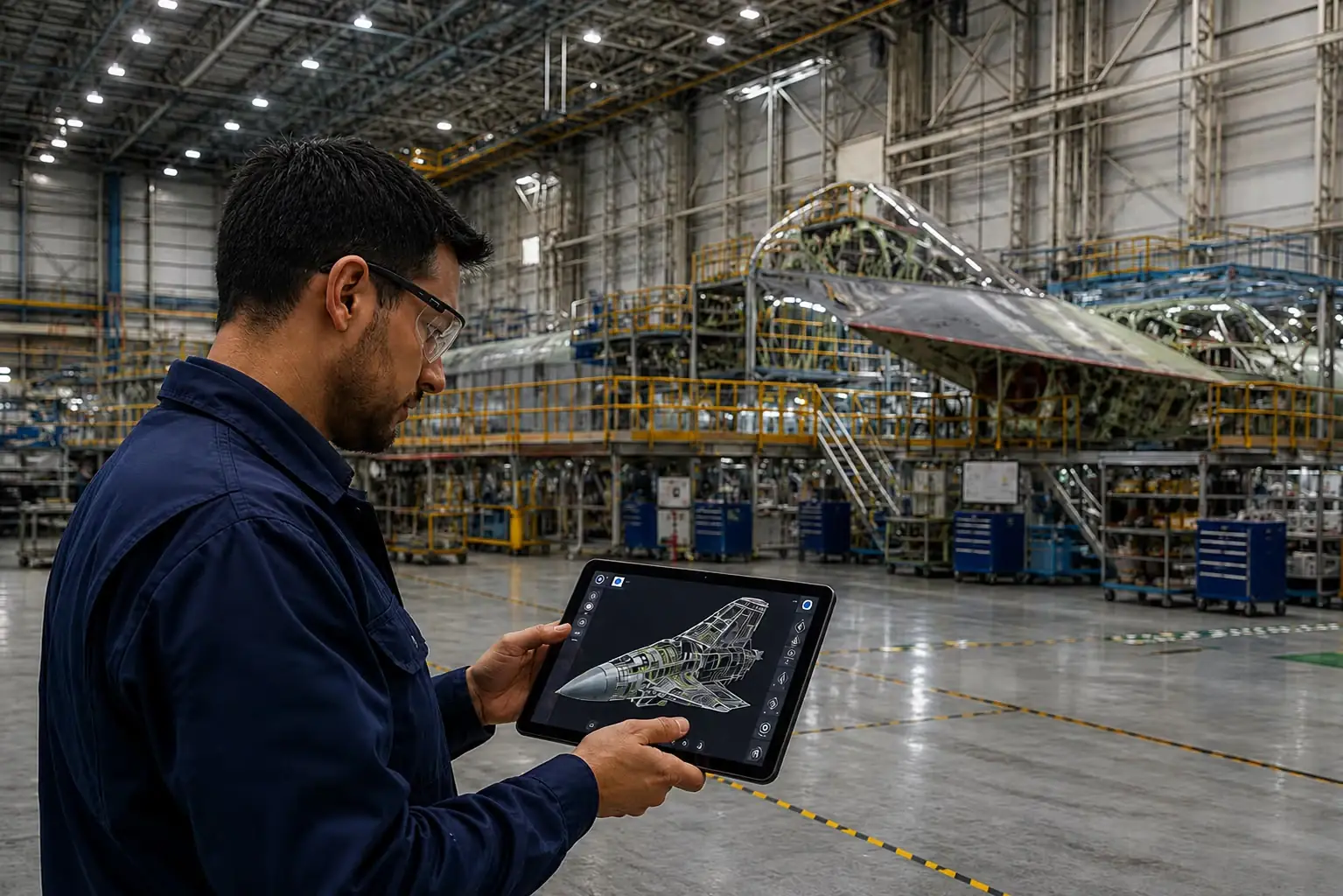
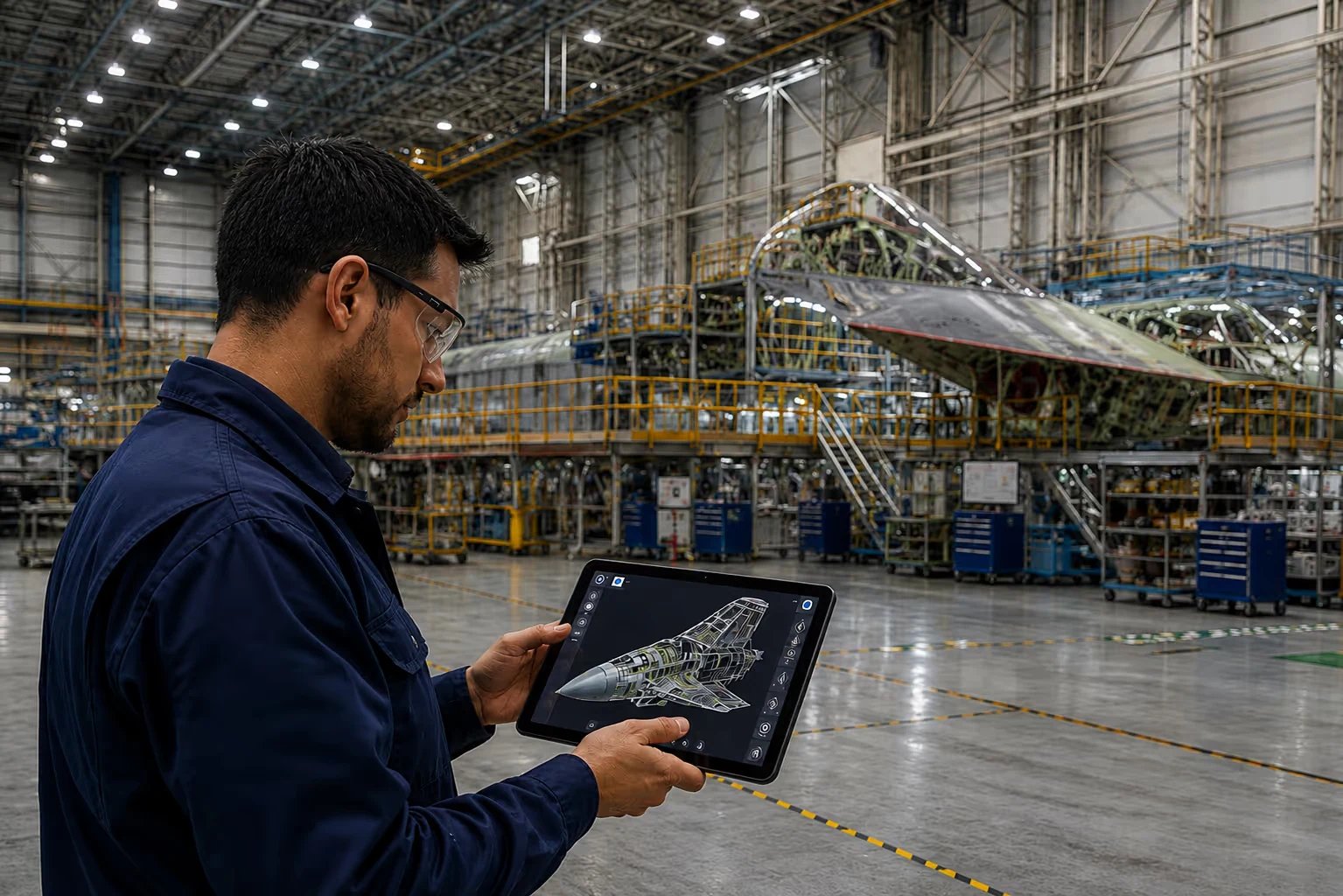
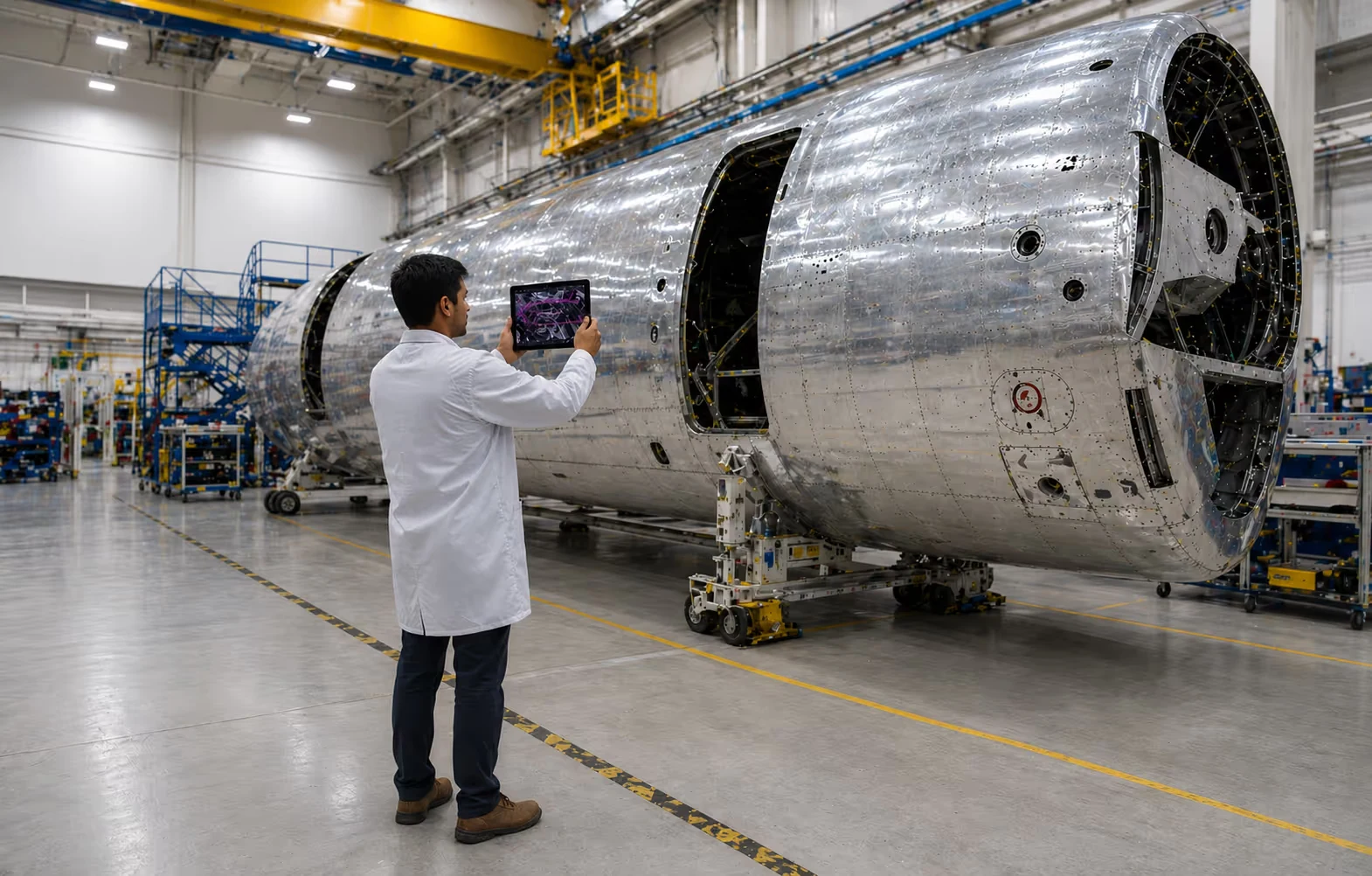
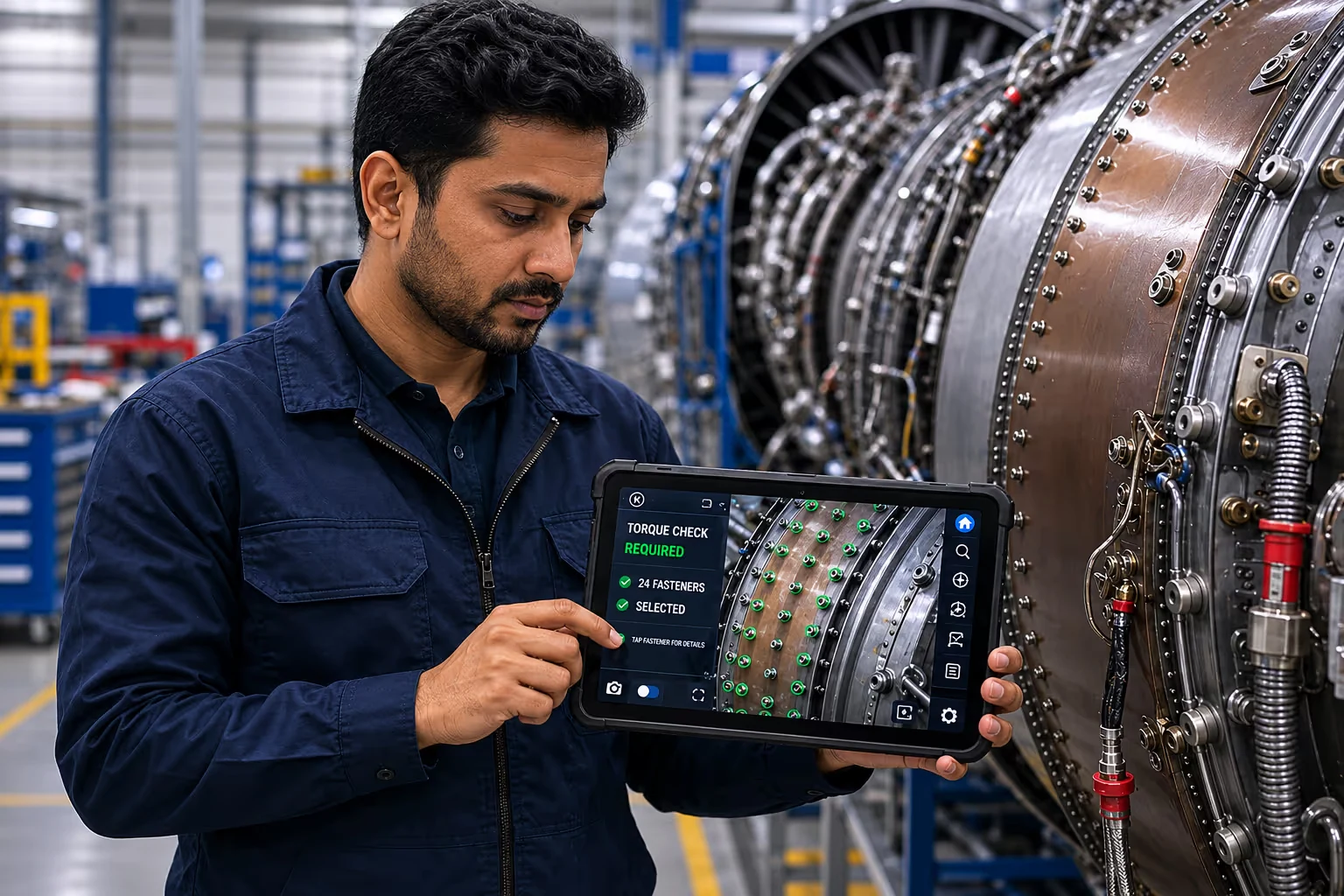
Technicians were given ruggedised industrial tablets in place of paper manuals. When a technician points the tablet camera at a component or assembly area, the app overlays 3D models and instructions on the live view. For example, the route of a wiring harness appears as a 3D path on the aircraft, so there is no guesswork about where it runs.
The rollout was phased. The team began with a pilot in one high-complexity assembly area, collected feedback from the technicians using it, and refined the interface and workflows before expanding. Training took place in the technicians' own work area and focused on their actual tasks rather than generic classroom sessions. The pilot also created internal champions who helped their colleagues adopt the tool.
How it works
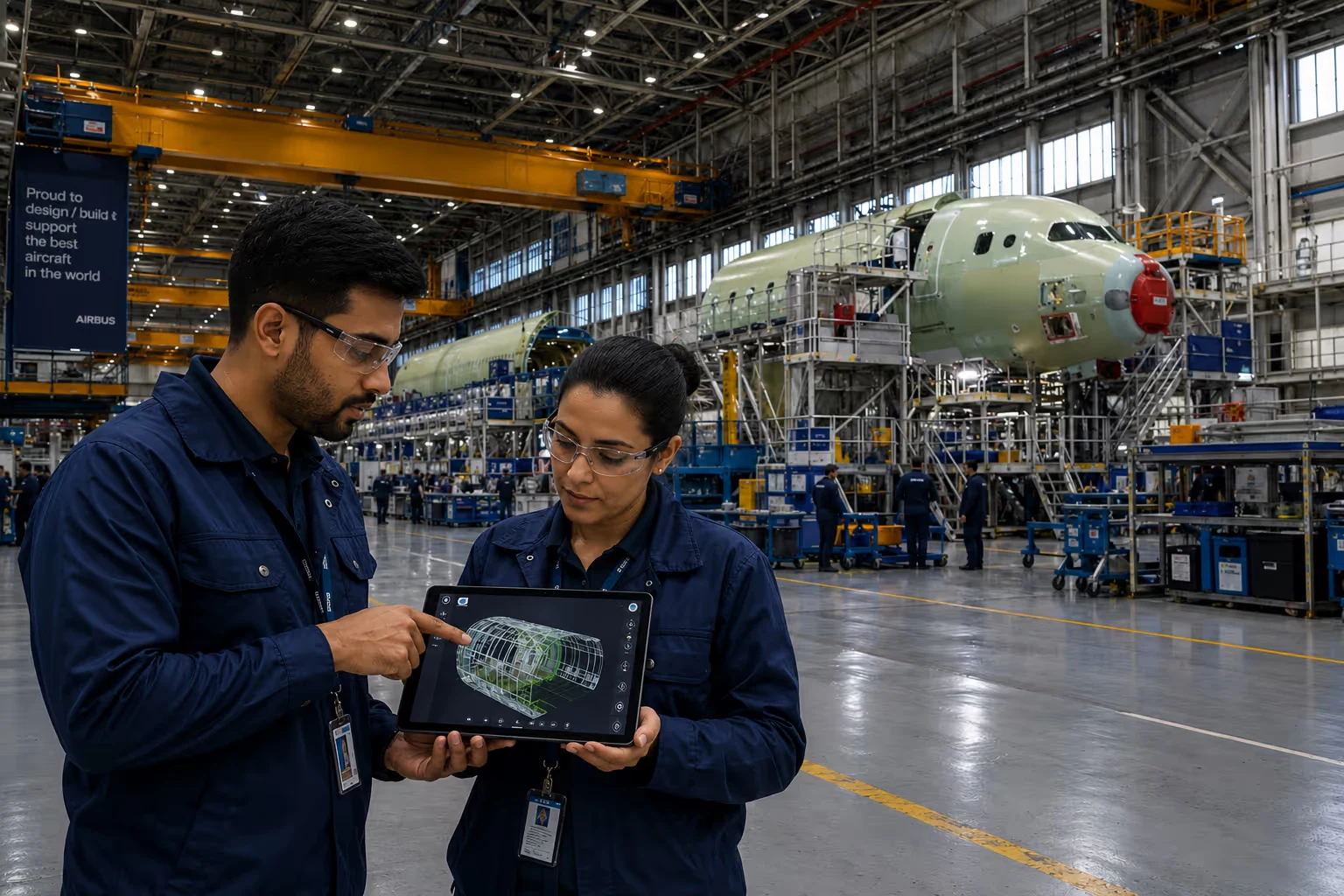
The tablet app does more than show pictures. At each step it gives the technician the information needed for that task:
- 3D models and instructions overlaid on the real component
- Torque specifications for each bolt
- Confirmation of correct part numbers
- Access to the relevant quality standards
- Digital sign-off at each critical step
The app is connected to the manufacturer's Product Lifecycle Management (PLM) and Manufacturing Execution Systems (MES). Work instructions are therefore always based on the latest design revision, which removes the risk of building from an outdated drawing.
Every sign-off is recorded, which builds a complete digital record of the assembly, often called a digital thread. Quality teams can trace each component and action, and audits draw on that record instead of paper files. The IT team built the integration with PLM and MES and ran the wireless network needed to serve data to many tablets across the hangar floor.
Results
The company has not published figures that we can cite, so this section describes the changes without numbers.
- Technicians: far less time spent reading paper drawings, and more time spent on assembly.
- Production: lower mental load, and fewer assembly errors with the rework, scrap and delay they cause.
- Quality assurance: with fewer defects to log, QA staff can spend more time on process improvement and root cause analysis.
- Engineering: data from the line shows which assembly steps cause delays or confusion, so designers can improve them for manufacture.
- Training: new technicians, including those with little aerospace experience, become productive sooner.
- Audits: sign-offs are recorded digitally, so audits draw on that record instead of paper files.
What it means for manufacturers
The lesson is not specific to aircraft. Any plant with long, multi-step assembly, frequent design changes and skilled workers reading complex drawings faces the same problem. Tablet AR puts the right instruction on the right part at the right moment, using hardware that technicians already understand.
The way the project was run matters as much as the technology. Starting with one difficult area, listening to the people on the line, training them at their workstation and linking the app to PLM and MES so instructions stay current are steps any manufacturer can copy.
To see where AR could help in your own plant, read our page on augmented reality or talk to our team.
More on augmented reality on the shop floor
 Insight · Tablet AR
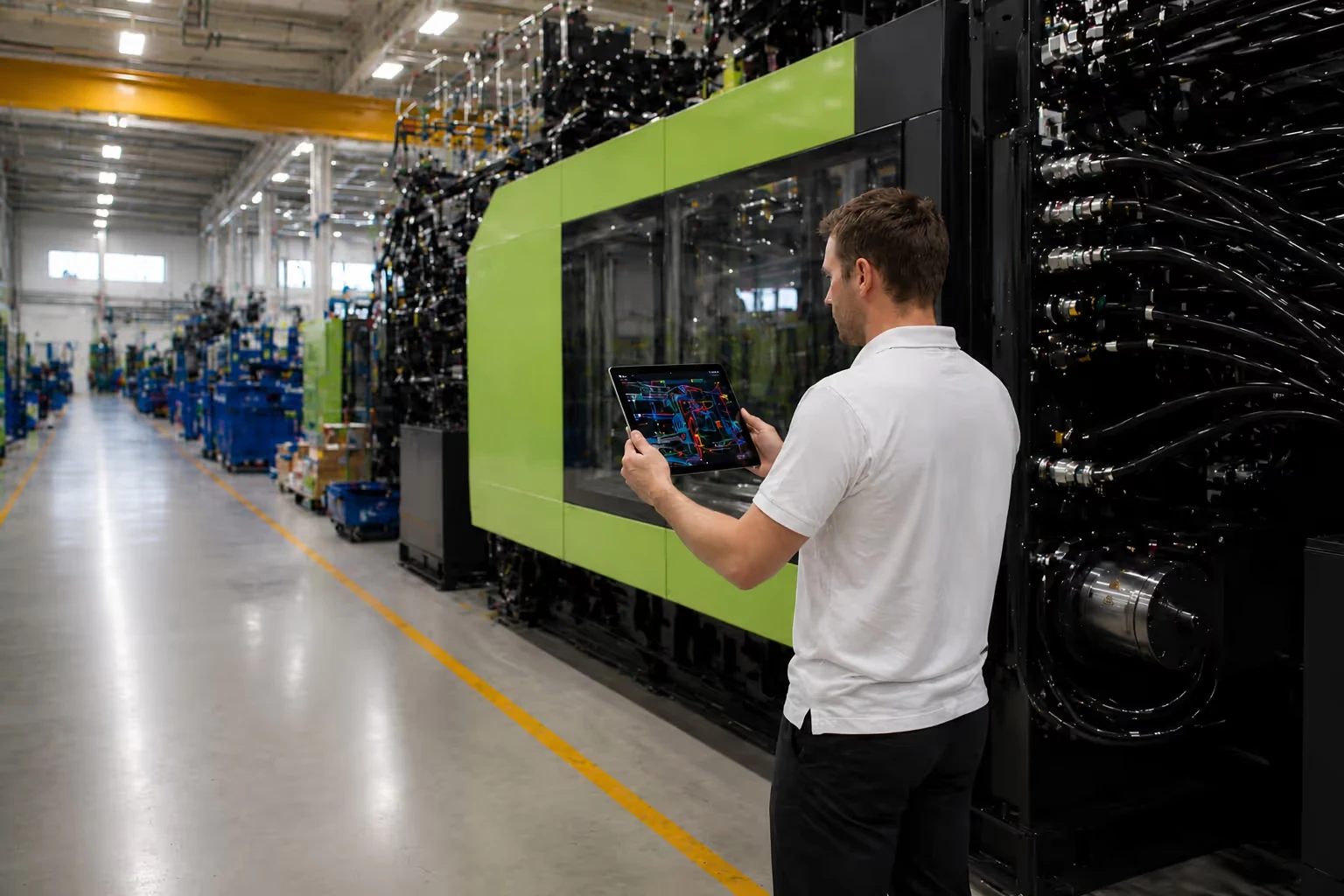
How an injection moulding machinery maker uses tablet AR for final quality checks
How an injection moulding machinery maker checks each machine against its own 3D model on a tablet before it ships.
Read the article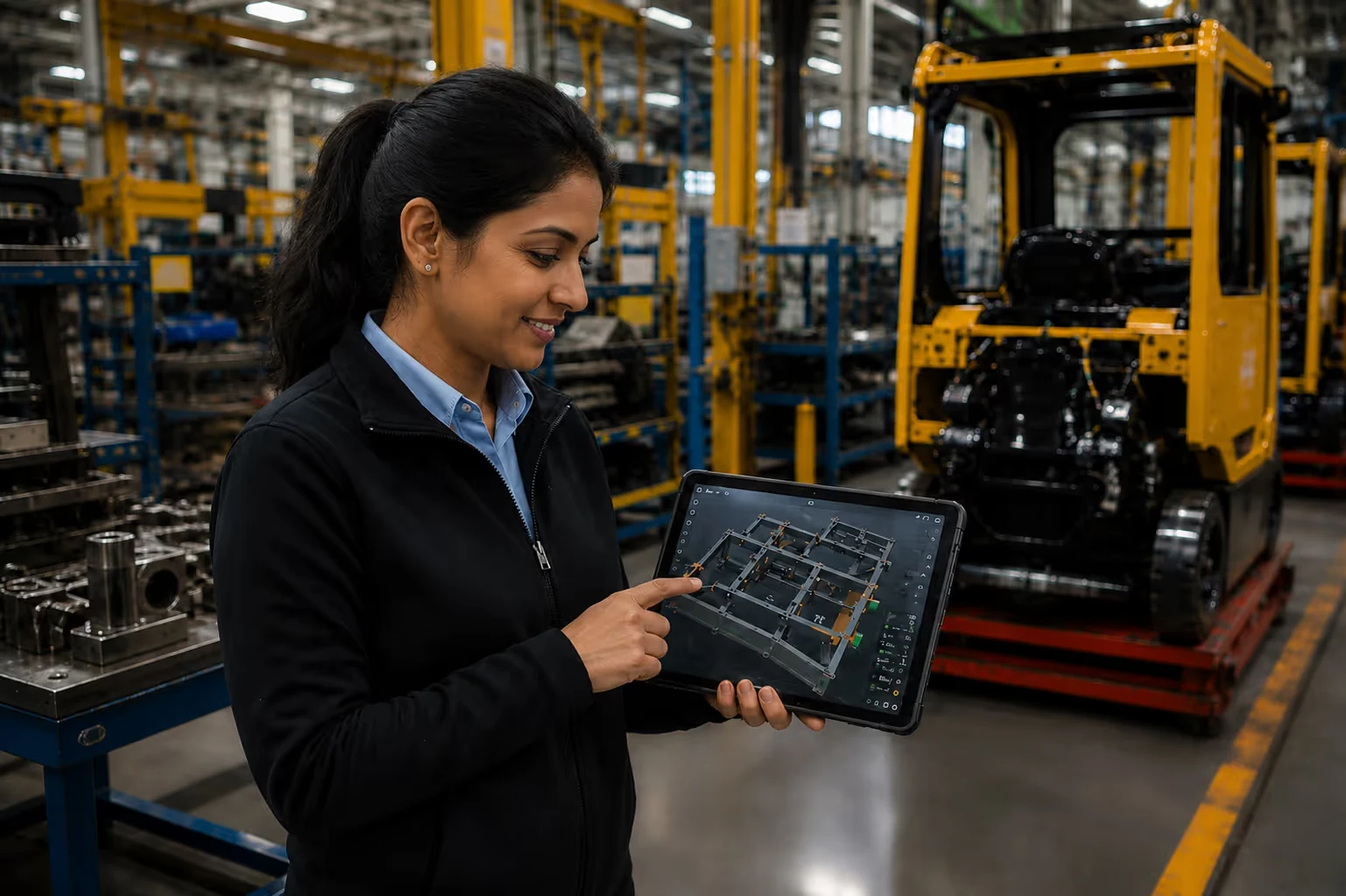 Insight · Tablet AR
How a forklift manufacturer uses tablet AR to inspect welded frames
How a material handling equipment maker replaced physical inspection jigs with tablet AR for forklift frames.
Read the article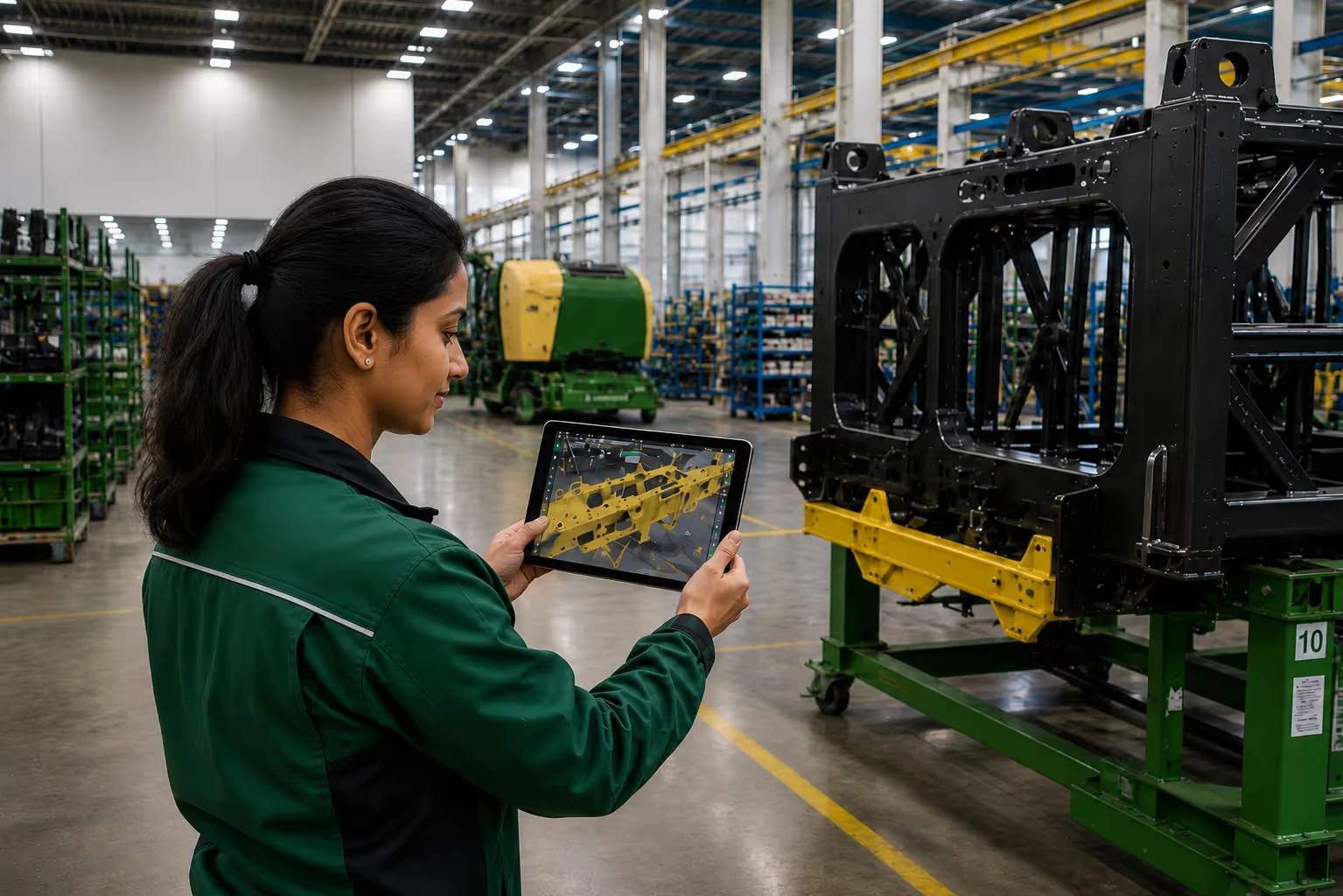 Insight · Tablet AR
How an agricultural machinery maker inspects heavy supplier parts in place with tablet AR
How an agricultural machinery maker checks large supplier parts in place with tablet AR instead of moving them to a measurement room.
Read the article