
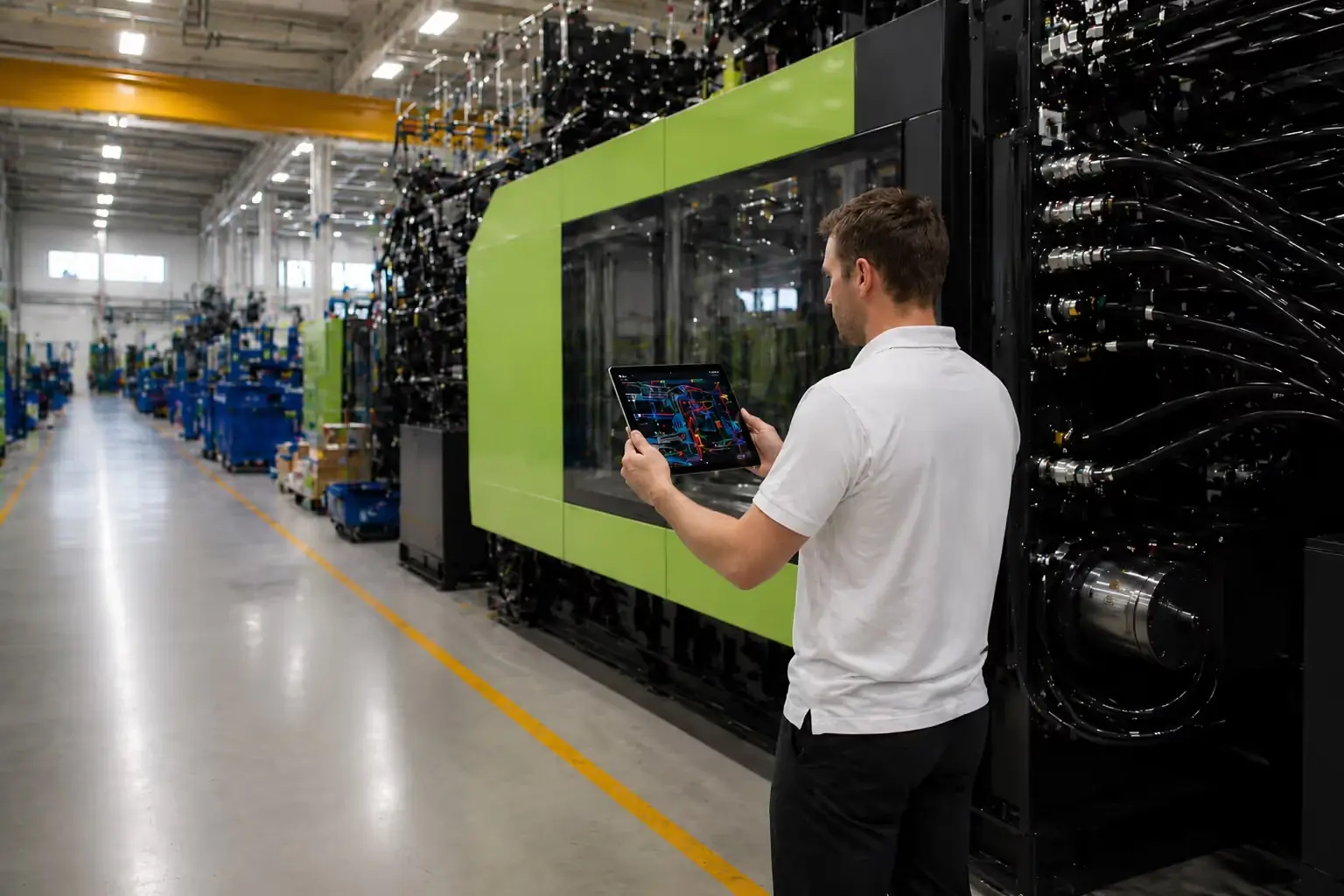
Another company's example, not a Metaverse911 project. We did not work on it. We have left out figures we cannot trace to a named, published source. See our case studies for our own work.
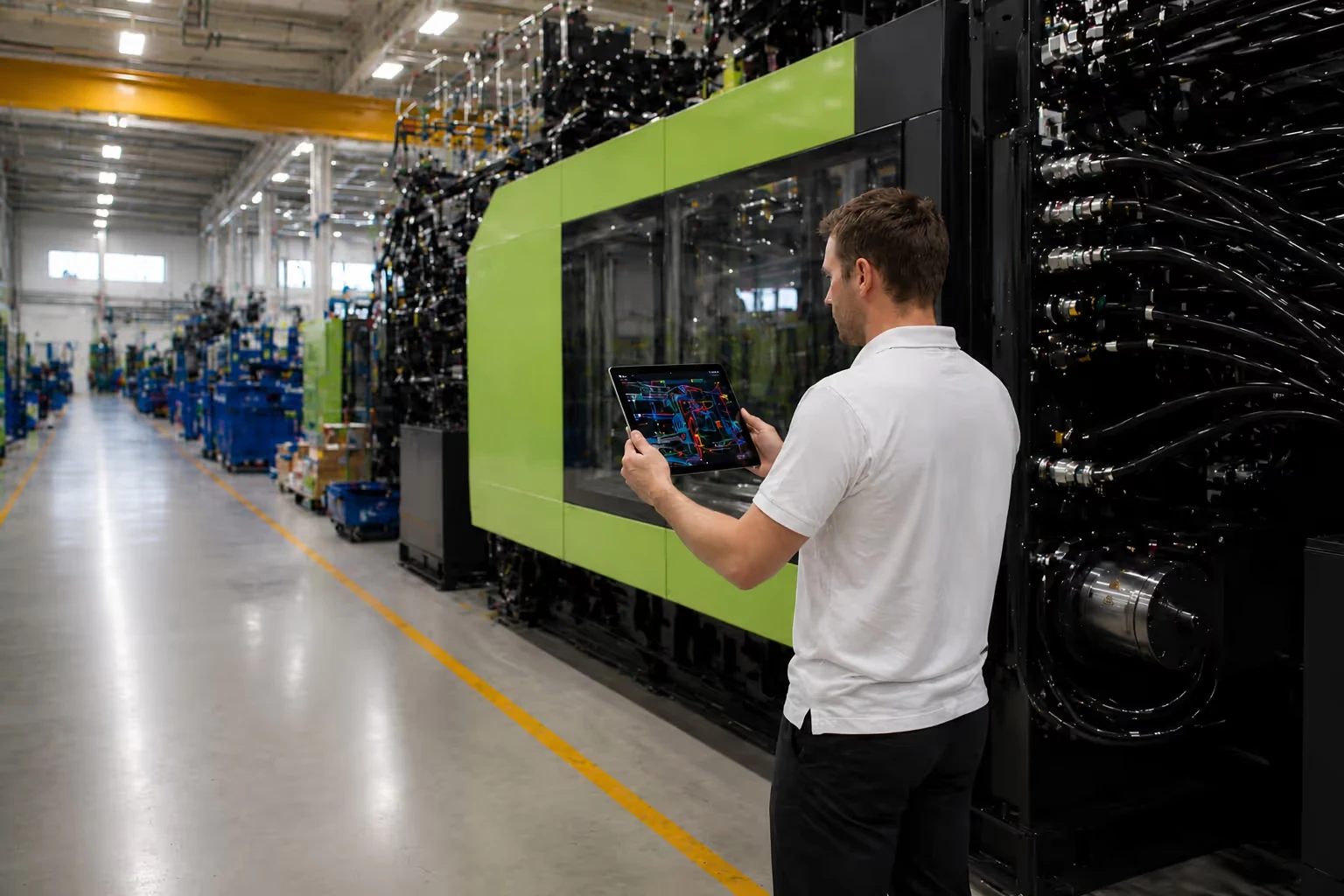
The situation: inspecting custom machines from paper
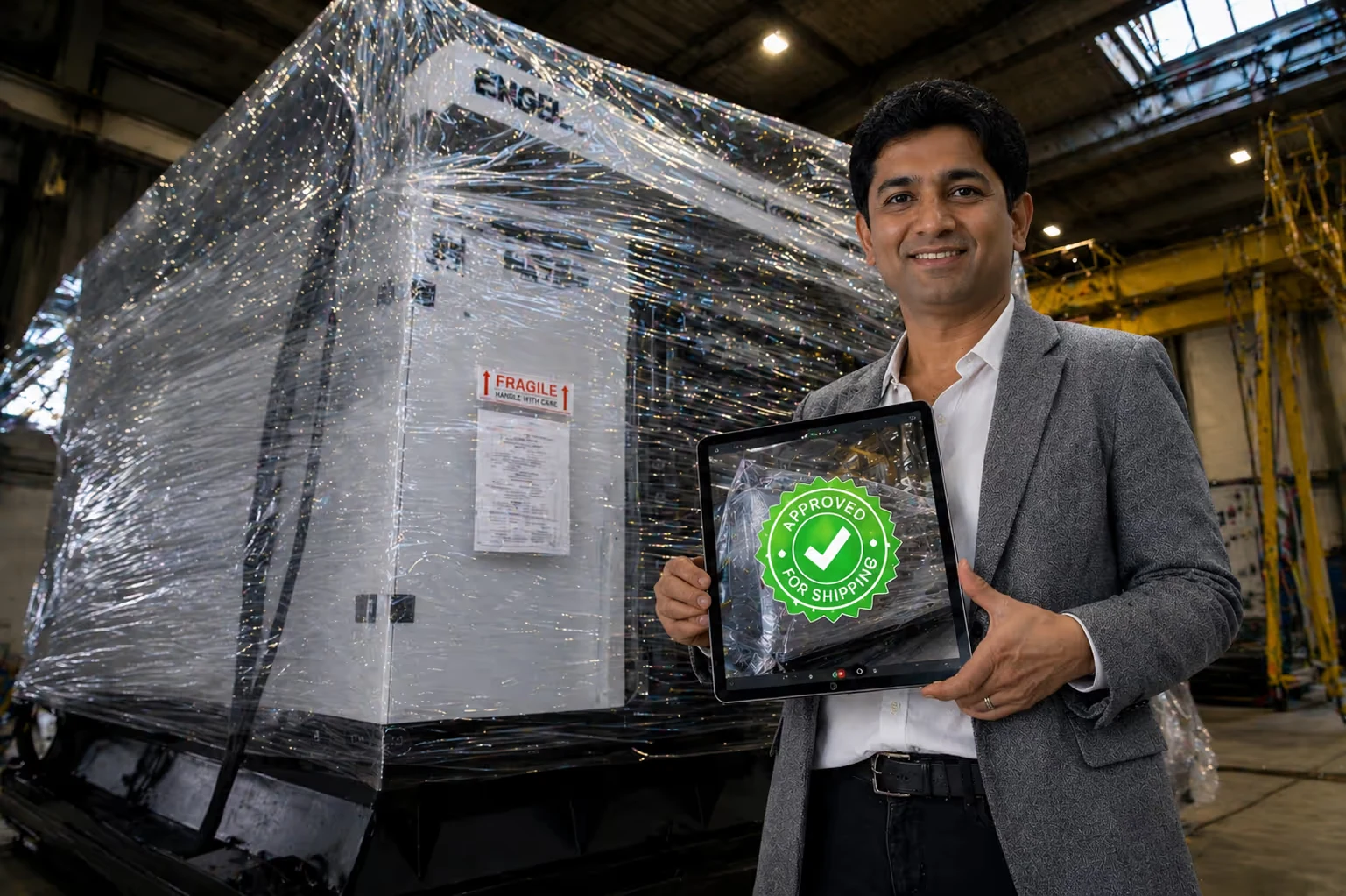
This Austrian manufacturer builds large, custom-configured injection moulding machines, some the size of a small bus. Each one has its own layout of hydraulic lines, electrical wiring and precision mechanical parts. Its customers, in sectors from automotive to medical technology, need these machines to run without problems from the day they are commissioned.
The final quality check before dispatch relied on veteran inspectors working from binders of 2D schematics, often hundreds of pages long. They had to translate flat drawings into a large, multi-layered machine in their heads and spot any difference. A hydraulic line routed a few centimetres off, or a connection not torqued to specification, could be missed.
A missed error was expensive. If it surfaced at a customer's site, it meant flying out specialist technicians, rework in a less suitable environment and production delays for the customer. As machines became more complex and more customised, the paper process became a bottleneck and a growing risk. The amount of information inspectors had to check was beyond what anyone could reliably hold in their head.
What they did: AR inspection against a digital twin
The manufacturer adopted a tablet-based AR system for the final quality checks of its machine assemblies. Inspectors use rugged, industrial-grade tablets. The aim was to make final inspection faster, more accurate and fully recorded.
Training, combined with a simple tablet interface, meant the inspection teams adopted the system quickly. The system runs on a secure, closed-loop network to protect the company's design data.
How it works
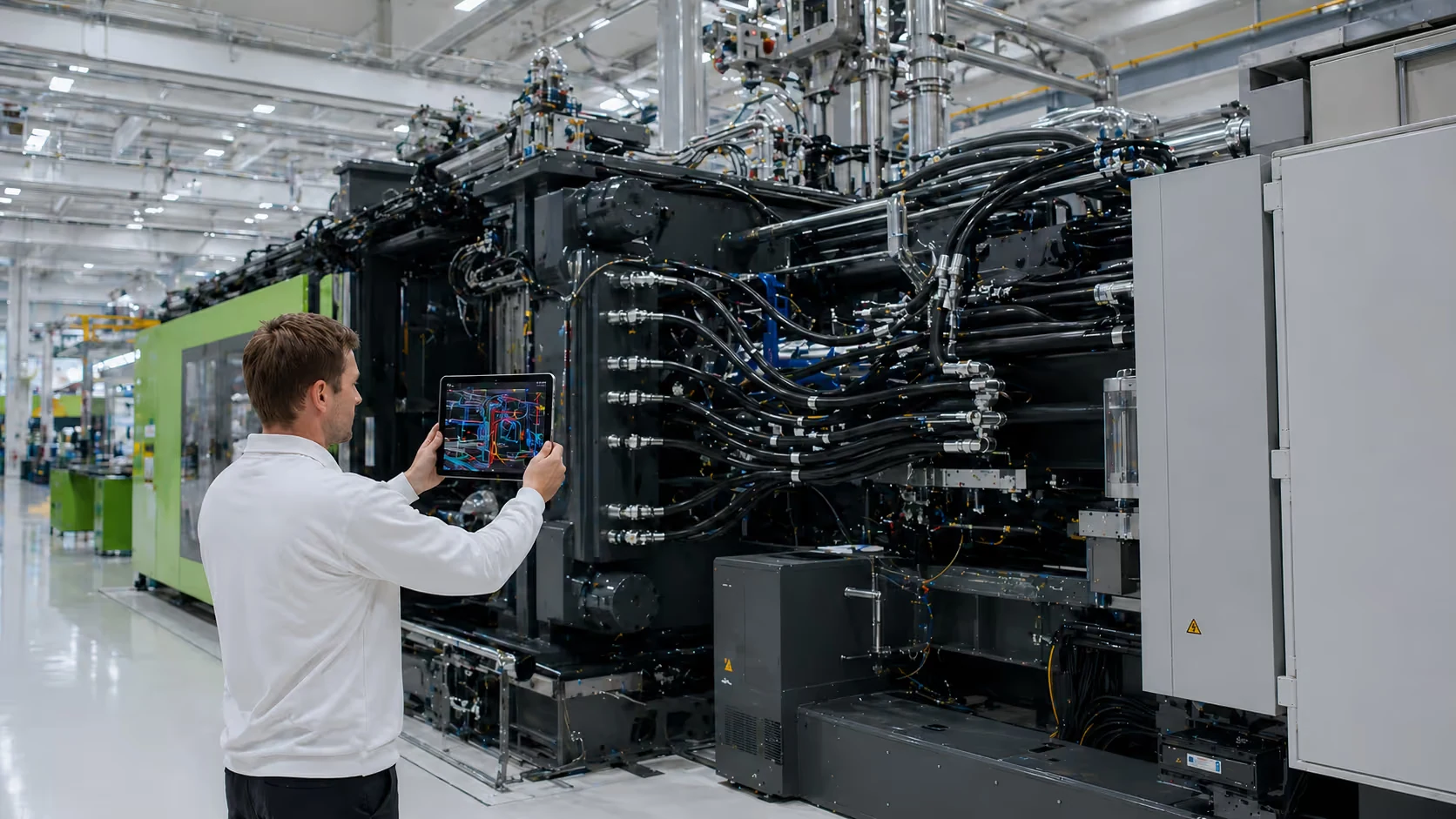
The inspector scans a QR code on the machine chassis. The app identifies the machine and loads its digital twin from a central server: a detailed 3D CAD model of that exact machine, including every wire, hose and component in the final design.
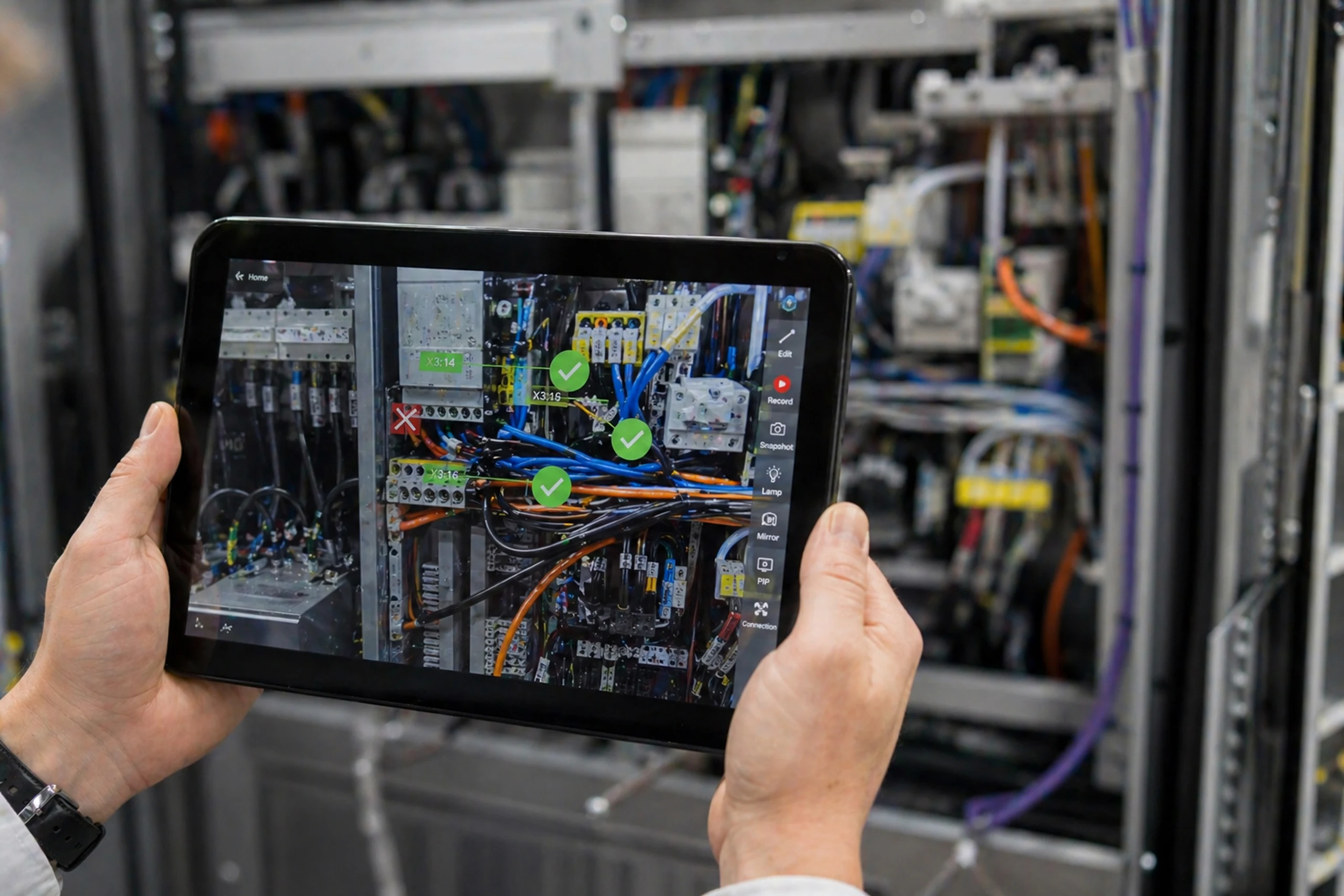
The app then overlays the CAD model on the tablet's live camera view. As the inspector walks around the machine, colour-coded lines on the screen show the correct routing for hoses, cables and wires. If a hydraulic hose runs on the wrong side of a bracket, the physical hose does not line up with the digital path, and the error is obvious.
Tapping any component or connection brings up more detail:
- The correct part number
- The required torque for a bolt
- The pressure rating for a hydraulic fitting
- A checklist for the sub-assembly
The inspector never has to leave the machine to look at paper or a separate computer. Every inspection is saved as a time-stamped digital record.
Results
The company has not published figures that we can cite, so this section describes the changes without numbers.
- Final inspection is faster, and the manufacturer says the checks are as thorough as before.
- Fewer errors reach the customer, so there are fewer commissioning problems and fewer field service visits.
- Every inspection is saved as a time-stamped digital record, which also makes ISO 9001 audits simpler.
- Hours saved in inspection can go to preventive maintenance and continuous improvement.
The effect reached other teams. Assembly technicians could see the correct final state in 3D, which reduced errors and rework. Engineers used data on common errors to make machines easier to assemble. Commissioning teams had fewer surprises at customer sites, so installations went faster.
What it means for manufacturers
For makers of complex, custom-built capital equipment, final inspection is where paper processes break down first. Every machine is different, and the cost of a missed error is paid at the customer's site. Comparing the real machine to its own digital twin on a tablet is a practical way to catch those errors in the factory.
The system did not replace experienced inspectors. It gave them a tool that let them check more, faster and with more confidence, and it fitted into the existing inspection step rather than adding a new one.
To see where AR could help in your own plant, read our page on augmented reality or talk to our team.
More on augmented reality on the shop floor
 Insight · Tablet AR
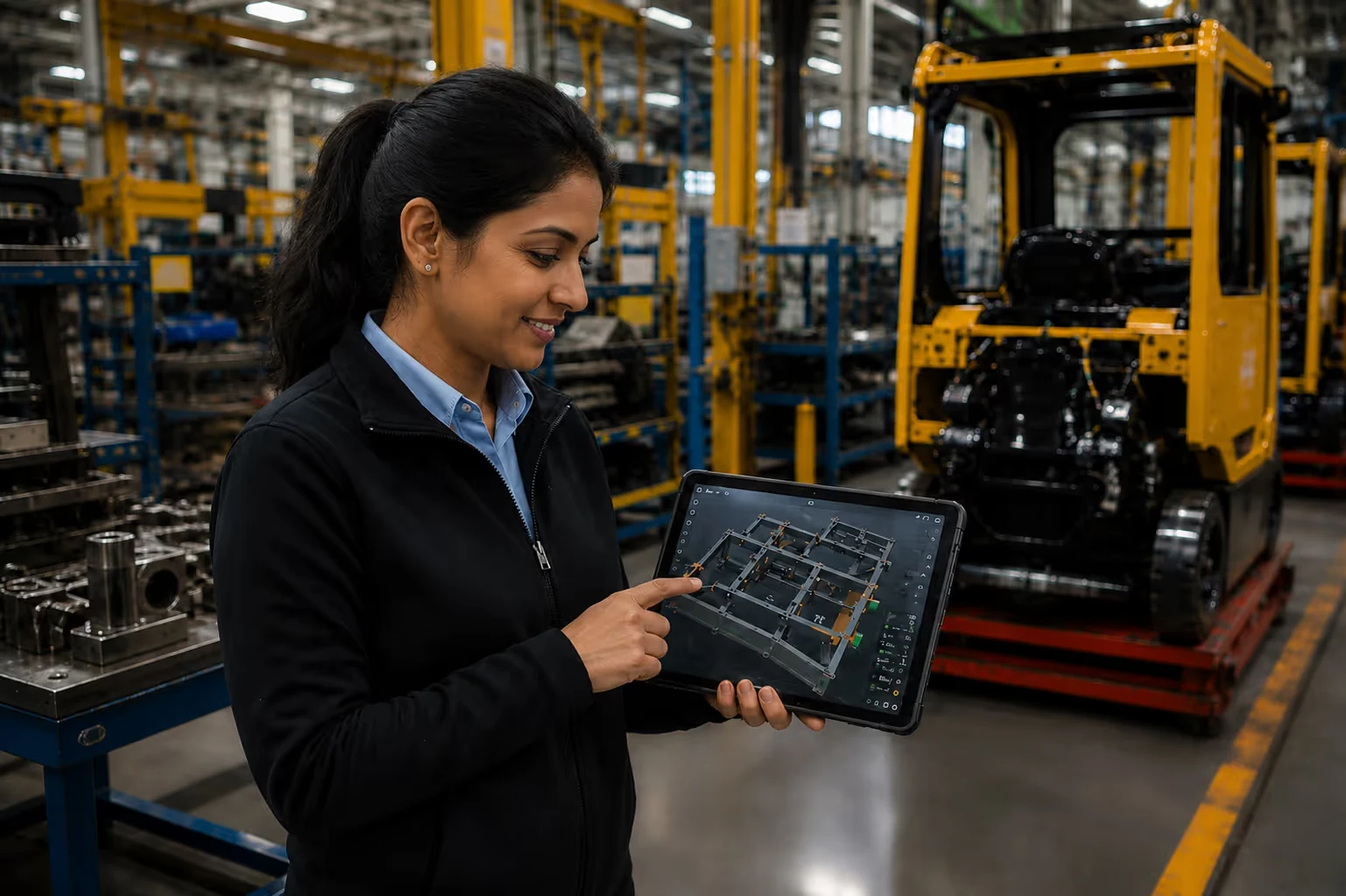
How a forklift manufacturer uses tablet AR to inspect welded frames
How a material handling equipment maker replaced physical inspection jigs with tablet AR for forklift frames.
Read the article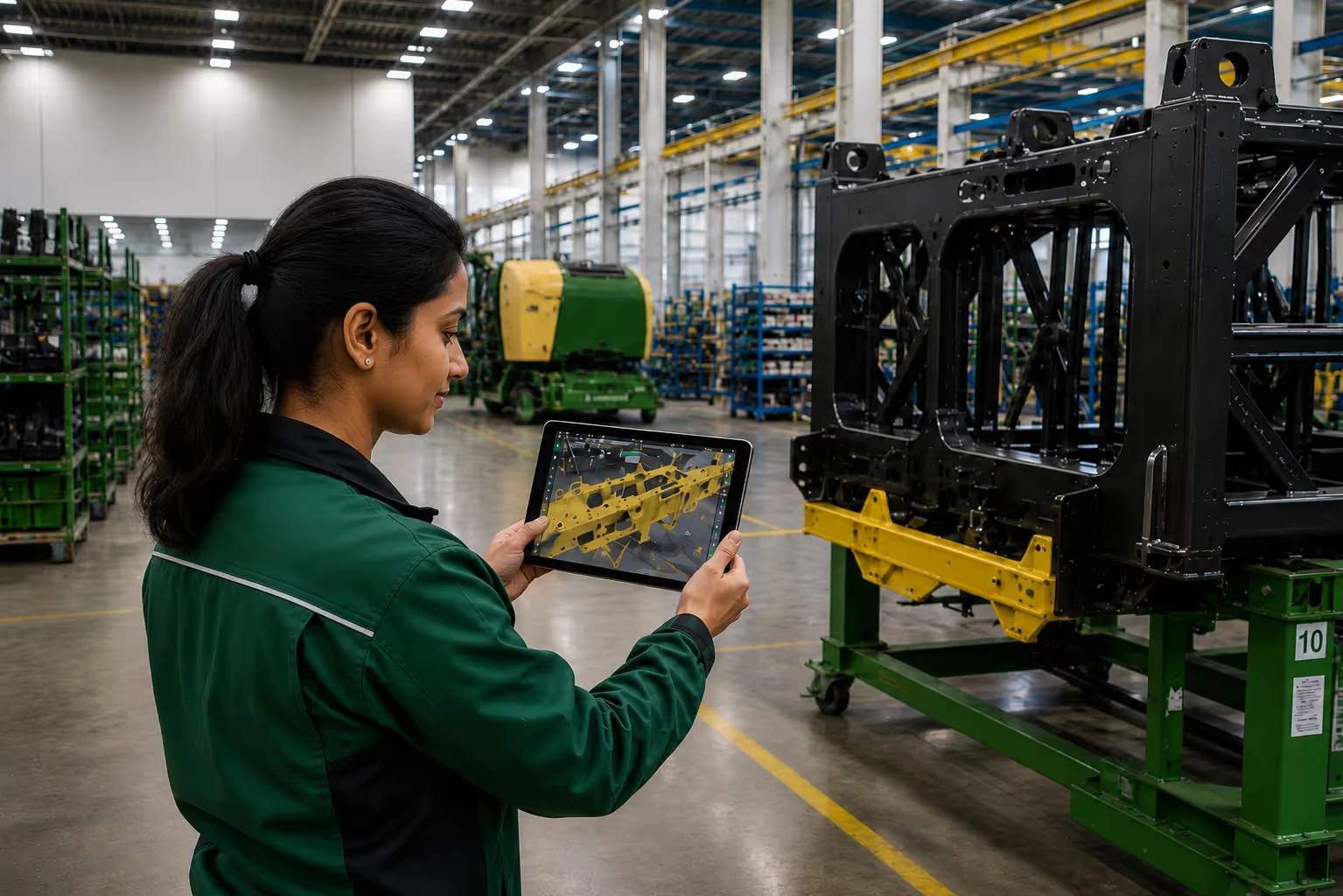 Insight · Tablet AR
How an agricultural machinery maker inspects heavy supplier parts in place with tablet AR
How an agricultural machinery maker checks large supplier parts in place with tablet AR instead of moving them to a measurement room.
Read the article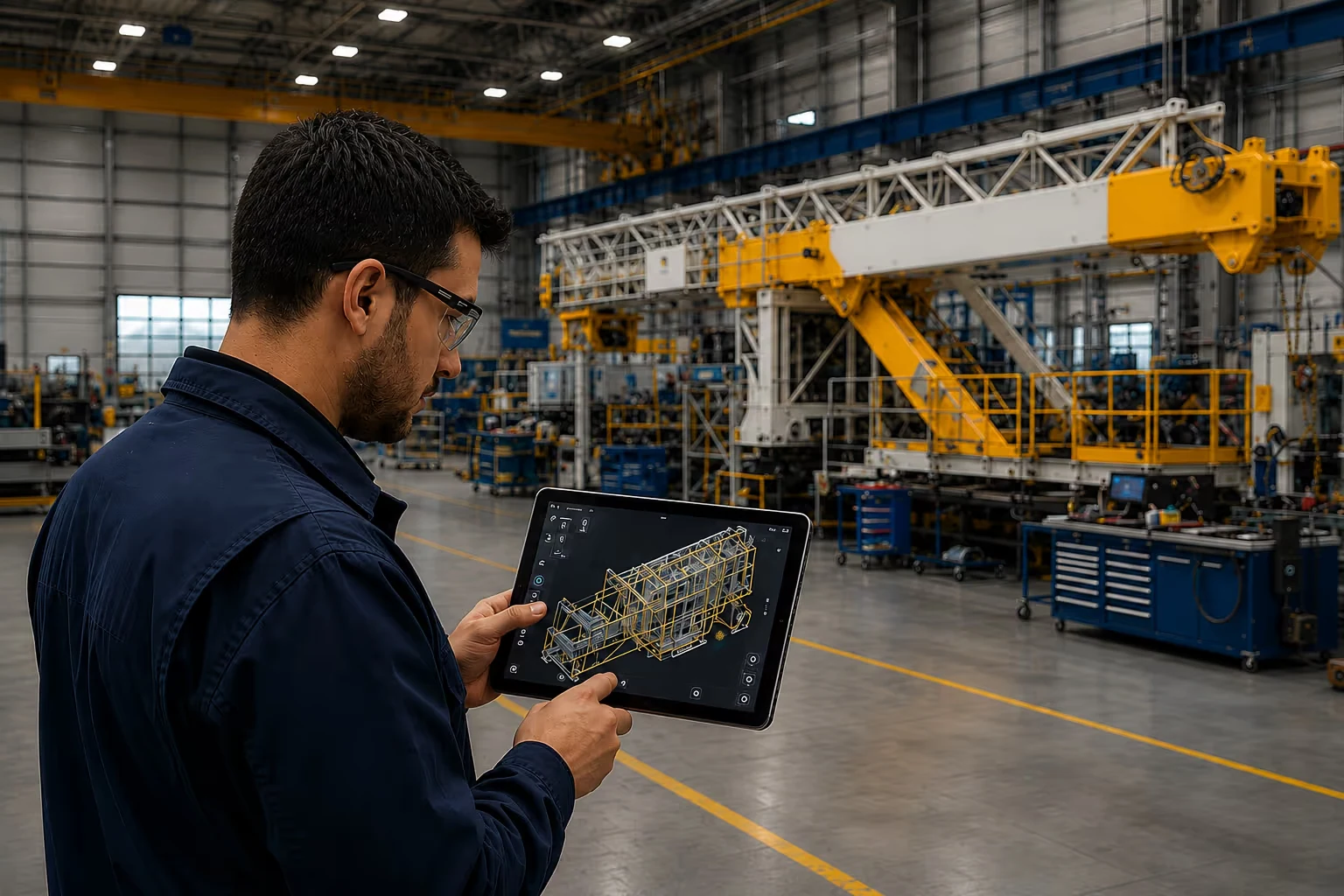 Insight · Tablet AR
How a crane manufacturer uses tablet AR to catch defects before painting
How a crane manufacturer added a tablet AR check between welding and painting to catch structural defects early.
Read the article