
Another company's example, not a Metaverse911 project. We did not work on it. Neither group nor the software developer is named in the material we used, and we have left out figures we cannot trace to a named, published source. See our case studies for our own work.
The situation: training that did not change behaviour
Heavy industry, including manufacturing, mining, oil and gas, and construction, carries a wide range of serious hazards. One site may need its workers to be competent in lockout/tagout (LOTO), confined space entry, working at heights and arc flash safety. Training for all of this usually meant classroom lectures, generic safety videos and costly physical simulations that rarely conveyed the real danger.
This page covers two examples. A multinational heavy manufacturing group found that its incident rates had stopped falling despite heavy investment in health, safety and environment (HSE) training. Workers knew the theory and could pass a multiple-choice test on LOTO, but they lacked a real sense of what a mistake would mean. A leading Indian manufacturing group, with plants across the country, found its training slow and expensive. Taking workers off the floor for days of classroom sessions hurt production targets and created tension between the HSE team and plant managers.
Language was a problem for both. An English safety video loses much of its meaning for non-native speakers, and manuals in English or Hindi were often poorly understood by workers whose first language was Marathi, Gujarati or Tamil. Both groups needed immersive training that worked across languages, could be rolled out to many sites and did not need the cost and lead time of building custom VR modules.
What they did: ready-made modules on standalone headsets
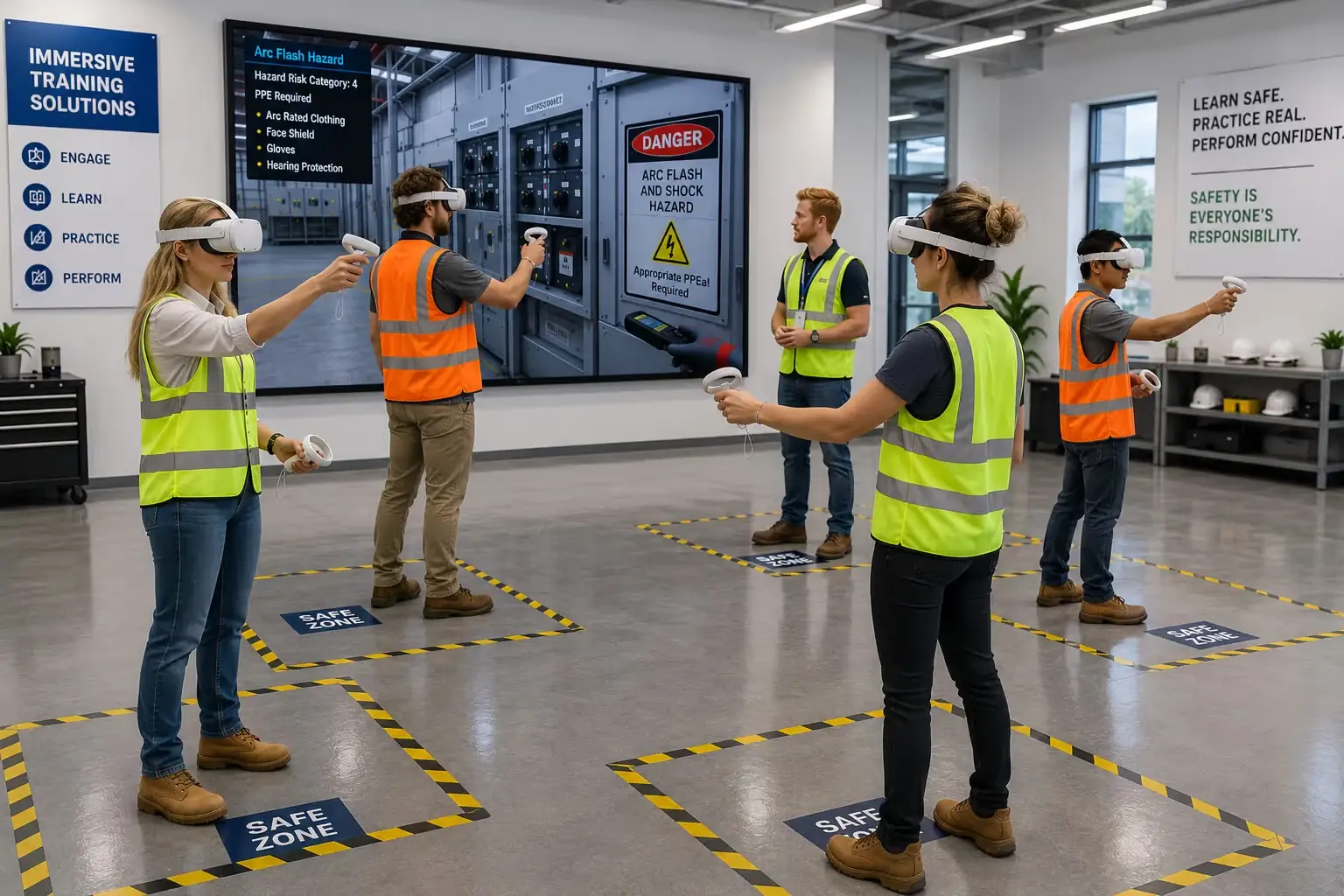
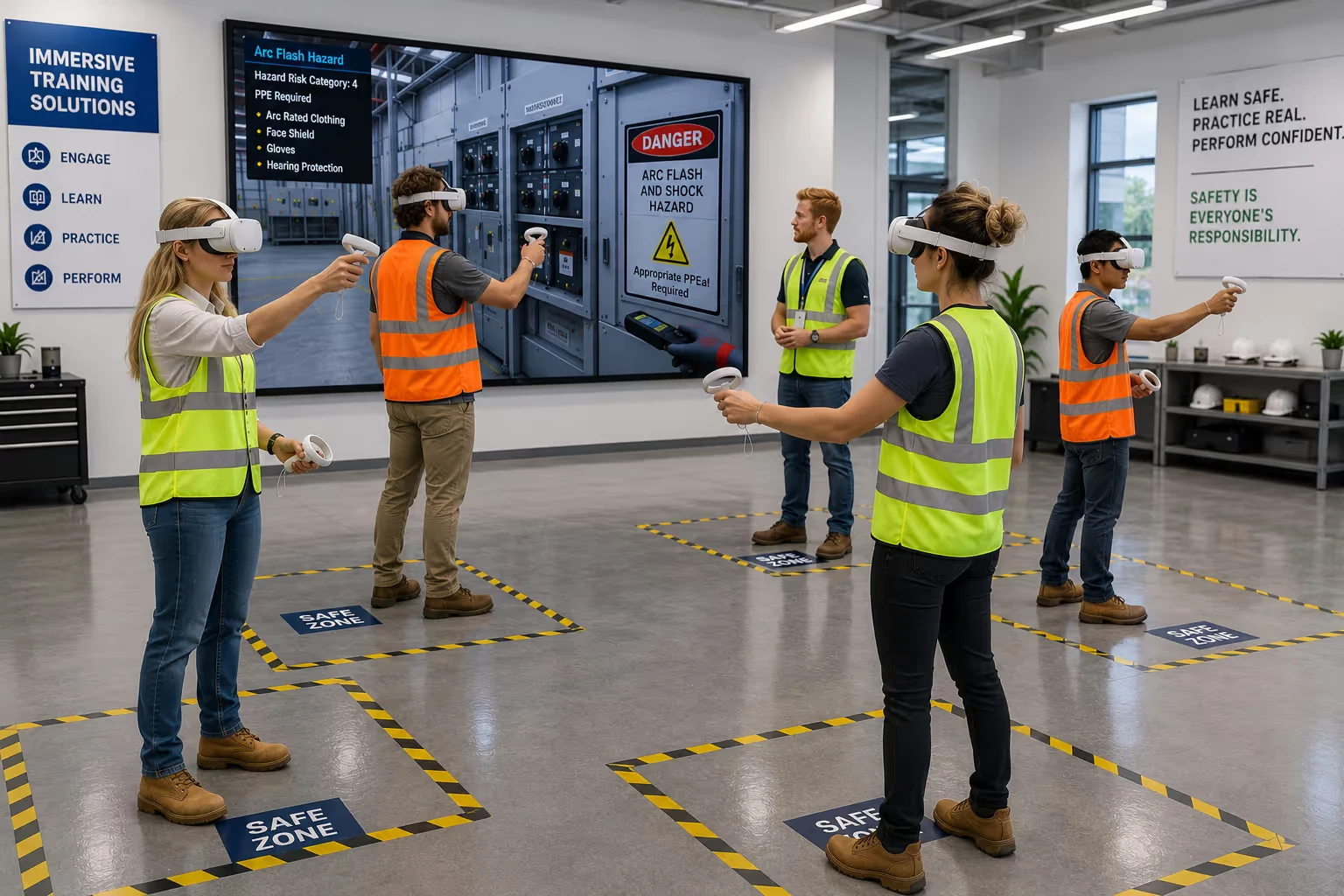
Each group worked with a global VR safety software developer and used its ready-made library of heavy industry safety modules on standalone headsets. Standalone headsets need no PC, tracking cameras or cables. A complete kit can be kept in a hard case or a locker on the factory floor, and a local safety officer or shift supervisor can set it up in minutes. Training can happen on the shop floor, in break rooms or in remote mining camps, and workers do not have to travel to a central academy. One headset can be shared across shifts.
The Indian group reviewed the investment closely, so cost shaped every decision. It chose standalone headsets because a PC-tethered system needs a high-end computer for every headset, which adds cost and needs a dedicated room and IT set-up.
The headsets track movement in all six degrees of freedom (6DoF), so trainees walk around equipment, crouch to inspect valves and physically pull levers or attach padlocks. That physical movement builds muscle memory.
How it works
Learn, train, assess
The modules are interactive, physics-based simulations rather than 360-degree videos. Each one follows three stages, which stops trainees from simply gaming the system:
- Learn: step-by-step guidance with visual prompts, voiceover and highlighted controls, for example the exact steps to apply a LOTO device, verify zero energy and secure the area.
- Train: the prompts are removed and the trainee works from memory. Mistakes get immediate feedback explaining what went wrong.
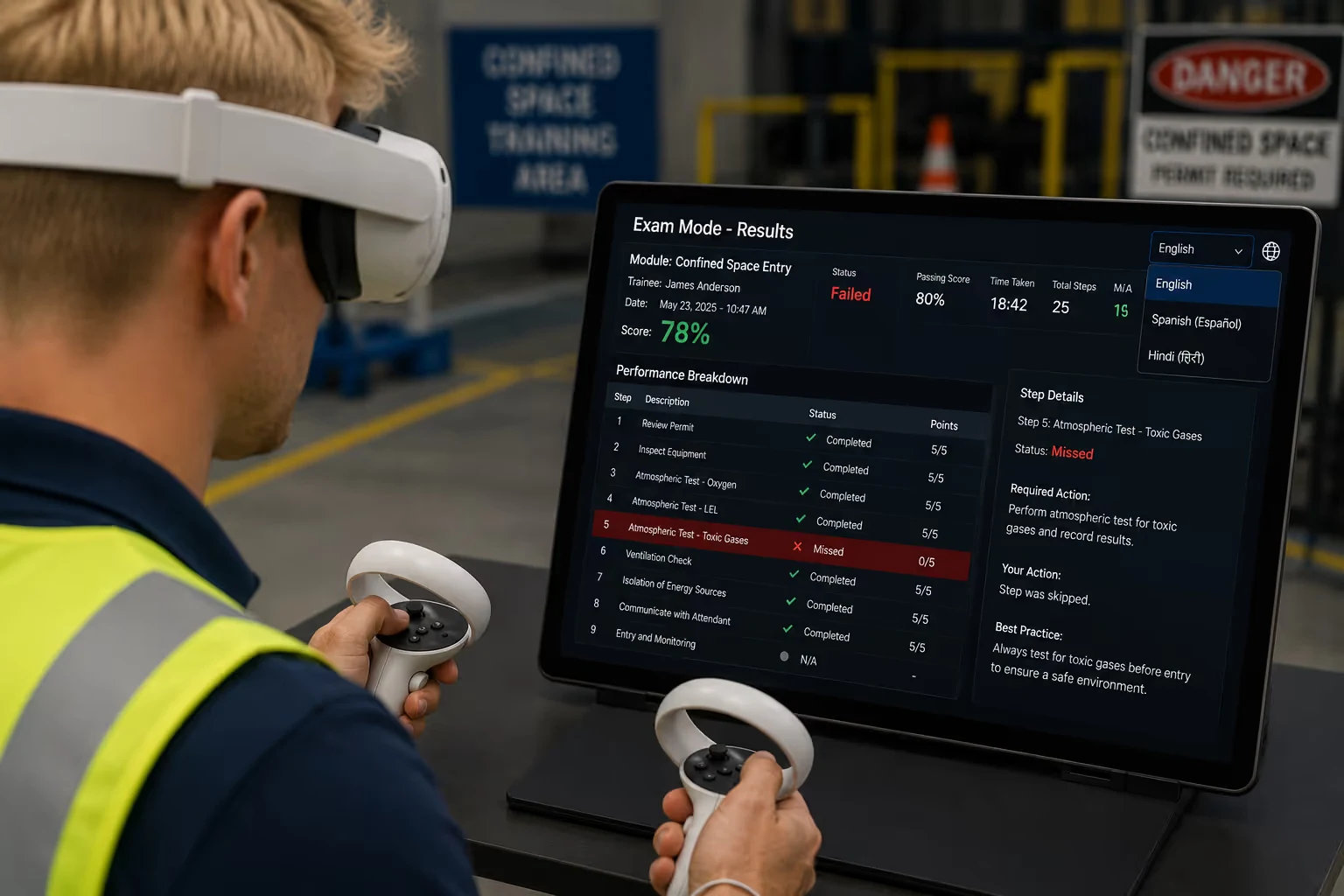
- Assess: an unassisted, timed test with random hazards such as a gas leak, a tool failure or a distracting virtual co-worker. Every action is recorded, and a pass or fail report goes to the Learning Management System (LMS).
The hazards covered
Modules used in these examples included:
- Arc flash and electrical safety: PPE selection, safe distances and the use of insulated tools, with a virtual arc flash that trainees remember.
- Confined space entry: atmospheric testing, continuous monitoring and emergency extraction in tight, poorly lit tanks and silos.
- Lockout/tagout: identifying every electrical, pneumatic and hydraulic energy source on multi-stage machinery and isolating them in the right order.
- Underground mining hazards: roof fall prevention, gas detection and navigation to emergency refuges.
- Chemical spills and electrical fires: choosing the right response, then seeing the simulated result of a mistake, such as an explosion or a gas release.
Languages and short sessions
Workers choose their language from a simple menu, including Hindi, Marathi, Gujarati and Tamil in the Indian example. No translators are needed, and every site gets the same standard of instruction. Sessions are short. Workers can complete a focused module during a shift change or break without leaving the floor. A backend dashboard tracks each trainee's progress, scores and time in VR, so HSE teams can see where people struggle, such as a particular LOTO step, and act before a real accident.
Results
The companies have not published figures that we can cite, so this section describes the changes without numbers. What the two examples report:
- A complete set of modules was in use across many sites much faster than custom development would have allowed.
- Training cost is lower than for physical simulations, because set-ups, consumables and instructor travel are no longer needed.
- Workers recall the protocol better under pressure than after classroom-only learning.
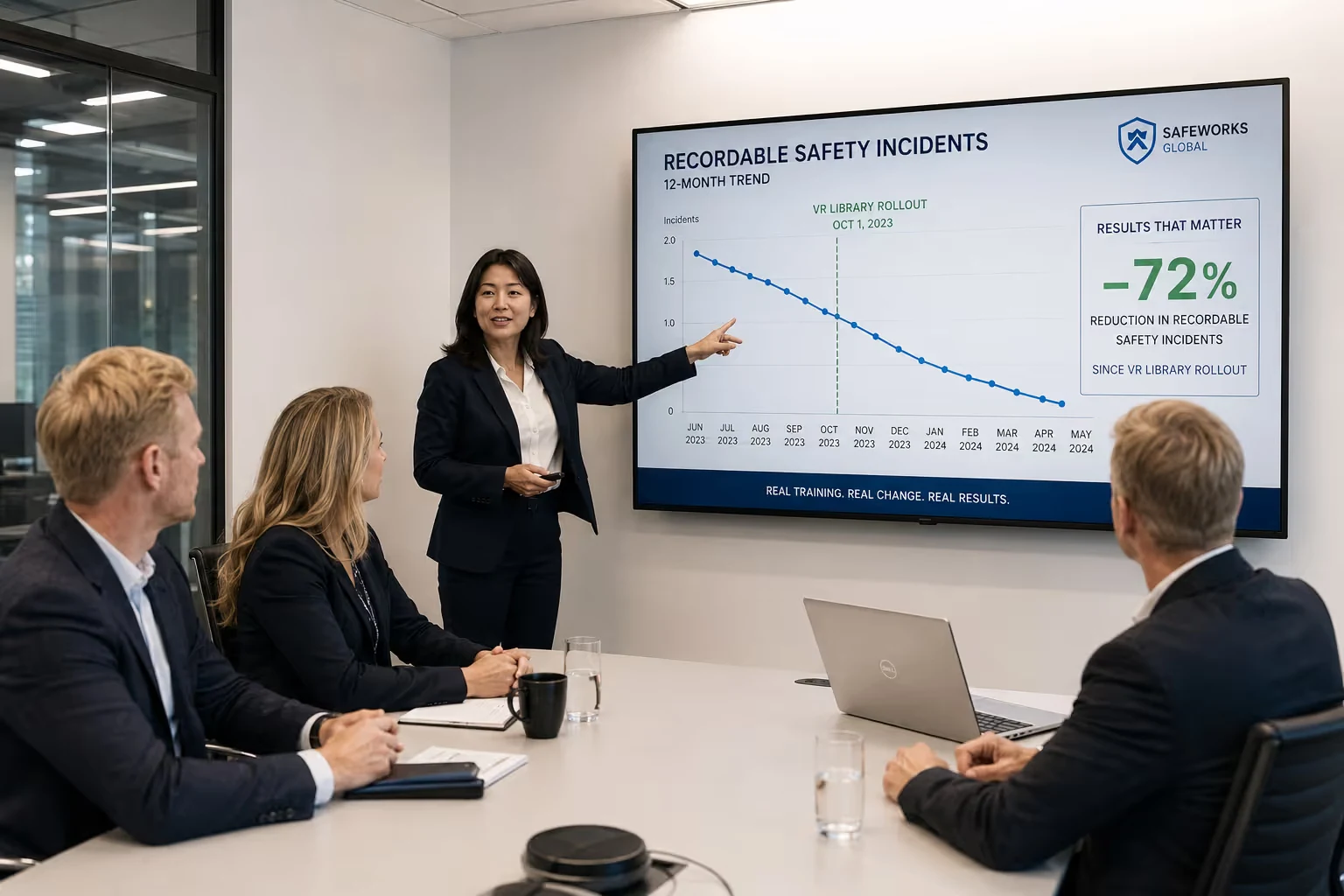
- Both groups expect fewer recordable safety incidents and savings on insurance, compensation claims and production stoppages.
Plant managers no longer had to shut down sections of the plant or take machines offline for safety demonstrations. Workers could be trained in small groups during shift changes. HSE teams gained a single, standard platform for their whole risk profile instead of buying from several vendors. HR and L&D teams gained objective, auditable data on competency from the assessment stage. For the Indian group, removing PC hardware turned a large capital request into a manageable operating cost, and the licence model made budgets for later years more predictable.
What it means for manufacturers
For common hazards such as arc flash, confined spaces and LOTO, a ready-made VR library can be in use much sooner than custom modules. Custom development is still the right choice for proprietary machinery and plant-specific procedures.
The other lessons are practical. Standalone headsets make it easy to train on site and in small groups. A structured path from guided learning to a timed test proves competence rather than familiarity. Training in each worker's own language matters in any plant with a mixed workforce. Short modules that fit into a shift change do not compete with production targets, so plant managers support them instead of resisting them.
Metaverse911 builds VR training for manufacturers, with prices from ₹1.25 lakh per module plus GST. See VR safety and machine training or talk to our team.
More on VR training & events
 Insight · VR training
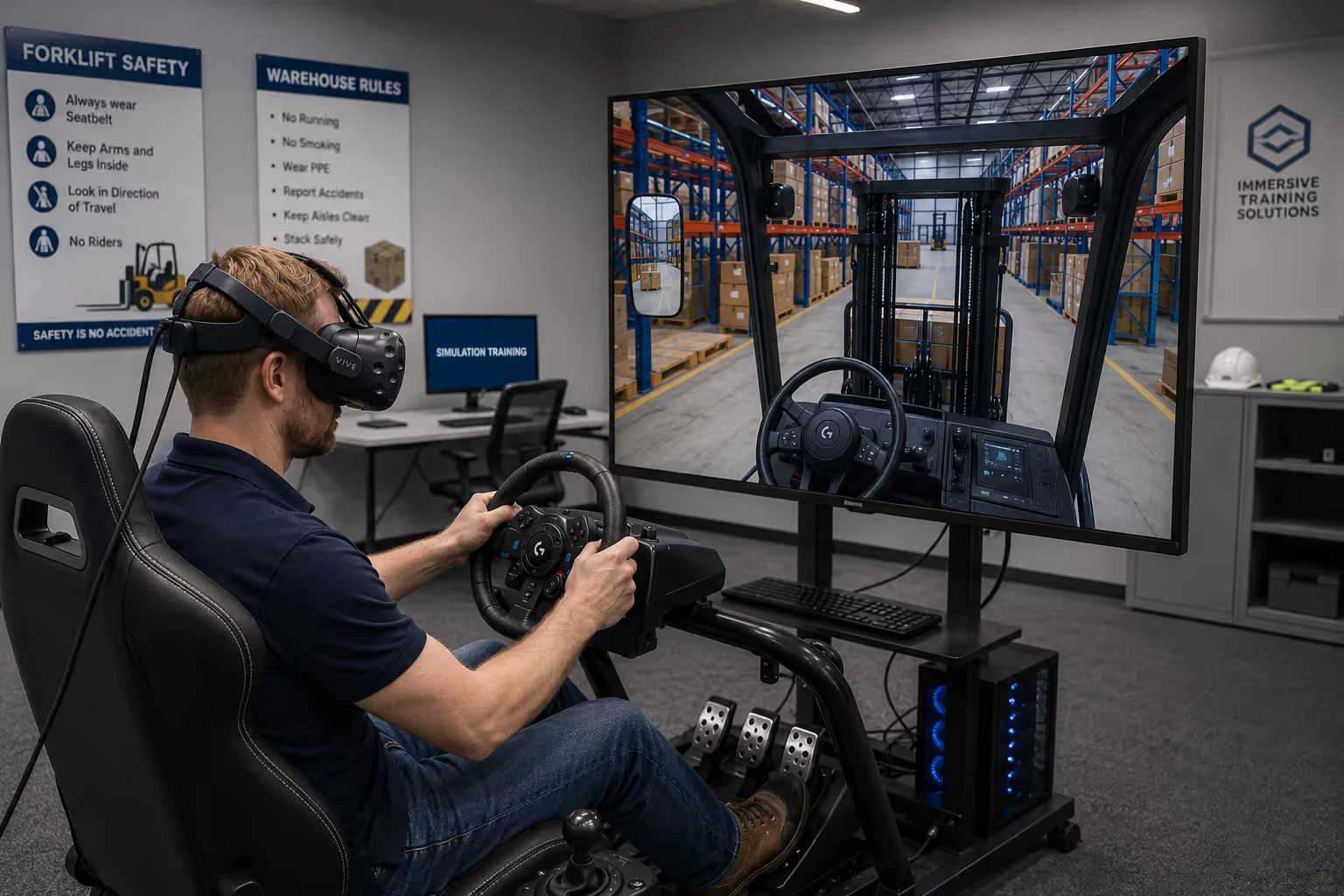
How a training institution uses high-fidelity VR for forklift operator training
How a forklift training institution built a realistic VR simulator with a steering wheel, pedals and an instructor panel.
Read the article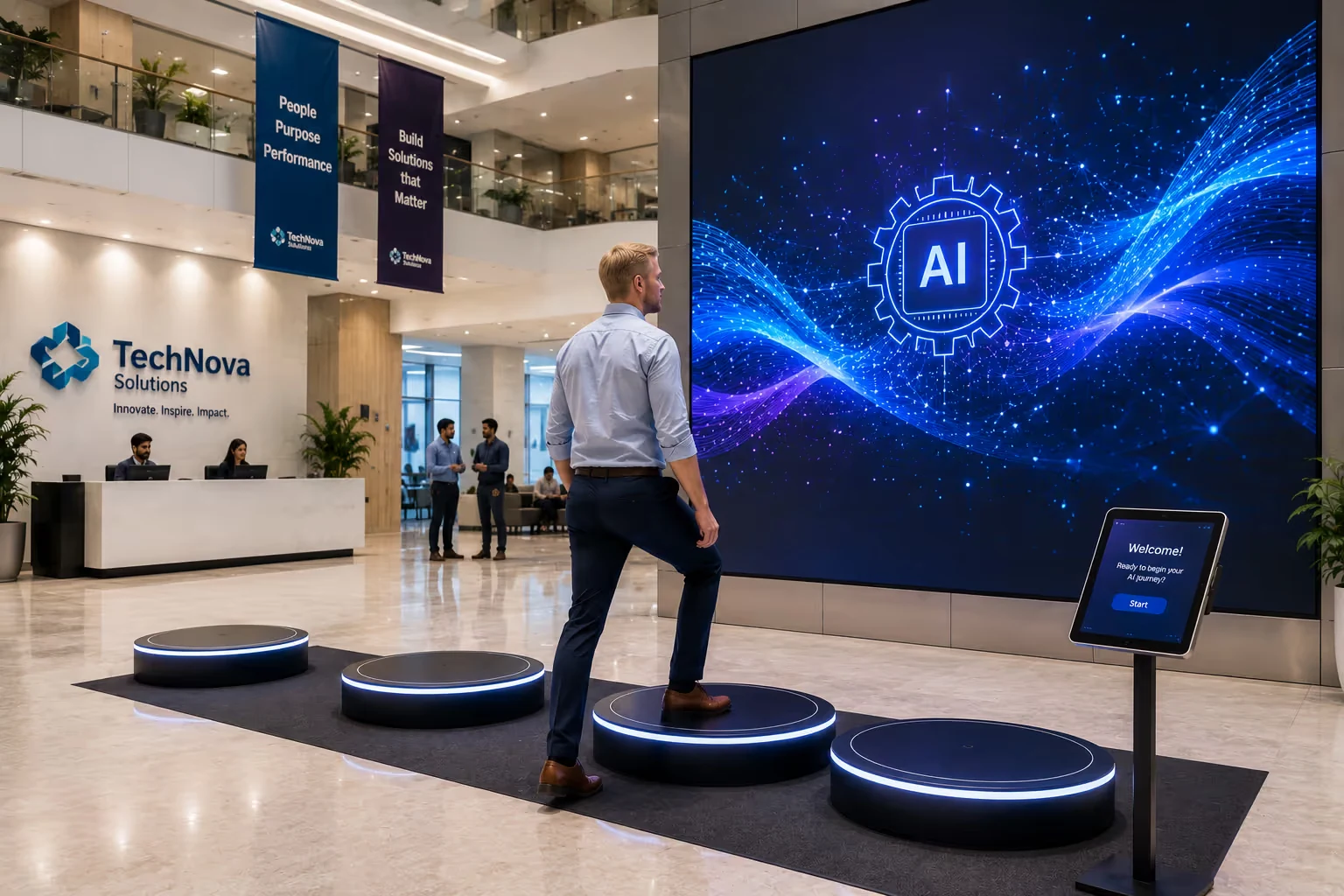 Insight · VR training
How a consulting firm used floor podiums to assess AI skills across its offices
How a consulting firm used game-show style floor podiums to assess employees' AI skills and match them to training.
Read the article
Frequently asked questions
Why choose an off-the-shelf VR library instead of custom modules?
Custom development works well for proprietary machinery, but it is expensive and slow. For universal hazards like arc flash, confined space or LOTO, a ready-made library gives tested simulations at a lower cost and in less time.
Are standalone headsets powerful enough for safety simulations?
Yes. Modern standalone headsets such as the Meta Quest 3 can render detailed industrial environments and physics interactions. They are portable and easy to use, with no need for expensive PCs.