
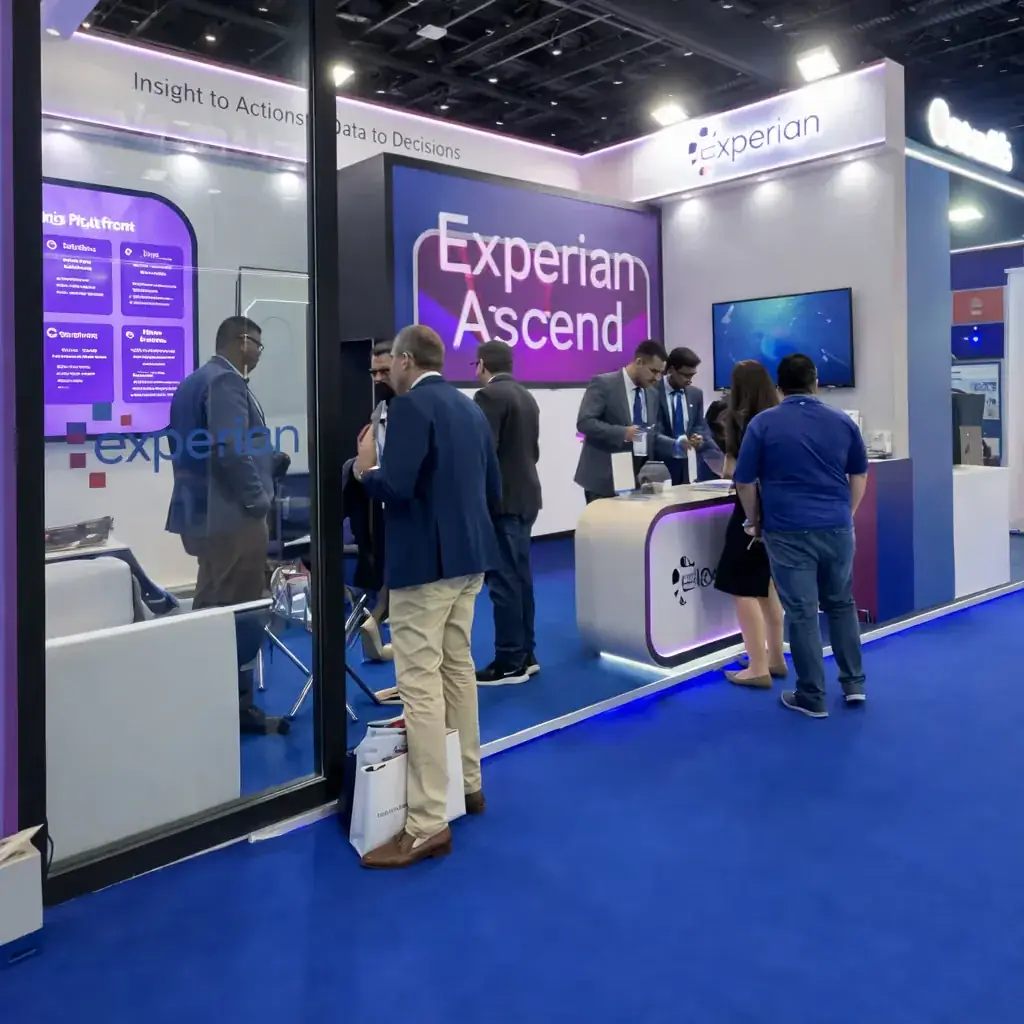
At Global Fintech Fest 2025 in Mumbai, 1,00,000+ attendees walked past 400+ exhibitors. Banners, brochures and a looping screen do not stop people in a hall like that. Experian's booth did: a 10×10 ft anamorphic LED wall drew 4,000+ visitors in two days and became one of the most-photographed activations at the show.
This guide collects the stall ideas our clients have used to get people to stop, with what happened on the day. Each one links to the full case study.
Start with the job the stall has to do
Our exhibition work follows one framework, used across 35+ enterprise events:
- Attract: a display on the fascia pulls visitors from across the hall before they read the signage.
- Engage: when visitors react to the display, they become participants, and dwell time goes up.
- Enquire: the display gives the team a natural conversation starter, so visitors arrive curious and ready to talk.
The ideas below map to those three jobs. Most good stalls use one idea for each.
1. An anamorphic LED wall
Anamorphic content is 3D animation made for an LED wall so that, from the right viewing angle, your product seems to break out of the screen. Nobody needs glasses. It is the fastest way to get people to stop at your booth and film it on their phones.
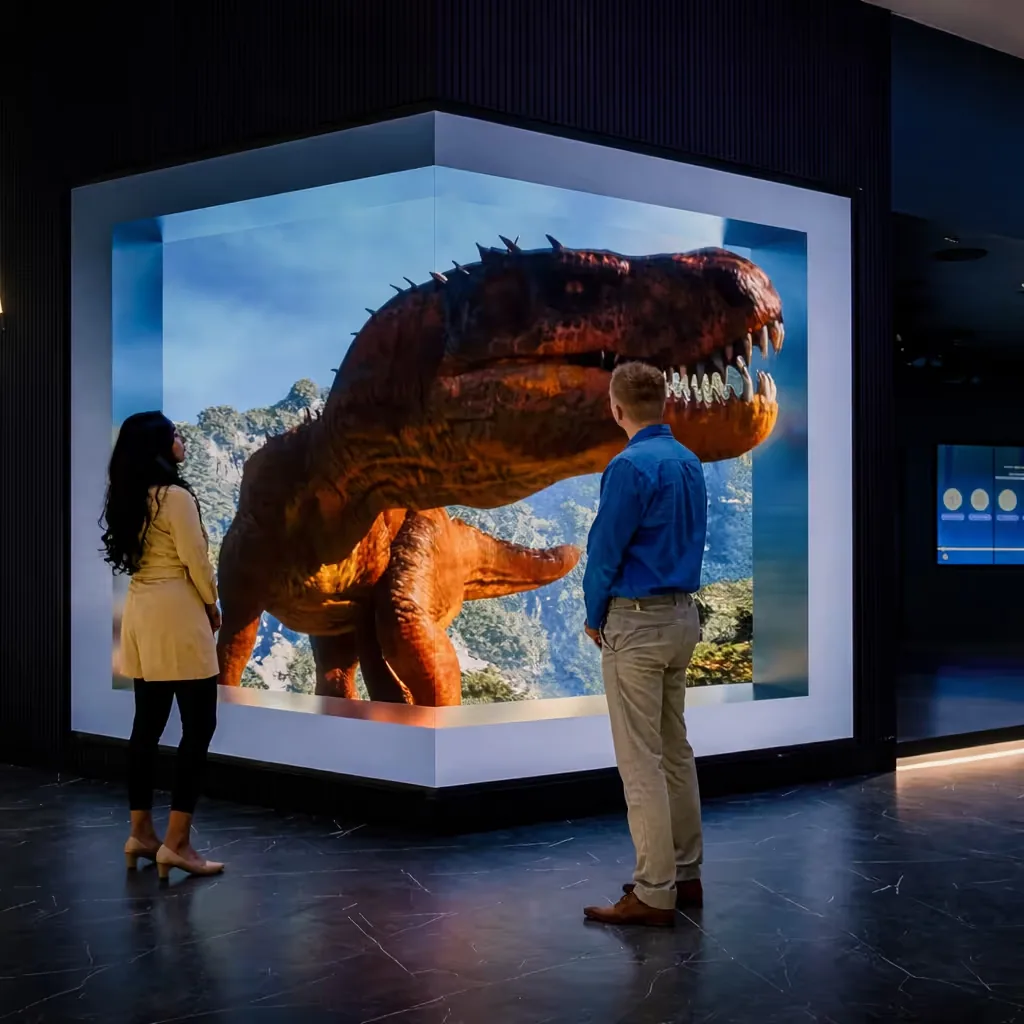
Experian's product is software, so there was nothing physical to put on the stand. The wall turned its data capabilities into 4D visuals and delivered 10× the dwell time of a standard booth. Across our booths, the average dwell time is 8× that of a standard booth.
The shape of the wall depends on your footprint and on how visitors walk past:
- L-shape corner: the most used shape for high-impact stands, as for C-DOT at India Mobile Congress 2025 and PI Industries at Chemspec Europe 2025.
- Flat fascia: for linear booths seen only from the front, as for Avantec Aircon at ACREX 2026.
- Inward L-shape, U-shape, curved arc, double-sided island or hybrid: for storytelling, luxury looks, island booths and irregular spaces. Gulf Oil used an inward L-shape at EXCON 2025.
A practical tip: when the closest visitors stop less than 5 metres from the wall, use P2.5 or P3 pixel pitch panels. A P4 panel costs less but visibly pixelates the illusion at close range. Films usually run 30 to 90 seconds and loop all day. More on anamorphic content.
2. A life-size hologram presenter
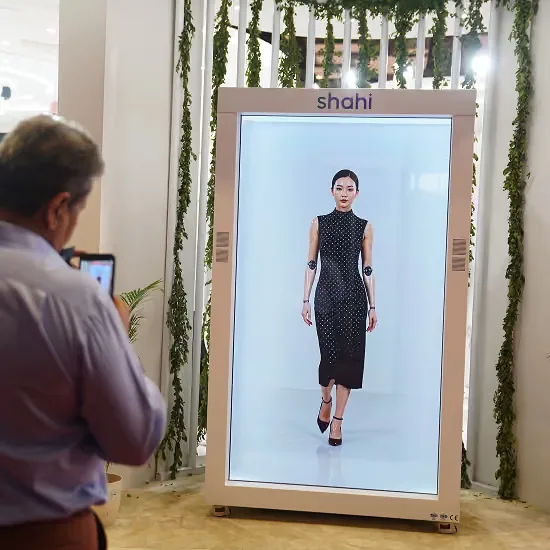
A person at human scale holds attention better than a flat screen. A HoloBox 911 is an 86-inch transparent 4K display in a 7-foot unit, and it can show a recorded welcome, a live speaker from another city or an AI avatar.
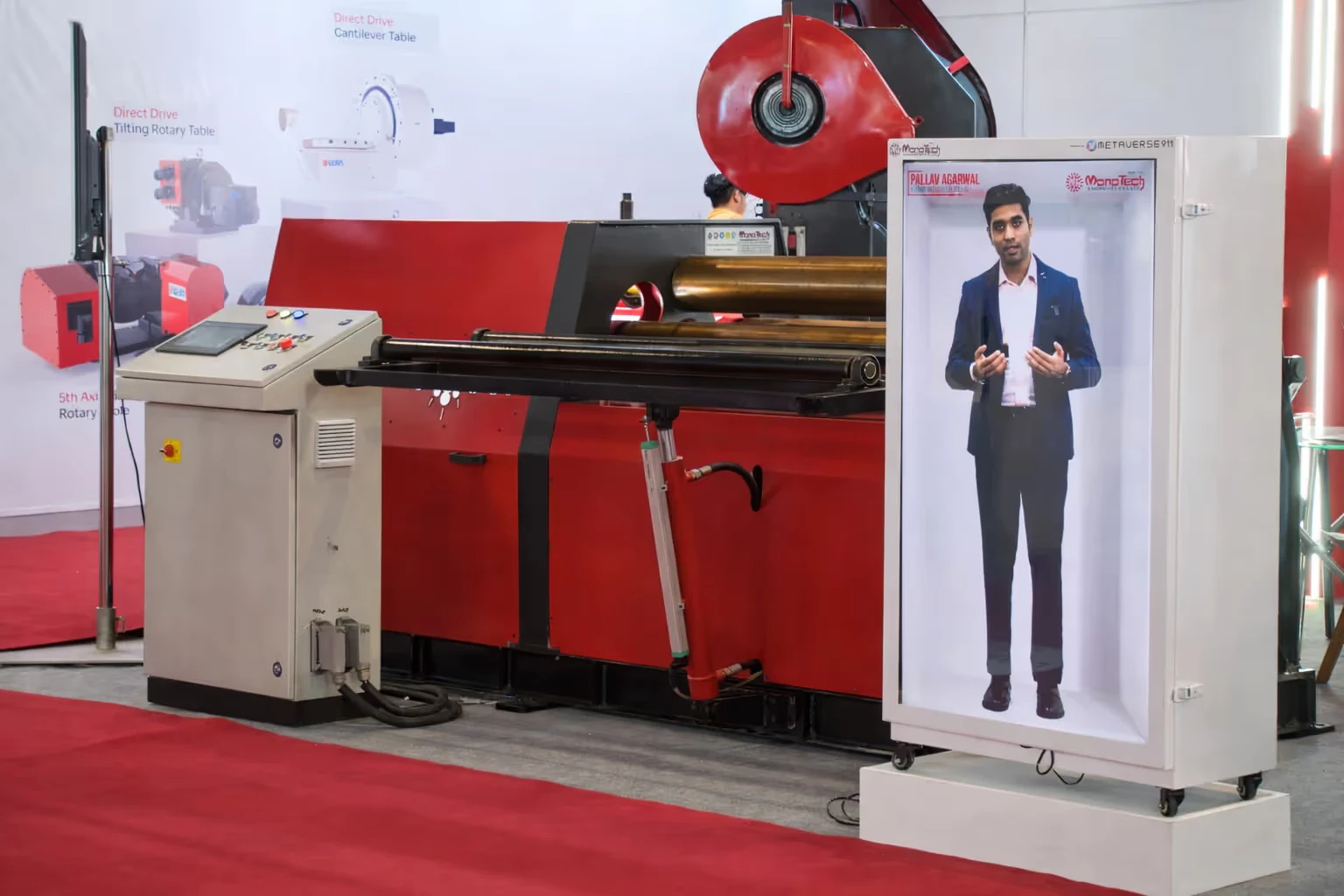
- At IMTOS 2025, Monotech Engineers greeted visitors with a hologram welcome from its CEO through all four days, to stand out among 500+ exhibitors.
- At Bharat Tex 2026, one HoloBox on the Shahi Exports stand ran a life-size holographic runway for four days, glasses-free in a lit hall, and drew 1,000+ selfies.
- At Global Fintech Fest, ACT21 Software used a life-size AI avatar to introduce its BFSI products, which gave its team an easy way into conversations.
If you only need one for the show, HoloBox rental covers the unit, the content and the on-site check. For a presenter that answers questions, see AI avatar holograms.
3. A floating product for a compact booth
When floor space is tight, a 3D product can float in the glass instead of standing on a plinth. Fluidra showed an Olympic aquatic centre, plant room and diving pool as an interactive 3D hologram at SFI Expo 2026, with no headset or app. For the smallest booths, HoloCube and HoloFan holographic displays show a product as a floating 3D hologram, from a single fan to a full holographic wall.
4. Your product at actual size, in AR
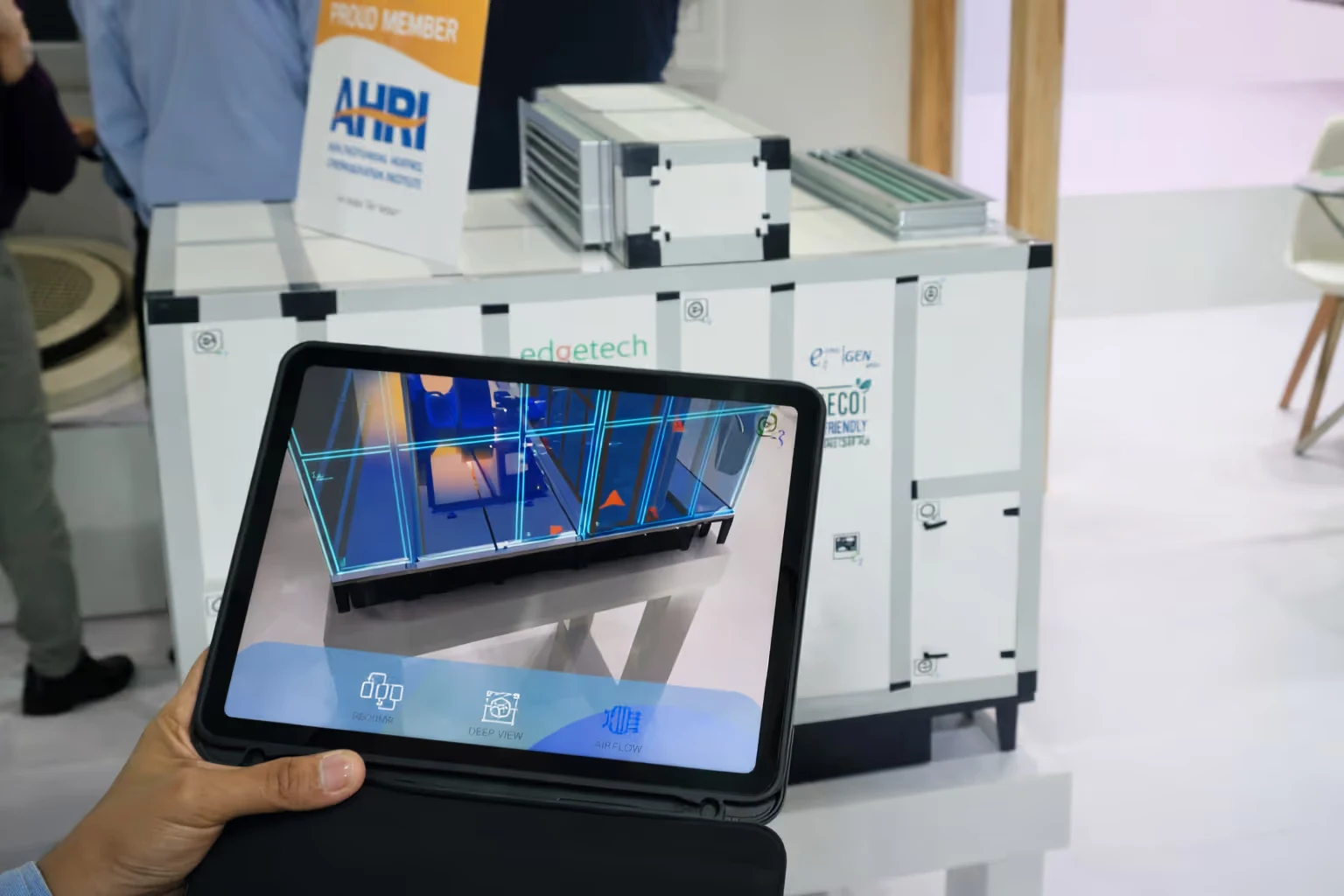
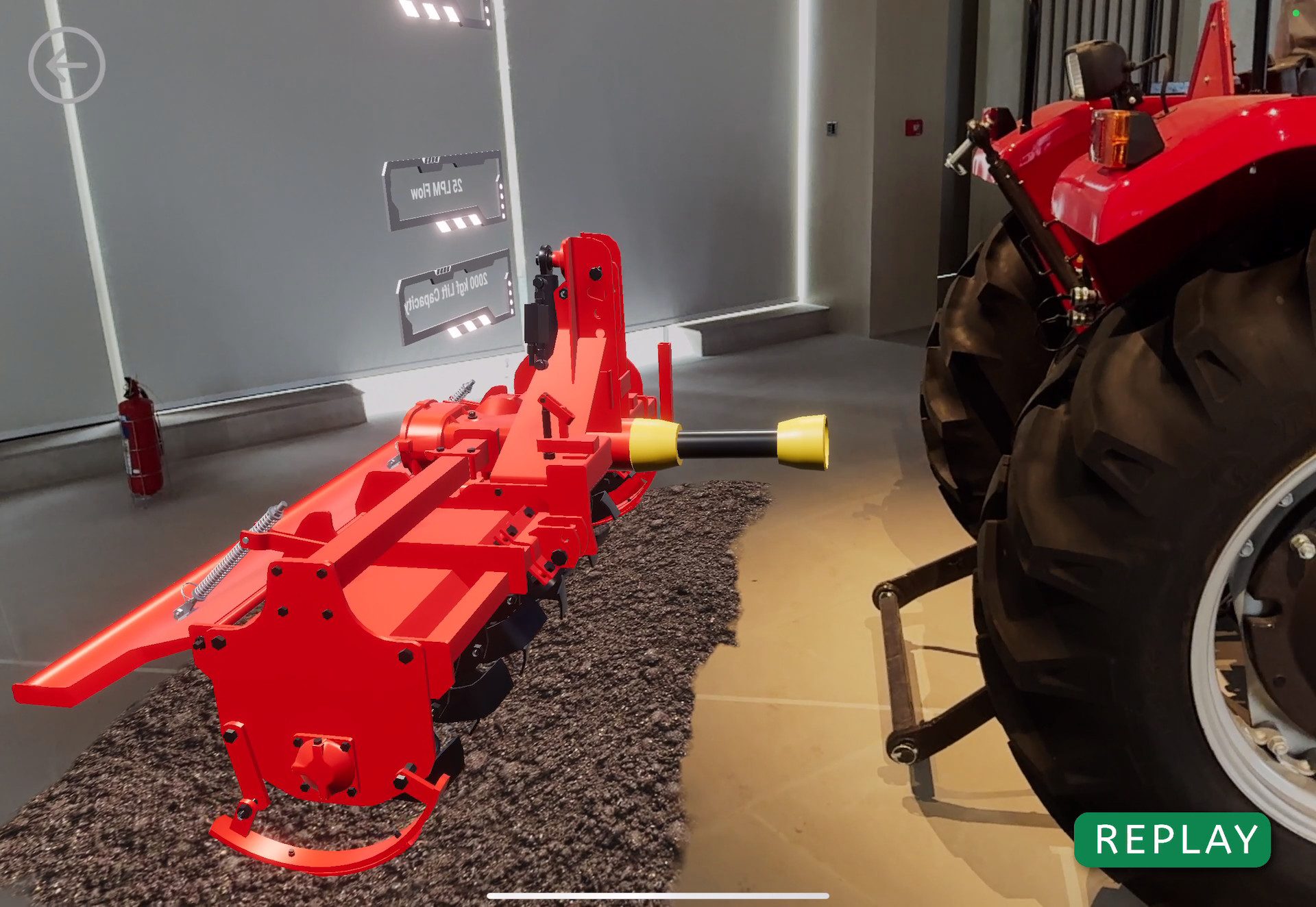
Big products are expensive to ship and hard to fit on a stand. With AR product visualisation, a visitor scans a QR code with a phone or tablet and your machine appears at actual size, with hotspots, animations and spec sheets. At ACREX India 2026, Edgetech paired a 3D printed model of its air handling unit with an AR layer, a touch-screen product kiosk and a looping 3D film.
5. A VR walk-around of a machine you cannot bring
Some machines will never fit through the hall door. VR and mixed reality machine demos let buyers walk around, open up and watch your machine run at full size. Our 4K 360° VR experience puts buyers inside Gandhi Automation's real hangar door installations, and it is reused at 30+ aviation exhibitions a year.
6. A configurator that captures the lead
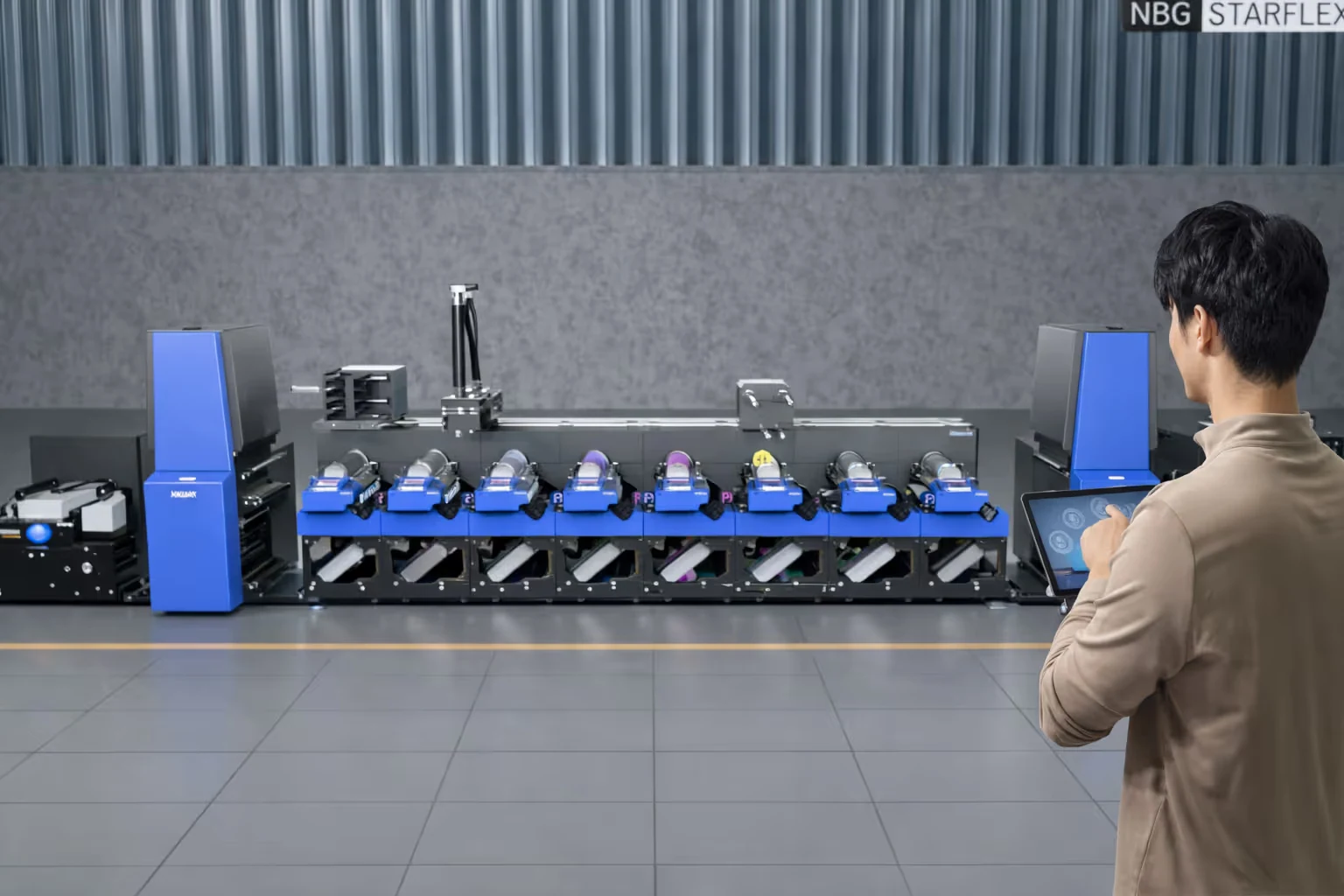
A touch screen gives visitors something to do while the team is busy, and it records what they were interested in. NBG used our touch-screen 3D configurator for its Starflex Printography machine at Plast India 2026 and CPHI & PMEC India 2025 to explain the machine to buyers.
7. A game that makes the product the hero
Games pull a crowd and keep it. For ASKA at the India HSE Summit, we built an IoT fire safety game played with real extinguishers, alongside a 3D product app on tablets and an AR light tower. Our Fire Guardian Challenge works on the same idea: visitors use a real extinguisher with IoT motion sensors to fight a fire on a 100-inch LED screen, with scores and a leaderboard. More on IoT simulations.
How to choose for your stand
- Footprint and approach: your booth size and the way visitors walk past decide the LED shape. We advise on it at the first meeting.
- What you sell: software and services suit anamorphic stories and AI presenters. Machines suit AR, VR and configurators.
- What you want visitors to do: stop, talk to someone, or leave their details. Pick one idea for each.
- Timing: for an anamorphic wall we survey the booth about three weeks before the show, and render the film for the confirmed viewing angle two weeks before.
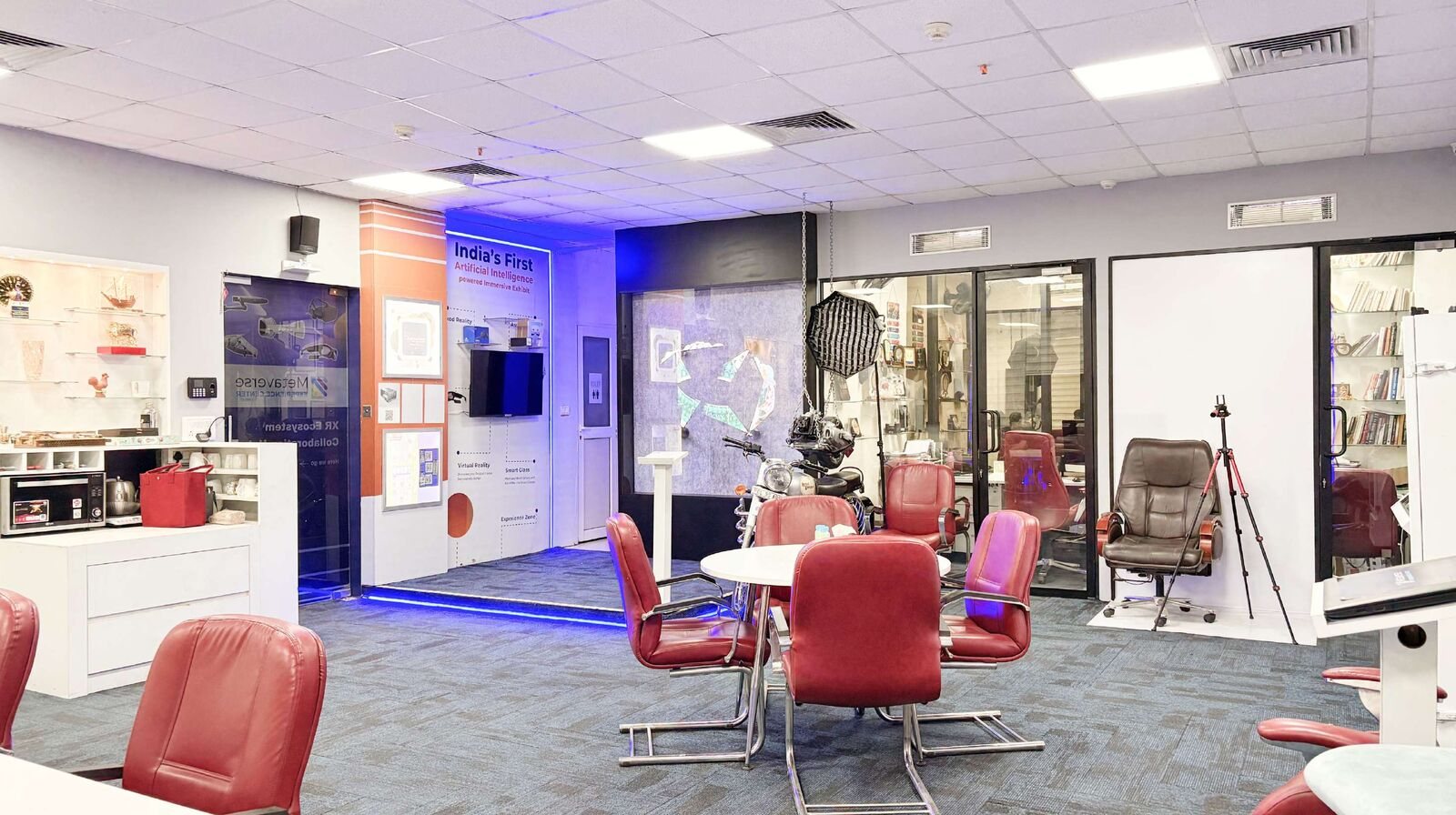
Every booth we plan includes a pre-event strategy brief, a custom content brief and a post-event performance report. You can see HoloBox, anamorphic LED and AR demos running at our Experience Centre in Noida before you decide. All of our exhibition work is under exhibition solutions.
Frequently asked questions
What are good exhibition stall ideas for manufacturers?
Show the machine without shipping it. Our clients use anamorphic LED films, AR at actual size, VR walk-arounds, touch-screen configurators and HoloBox holograms on their booths.
What is the most eye-catching idea for a small stall?
A display that works from across the aisle. An anamorphic LED wall makes a compact stand feel like the largest on the floor, and a HoloBox or holographic fan puts a life-size person or a floating product in a small footprint.
Do visitors need glasses or headsets to see anamorphic or hologram displays?
No. Anamorphic LED content and HoloBox holograms are both seen with the naked eye. Only VR walk-arounds need a headset, and AR runs on a phone or tablet.
How early should we plan booth technology for a show?
Start with the format at the first meeting, because your booth footprint and visitor approach decide it. For an anamorphic wall, we survey the booth about three weeks before the show and render the film for the confirmed viewing angle two weeks before.