
Another company's example, not a Metaverse911 project. We did not work on it. We have left out figures we cannot trace to a named, published source. See our case studies for our own work.
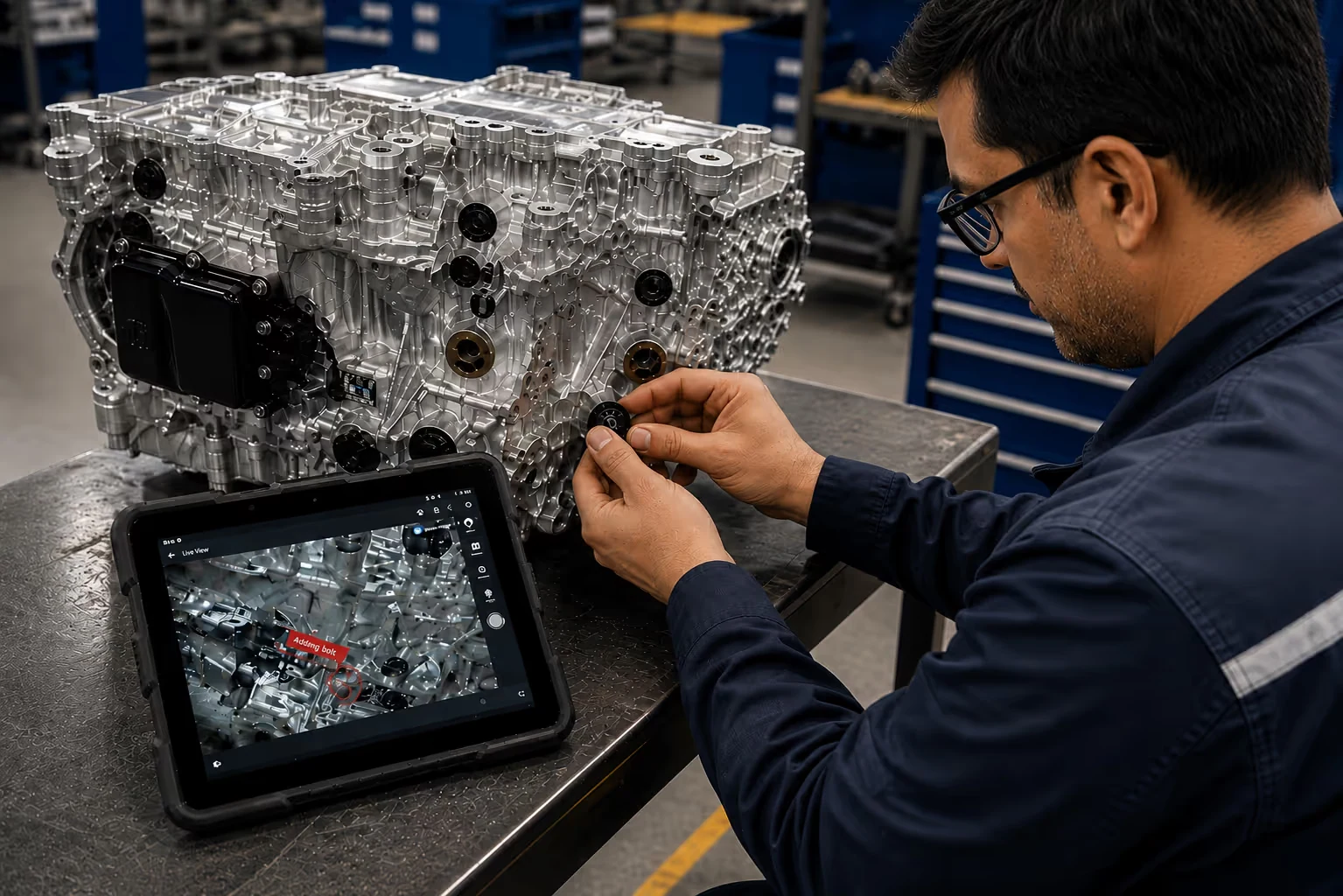
The situation: thousands of engine variants and a paper checklist
The manufacturer's Gothenburg facility handles thousands of engine variants. For the quality assurance (QA) teams, that variety made consistent inspection very hard.
New operators went through a long training programme to learn the quality checks, and even that covered only the most common variants. The thousands of less common configurations depended on the knowledge of a few experienced inspectors. Inspectors worried about missing a check, and new hires felt their inexperience put the line at risk.
Demand for more customisation, shorter product cycles and a tight labour market made things worse. Every time the line switched to a new engine model, updating, printing and distributing the paper checklists took a long time. During that time, the plant risked quality escapes.
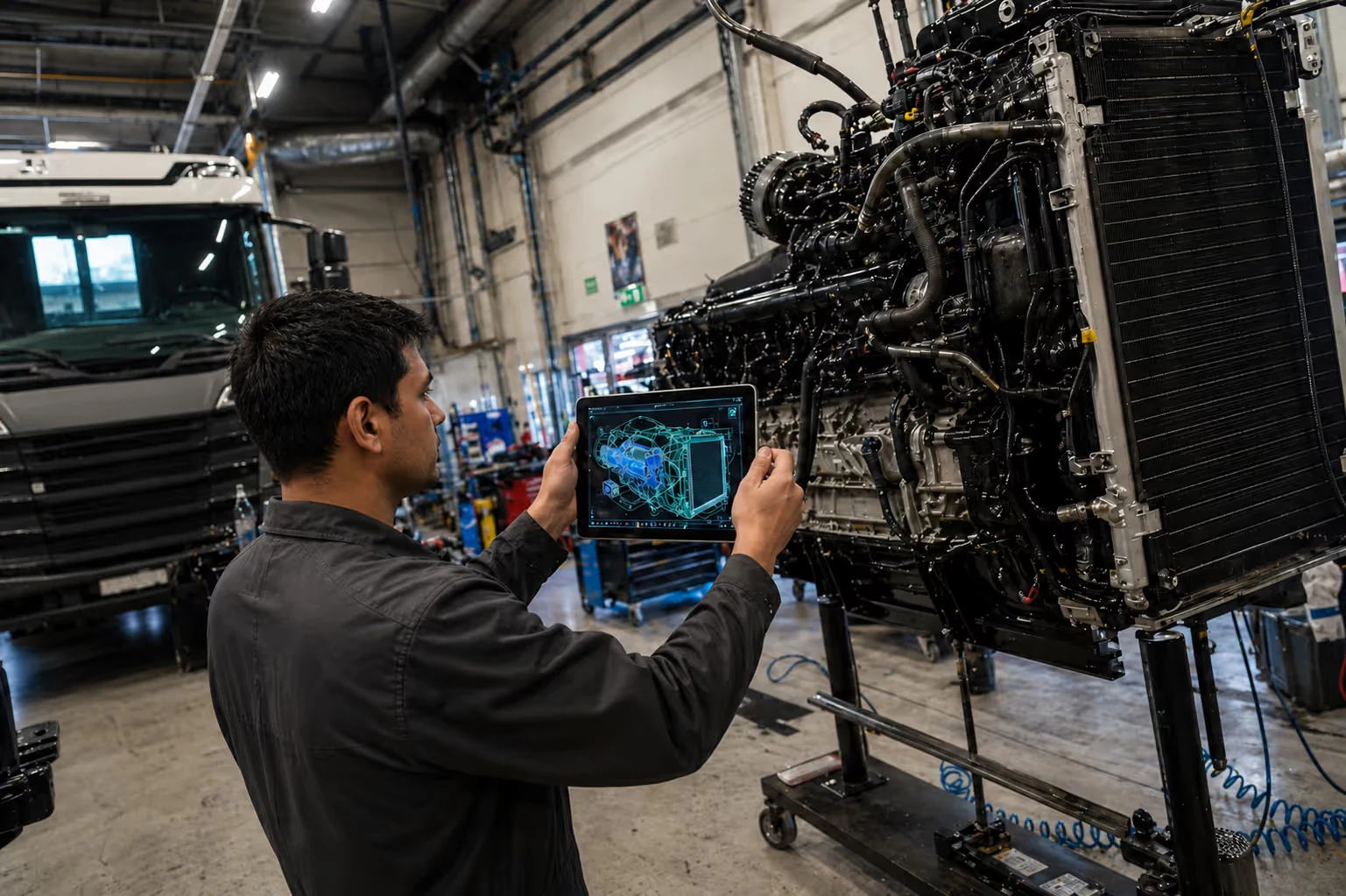
What they did: AR guidance on rugged tablets
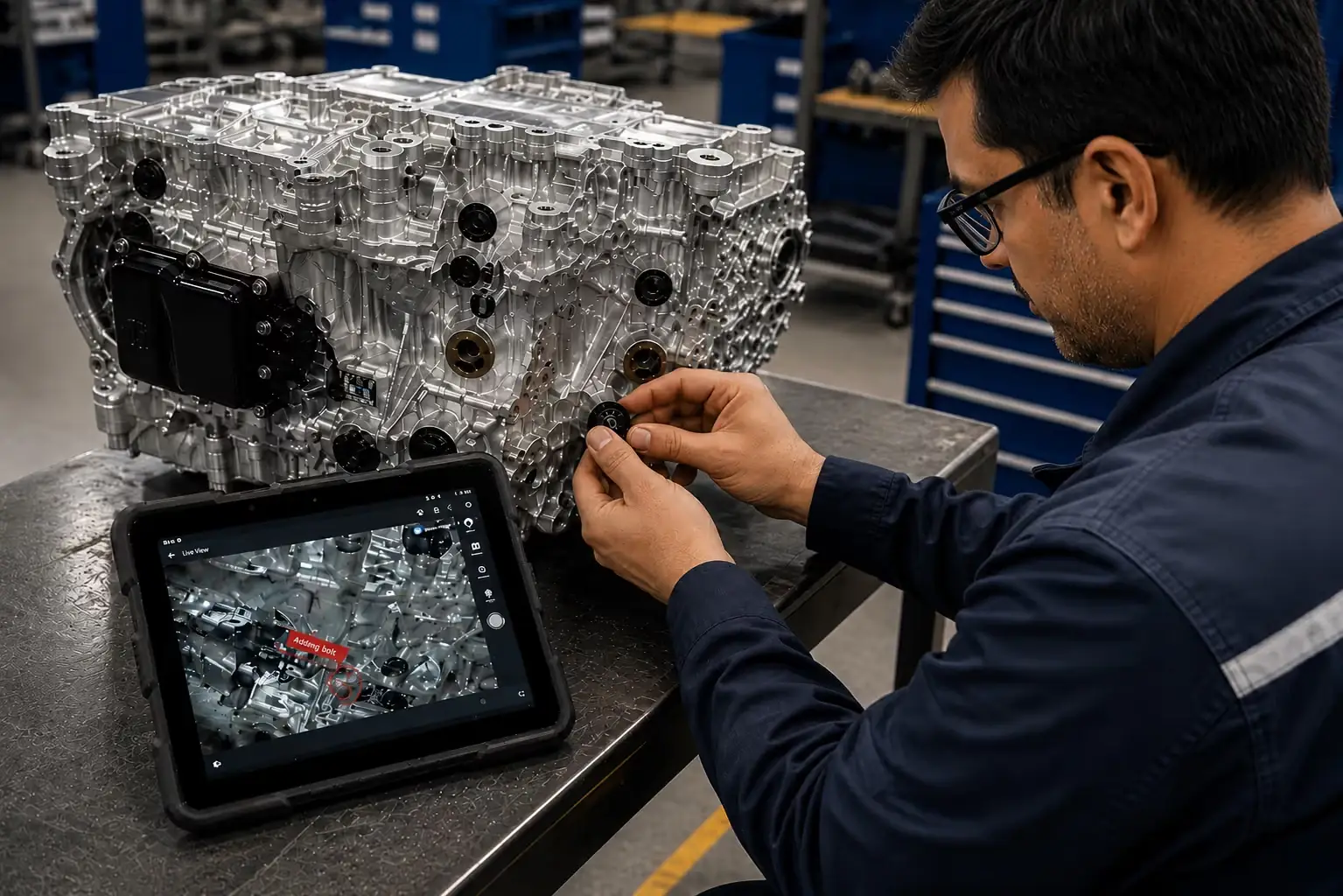
The manufacturer chose a tablet-based AR solution rather than headsets or glasses. Operators use ruggedised industrial Android tablets and iPads, with computer vision tracking that recognises each engine.
The rollout included hands-on workshops where operators saw the benefits for themselves and understood that the tablet supports their expertise rather than replacing it. Because the app is simple, little training was needed on the tool itself, so training could focus on quality standards.
How it works
- The operator points the tablet at a newly assembled engine, and the system identifies the exact variant.
- The 3D CAD data and a step-by-step list of quality checkpoints appear over the live view of the engine.
- The app guides the operator through the checks for that configuration.
- The operator confirms each check on the tablet. Results go automatically to the plant's Manufacturing Execution System (MES), creating an auditable record of every inspection.
- If there is a problem, the operator takes a photo, annotates it and sends it straight to engineering or maintenance.
Manufacturing engineers update checklists digitally and push them to the whole plant quickly, so the line always matches the latest engineering changes. The IT team built the integration between the AR platform and the MES.
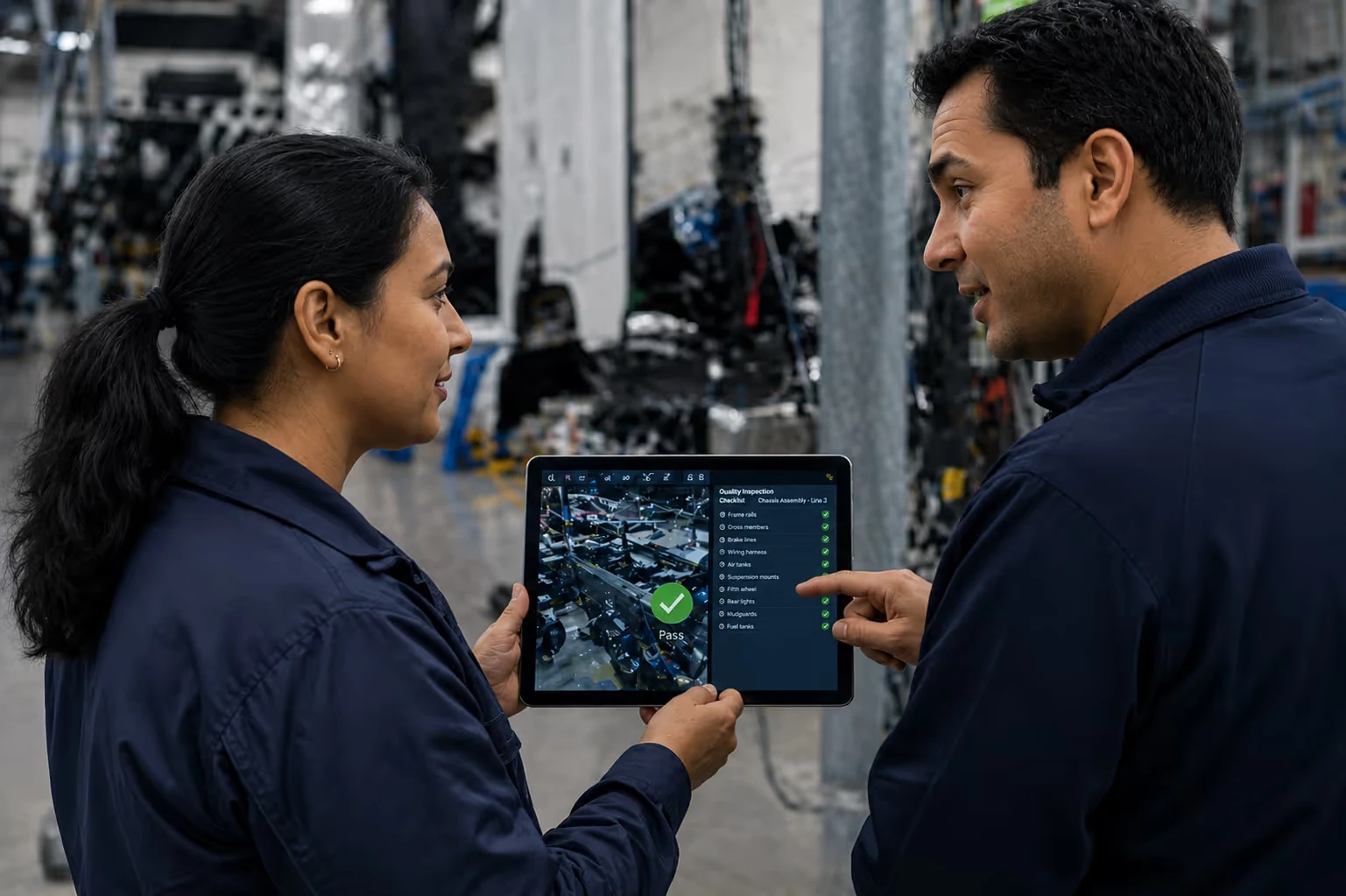
Results
The company has not published figures that we can cite, so this section describes the changes without numbers.
- Faster training: new QA operators become productive sooner, because the tablet tells them which checks apply to each engine.
- Faster checklist updates: engineers push a change to the whole plant digitally instead of printing and distributing paper.
- A record of every inspection: results go to the MES, so each check can be audited.
- Better feedback to design: inspection data helps engineers reduce design-related quality issues in the next engine generation.
New employees feel confident sooner. Production supervisors get real-time visibility of quality checks, which reduces bottlenecks and downtime.
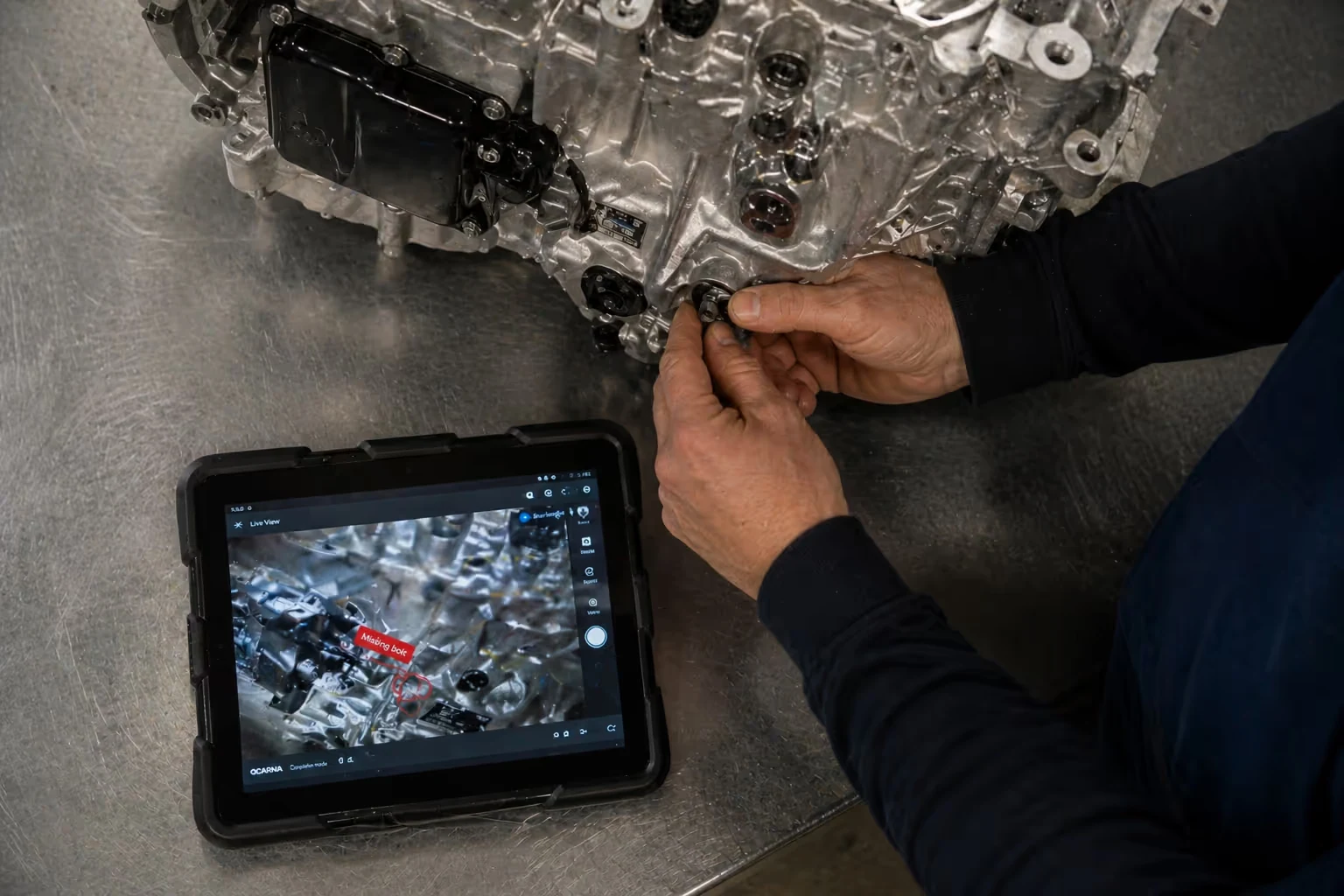
What it means for manufacturers
High-mix production is where paper checklists and memory fail first. When each product can be configured differently, the inspector needs the right checks for the exact unit in front of them. Tablet AR that recognises the variant and shows its checklist on the product solves that.
The faster training is just as important. A new inspector who can work accurately sooner makes the whole plant more flexible when demand or staffing changes.
To see where AR could help in your own plant, read our page on augmented reality or talk to our team.
More on augmented reality on the shop floor
 Insight · Tablet AR
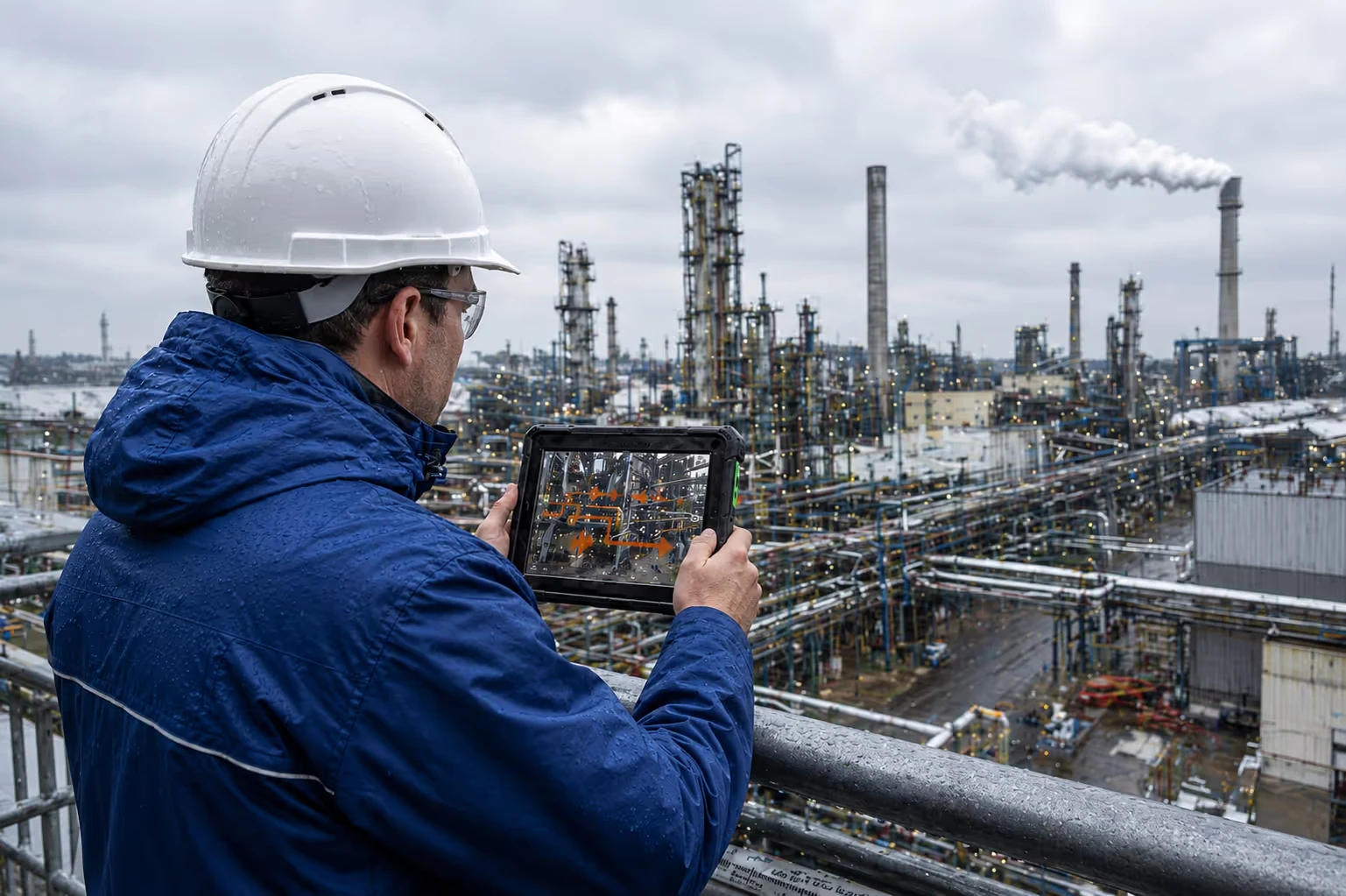
How a chemical producer uses AR tablets in explosion-proof zones
How a chemical producer put intrinsically safe AR tablets in ATEX hazardous zones and linked them to plant data.
Read the article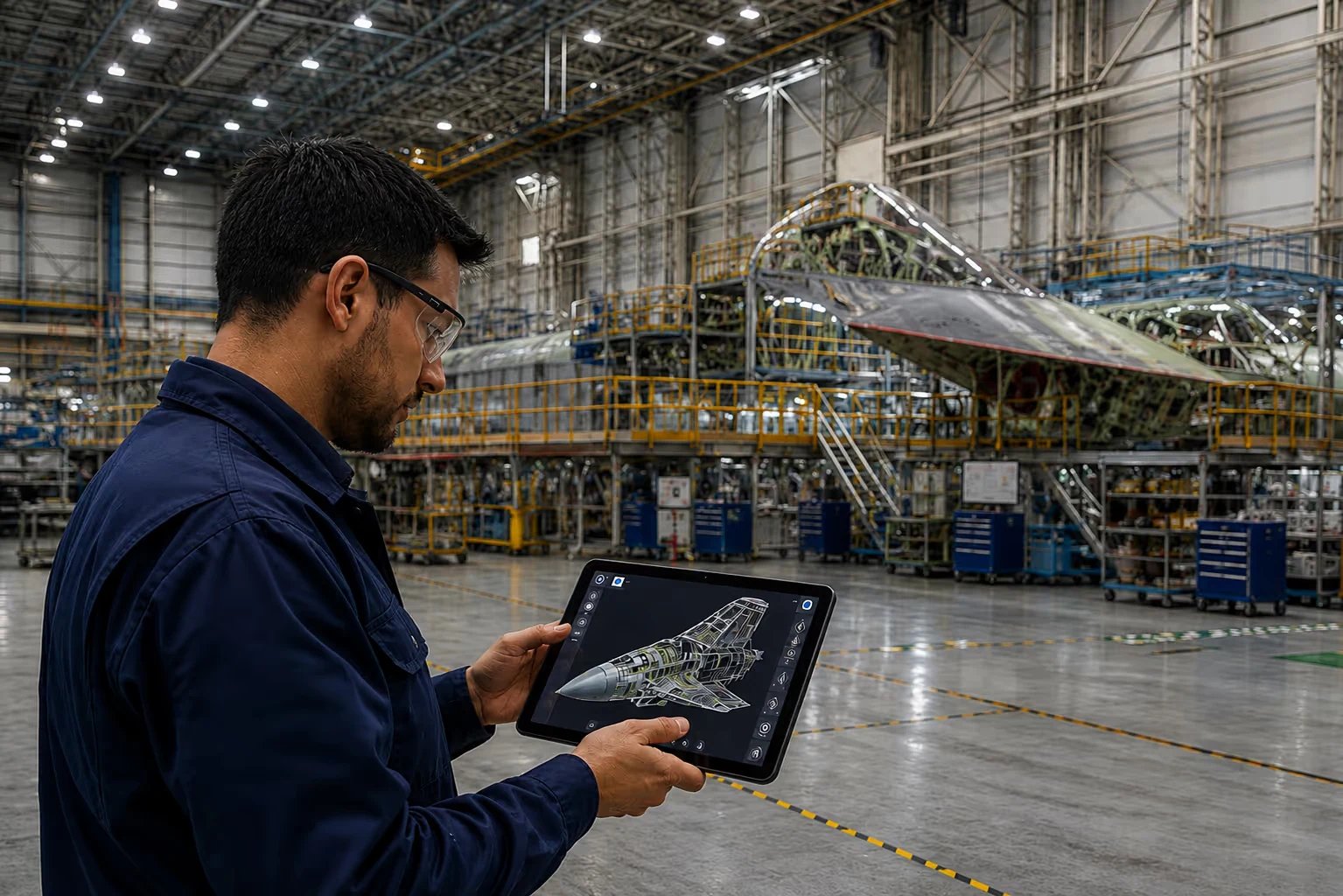 Insight · Tablet AR
How an aerospace manufacturer uses tablet AR to assemble the Eurofighter Typhoon
How an aerospace manufacturer replaced paper drawings with 3D work instructions on rugged tablets for Eurofighter Typhoon assembly.
Read the article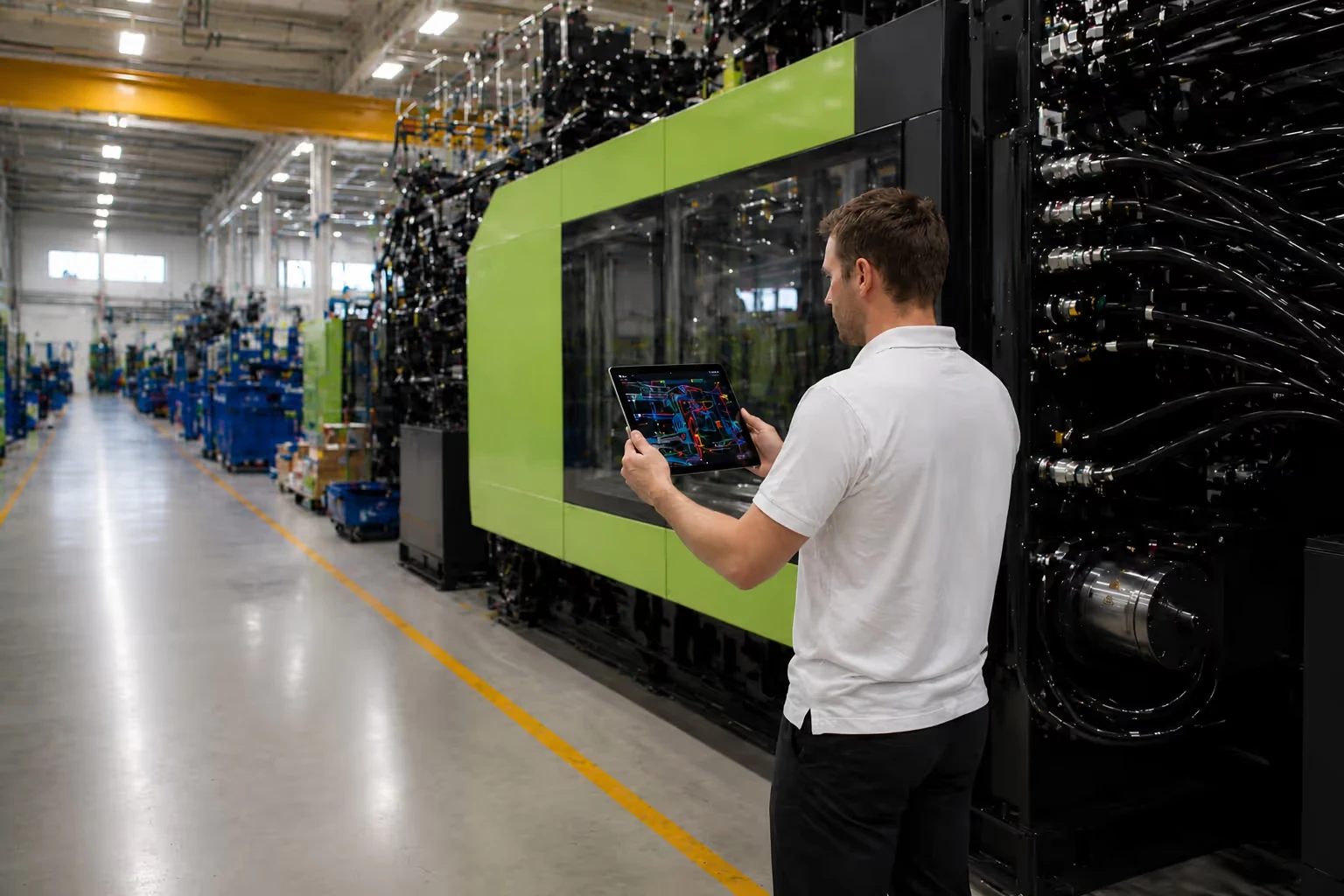 Insight · Tablet AR
How an injection moulding machinery maker uses tablet AR for final quality checks
How an injection moulding machinery maker checks each machine against its own 3D model on a tablet before it ships.
Read the article