
Welding machines we have built in VR
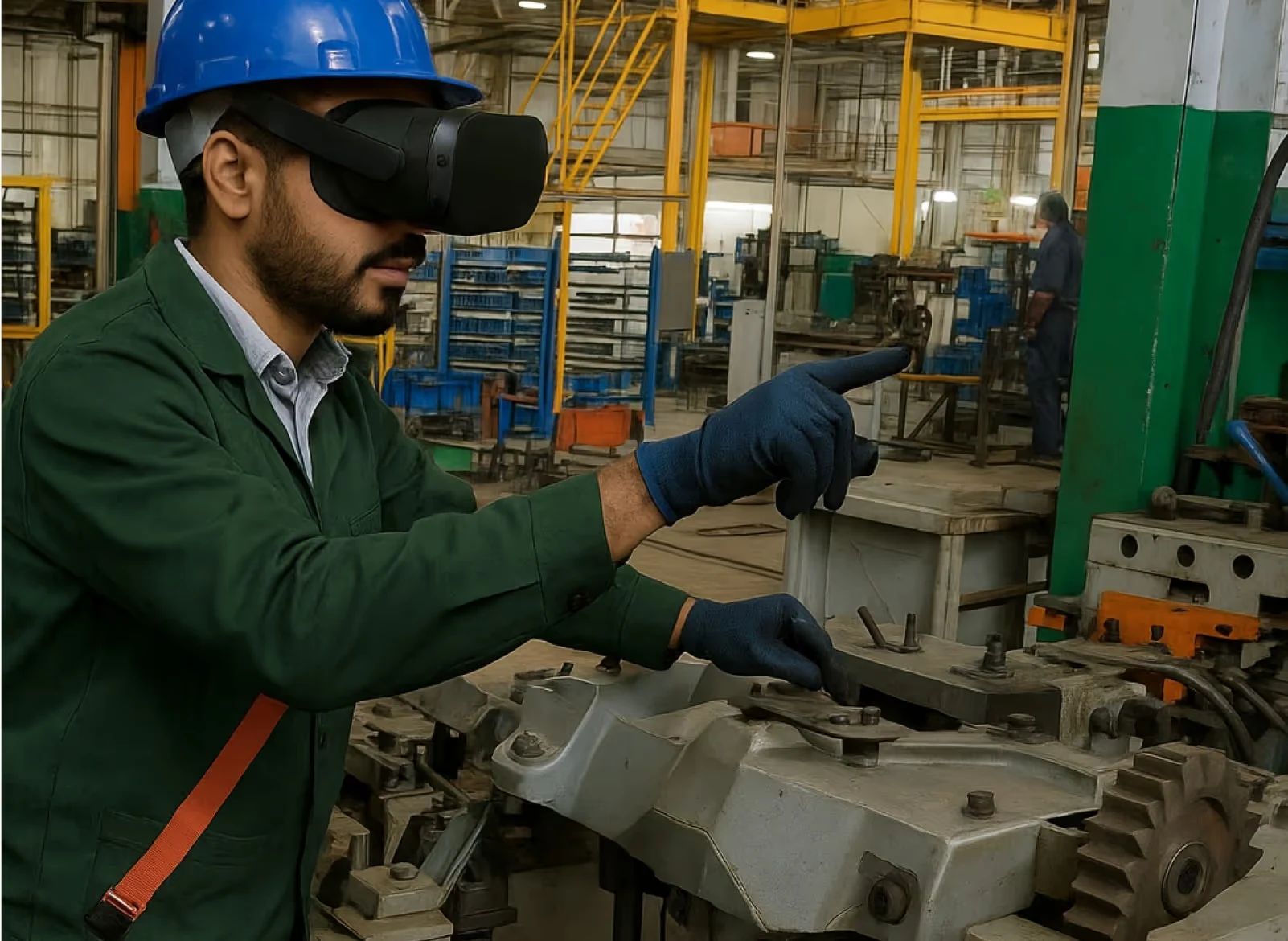
Every 3D model is built from scratch using your CAD files, photographs and workshop layouts, so each machine looks as it does on your floor, including the ladders, harnesses and safety fixtures around it.
MIG welding
Manual welding practice, repeated as often as the trainee needs, with interactive controls and narration.
Manual spot welding
Machine set-up, operation and the safety steps around a manual spot welding machine.
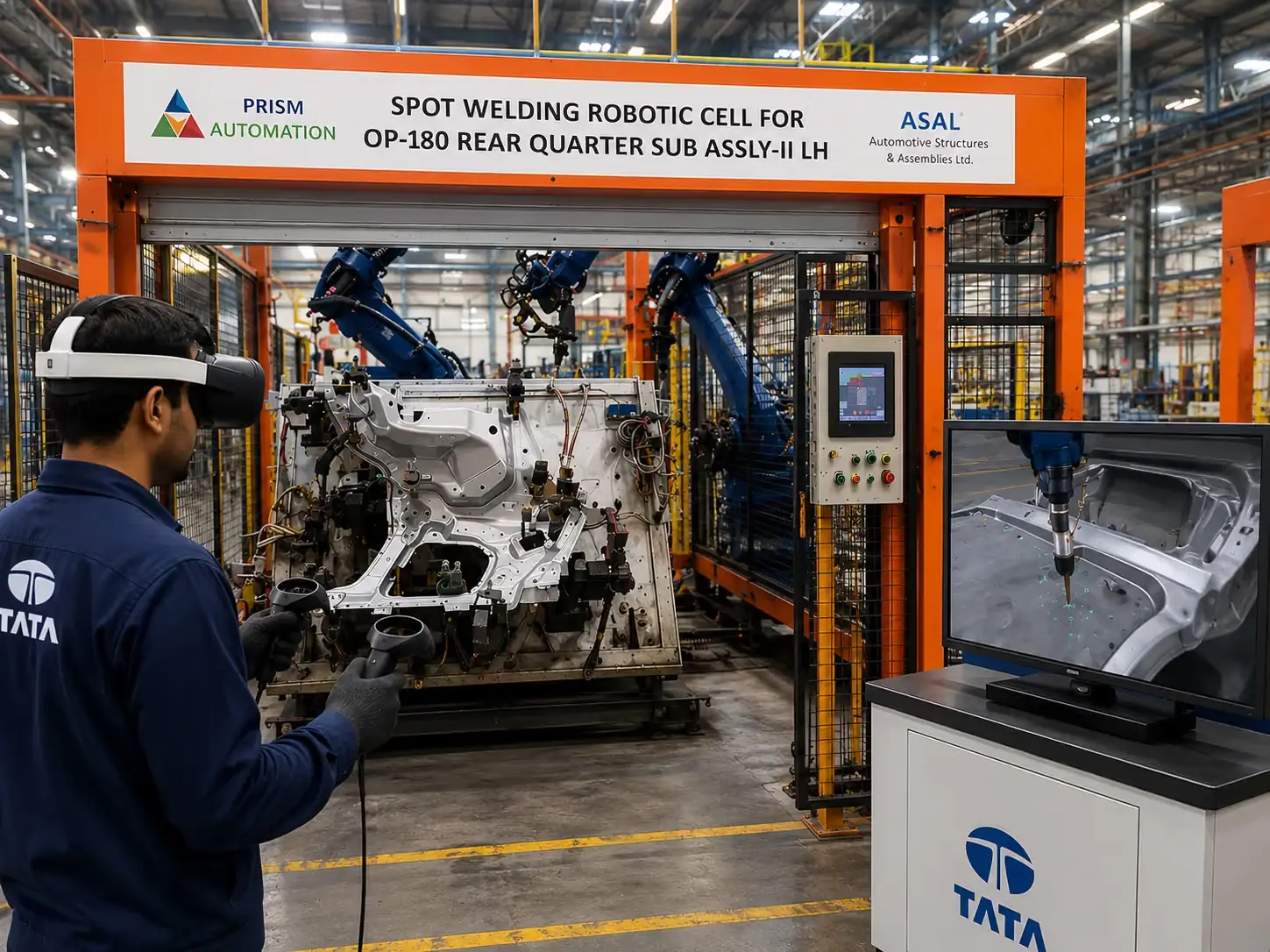
Robotic welding cell
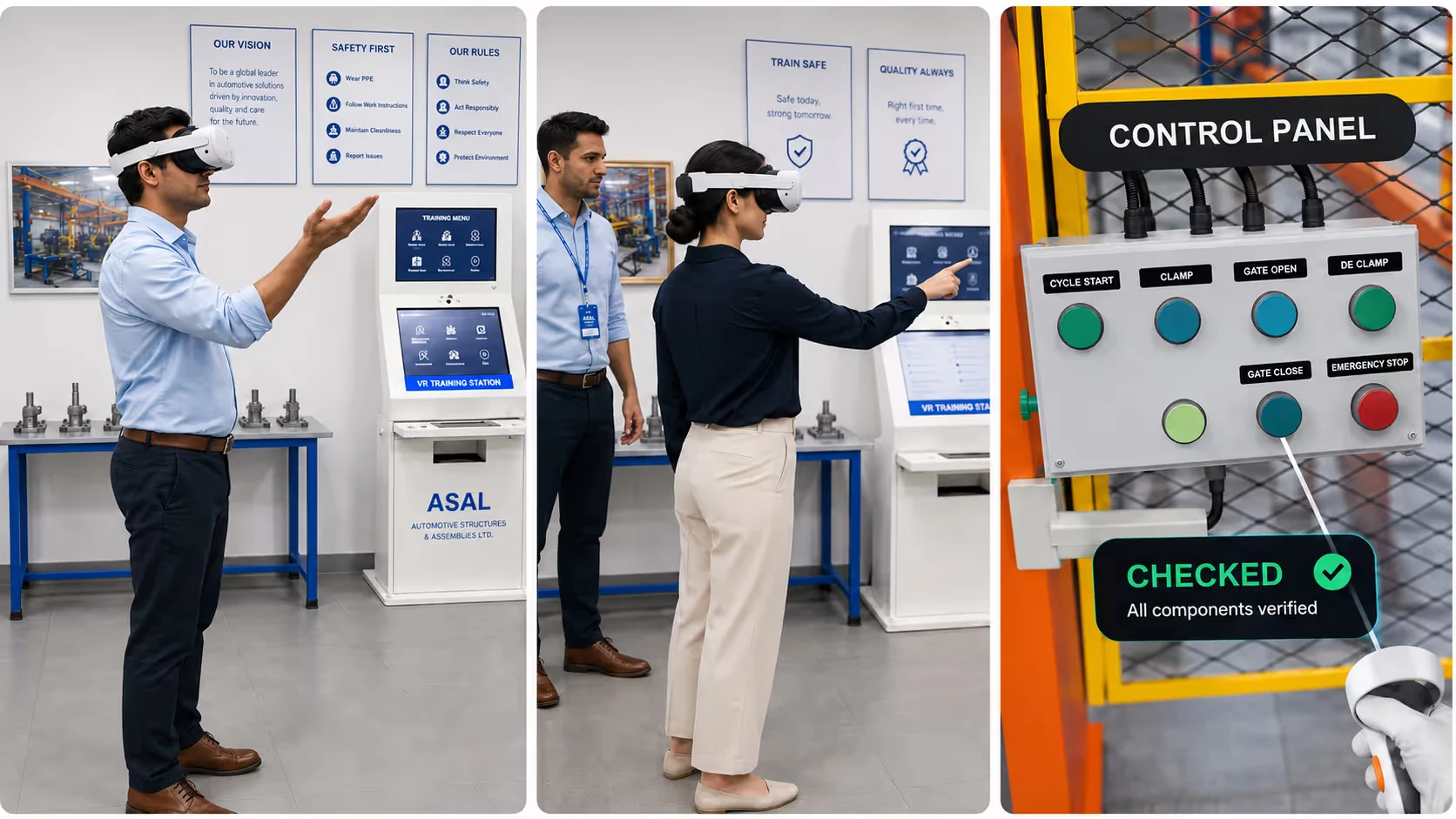
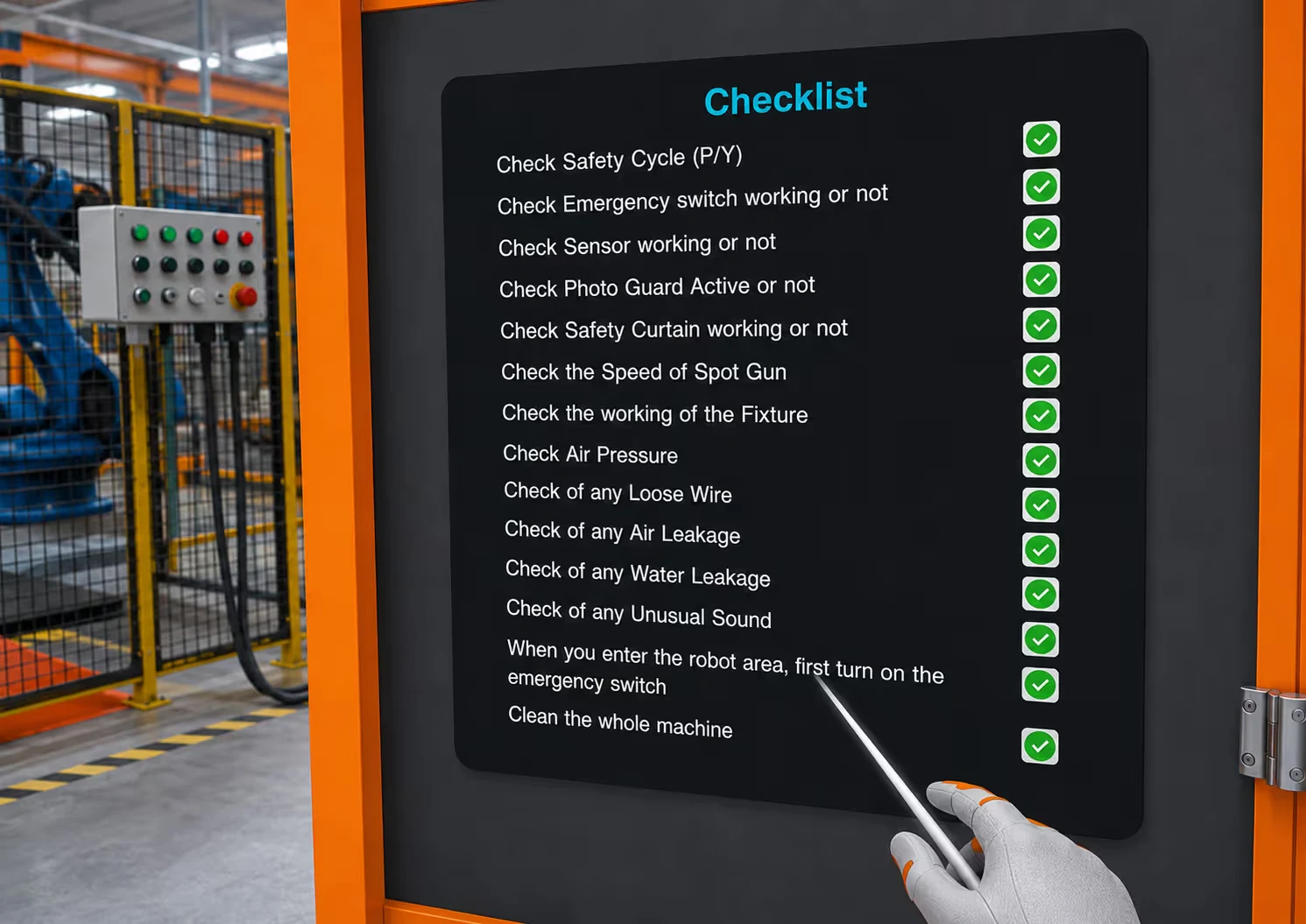
Safety, set-up, execution and quality checks, including the pre-start checklist and the control panel.
Projection welding
Nut welding on a manual projection welding machine, and the quality checks that go with it.
Stud welding
Operating a stud welding machine step by step, with guided practice and an assessment quiz.
Stamping operations
The end-to-end stamping process, from pre-operation checks to operation and inspection, in sequences of up to 54 steps.
Guided first, then on their own
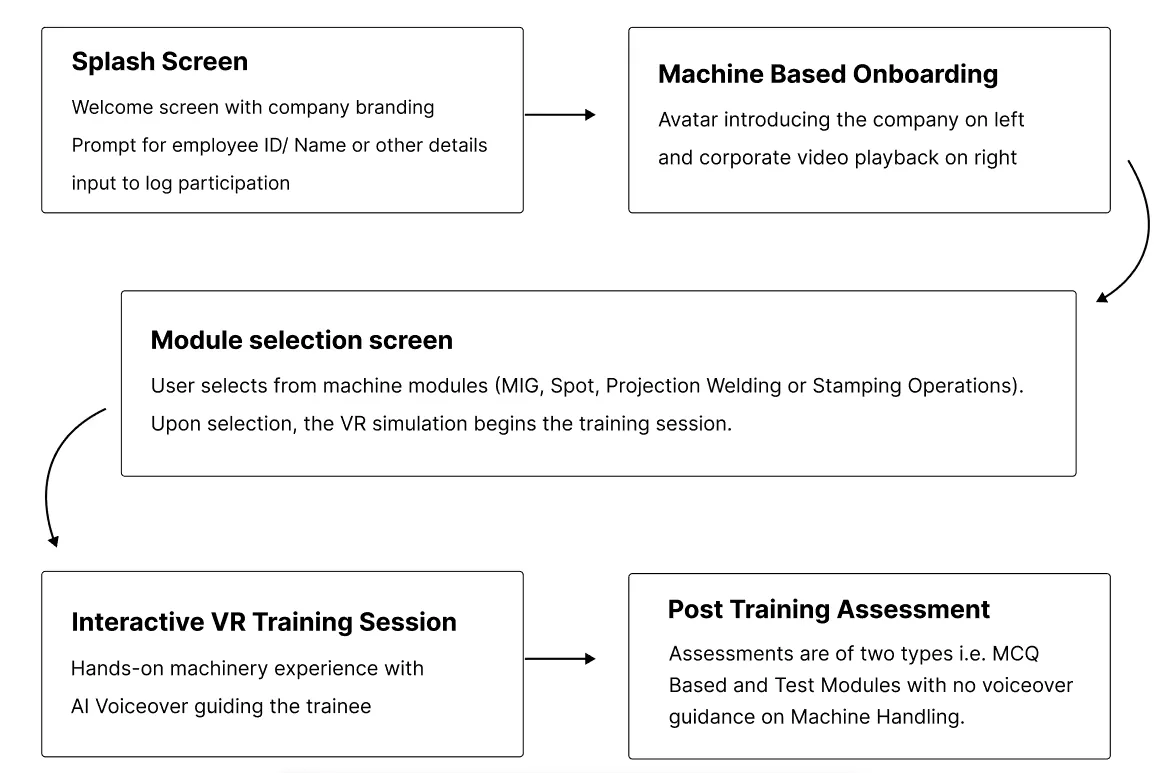
The experience opens with a company introduction from a digital avatar in a dojo-style virtual room. The trainee picks a machine module and works it step by step in a first-person view of the workshop, with AI voice guidance in their own language.
Then the guidance is switched off. In the unguided assessment the trainee completes the process alone and is scored on sequence, errors and time. Passing earns a VR completion certificate, and supervisors see every result on a web dashboard with batch analytics and scorecards.
Two ways to simulate a weld
Both move a trainee's first mistakes off the real line. They differ in what the trainee holds.
VR on standalone headsets: what we build
- Meta Quest 3 headsets with no PC, so training can go to any plant
- Your machines, fixtures and SOPs copied 1:1
- Narration in Hindi, English, Marathi, Tamil, Telugu or the language your operators speak
- Scored on sequence, errors and time, with a certificate before the shop floor
- Runs offline on a plant server, or on a private or public cloud
Phygital simulators: industry practice
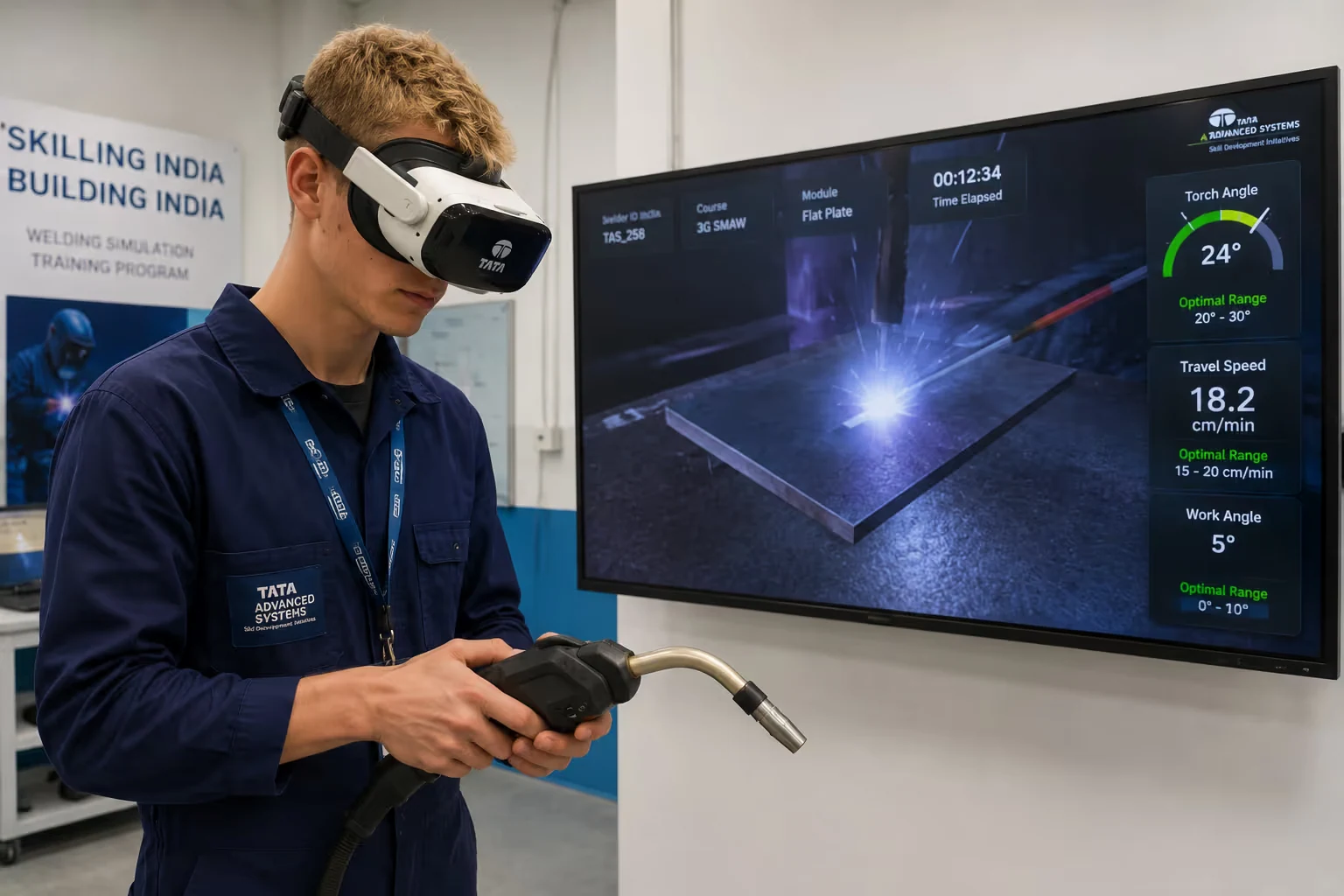
- A headset plus a tracked replica of a MIG, TIG or Stick torch or a spray gun
- The tool has the weight, balance and trigger resistance of the real one
- Welding: work angle, travel angle, travel speed and contact-tip-to-work distance tracked live
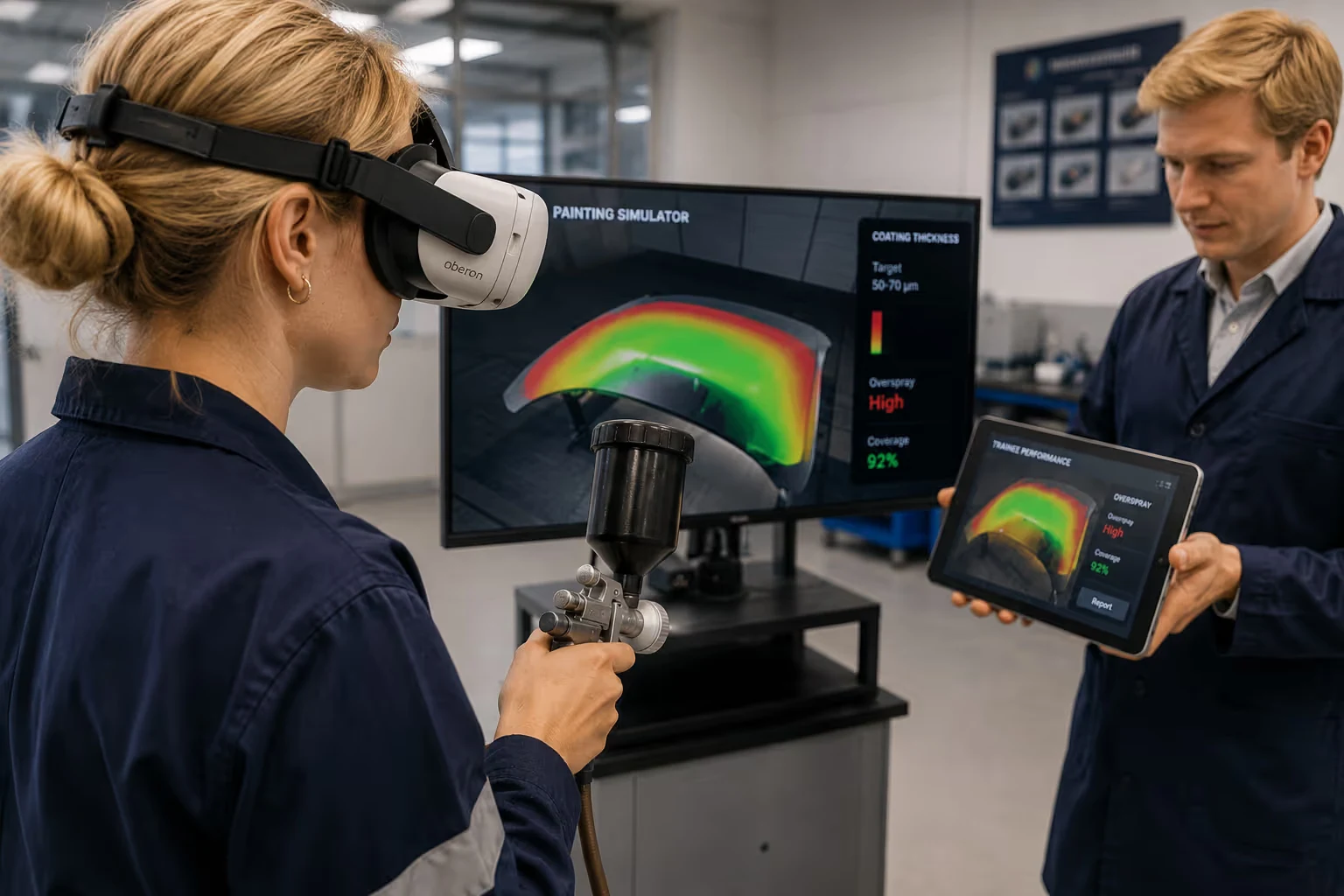
- Painting: gun distance, stroke speed, angle and virtual paint thickness
- Covers the foundational and intermediate stages, before final practice and certification in a real workshop
The phygital column summarises our industry insight on phygital welding and painting simulators in India. It describes another company's deployment, not a Metaverse911 project. For that deployment, the reported results were up to 70% lower raw-material cost during foundational training and certification-ready skill up to 40% faster.
Six plants, one curriculum
We designed and deployed a VR programme for new sheet metal stamping and welding operators at a Tata Group company. It copies the shop floor 1:1 on Meta Quest 3 and is now used across six plants. After roll-out:
- Customer PPM fell from 329 to 100.
- Internal PPM fell from 2,000 to 500.
- The cost of poor quality halved.
- One curriculum runs across six plants with no rebuild cost, for 9,000 to 13,500 trained operator-sessions a year.
Where painting simulators fit
Industrial painting has the same training problem as welding: practice uses up material, and beginners are exposed to fumes and chemicals while they learn. A painting simulator lets the trainee coat a 3D model of a part, calculates the thickness of the virtual paint, highlights overspray, under-application and incorrect overlap, and resets the workpiece instantly for another attempt.
If you train painters for a paint shop or a coating line, tell us the process, the parts and the defects you see most. We will tell you what a VR module can cover, and what still needs the real booth.
Built to pass an IT review
On-premise, offline
A local server at each plant, usually a mini-PC or industrial edge server in the training room. No internet is needed after set-up.
Private or public cloud
The same programme can be hosted on your private cloud over VPN, or on AWS, Azure or GCP.
Standalone headsets
Wireless Meta Quest 3 headsets, so the programme rolls out to any plant without PCs.
ISO/IEC 27001
Metaverse911 is certified for information security management, and to ISO 9001 for quality.
More on welding and machine training
Frequently asked questions
Which welding processes can operators practise in VR?
Our VR welding system covers a MIG welding machine, a stud welding machine, a manual projection welding machine, a manual spot welding machine and a robotic welding machine, as well as stamping operations. Each machine simulation has guided training, safety compliance training and an assessment.
Does VR welding training make a difference on the shop floor?
At a Tata Group company where our VR programme for stamping and welding operators runs across six plants, customer PPM fell from 329 to 100 and internal PPM from 2,000 to 500 after roll-out, and the cost of poor quality halved.
What is a phygital welding simulator?
It combines a physical tool with a digital workshop. The trainee wears an XR headset but holds a tracked replica of a real welding torch or spray gun, with the weight, balance and trigger of the real thing. Our insight article describes how these simulators are used in India.
Can VR training be used for industrial painters too?
Yes. Painting simulators track gun distance, stroke speed and angle, calculate the thickness of the virtual paint, and highlight overspray, under-application and incorrect overlap. The workpiece resets instantly, so trainees practise without wasting coating. Tell us your paint process and we will tell you what a module can cover.
Can the training run in our operators' language?
Yes. The Tata AutoComp programme runs in Hindi, English and Marathi with an icon-led interface, and our welding modules use multilingual audio narration, for example in Tamil and Telugu.