
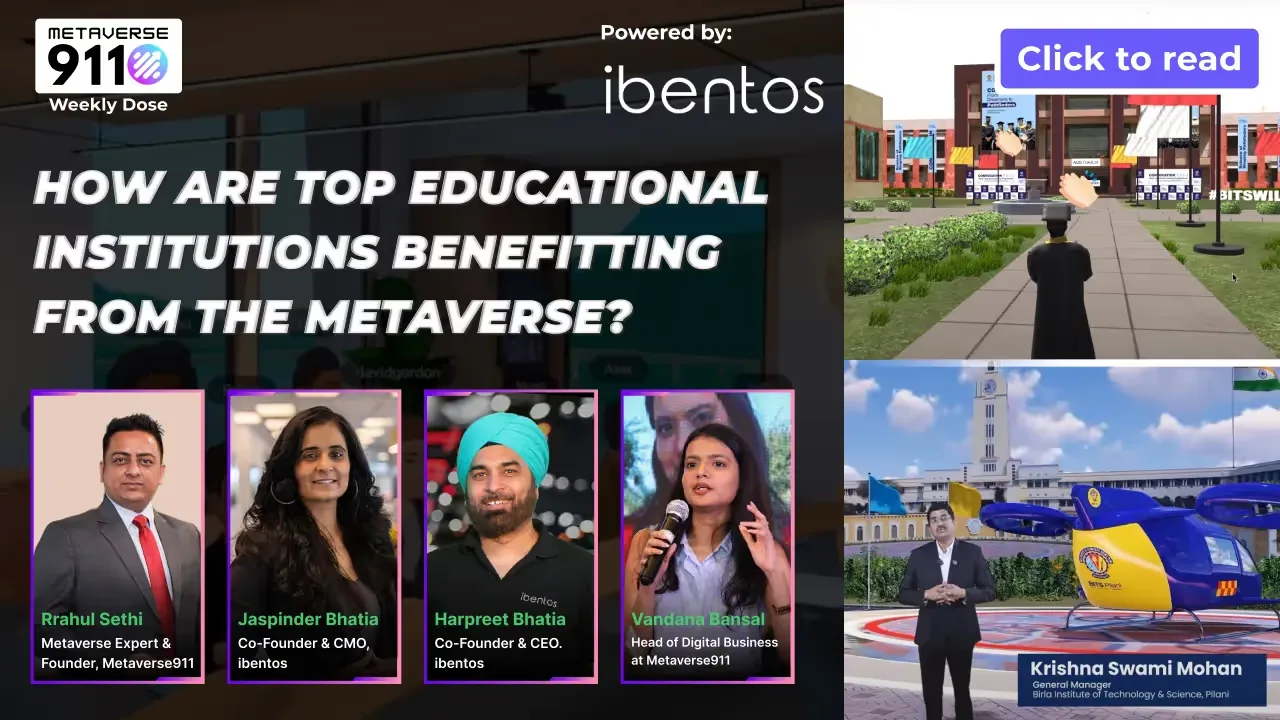
This article is based on a 45-minute LinkedIn Live session, "How are top educational institutions benefitting from The Metaverse?", with Harpreet Bhatia, Co-Founder and CEO of ibentos, and Jaspinder Bhatia, Co-Founder and CMO of ibentos. The session was moderated by Vandana Bansal from Metaverse911.
The challenge for educational institutions
Universities and colleges compete for students who may live far from campus and cannot easily visit. Distance learners rarely meet their peers or faculty. International exchange is expensive and open to only a few. And complex subjects such as science, engineering and healthcare need hands-on practice that is hard to provide at scale.
Immersive technology is helping institutions address each of these. The panel discussed five uses.
Five ways institutions are using immersive technology
1. Virtual campus tours
Prospective students can explore facilities, meet faculty and see campus life without leaving home. Because tours work from anywhere and for people with limited mobility, institutions can reach a wider and more diverse pool of applicants.
2. Admissions
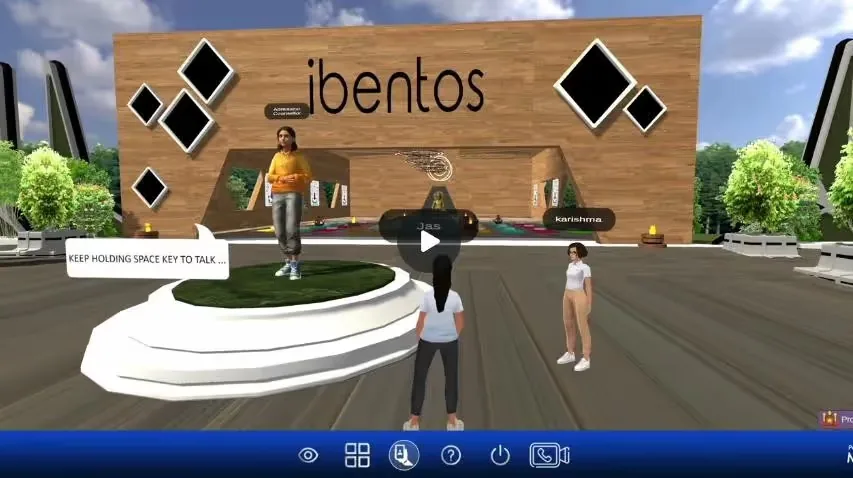
Institutions are using virtual environments for interactive application portals, virtual interviews, information sessions and orientation programmes. AI-based avatars can guide prospective students, answer their questions and explain admission requirements.
3. Global student exchange
Students can take part in cultural exchanges, language courses and joint projects with peers abroad without travelling. Two examples:
- Florida State University worked with the University of Tampere in Finland and the Universities of Bergen and Volda in Norway to bring students together in a virtual world to discuss climate change. 25 students from the institutions gathered around a virtual campfire in a virtual forest.
- Students of the Korean Studies Program at the Hebrew University of Jerusalem and the Hebrew class at Hankuk University of Foreign Studies took part in a language exchange at the Embassy of Israel in the metaverse.
4. Student engagement and events
Virtual events give distance learners a way to connect with peers and faculty.
- BITS Pilani held a virtual convocation for 6,600 WILP students, with personalised entry, lifelike avatars, virtual stages and AI-based avatars.
- IIT Kanpur ran its annual cultural fest in the metaverse, powered by ibentos, with startup showcases, virtual campus tours and performances.
Institutions also use virtual spaces for lectures, seminars, workshops and career fairs that encourage active participation.
5. Virtual labs and simulations
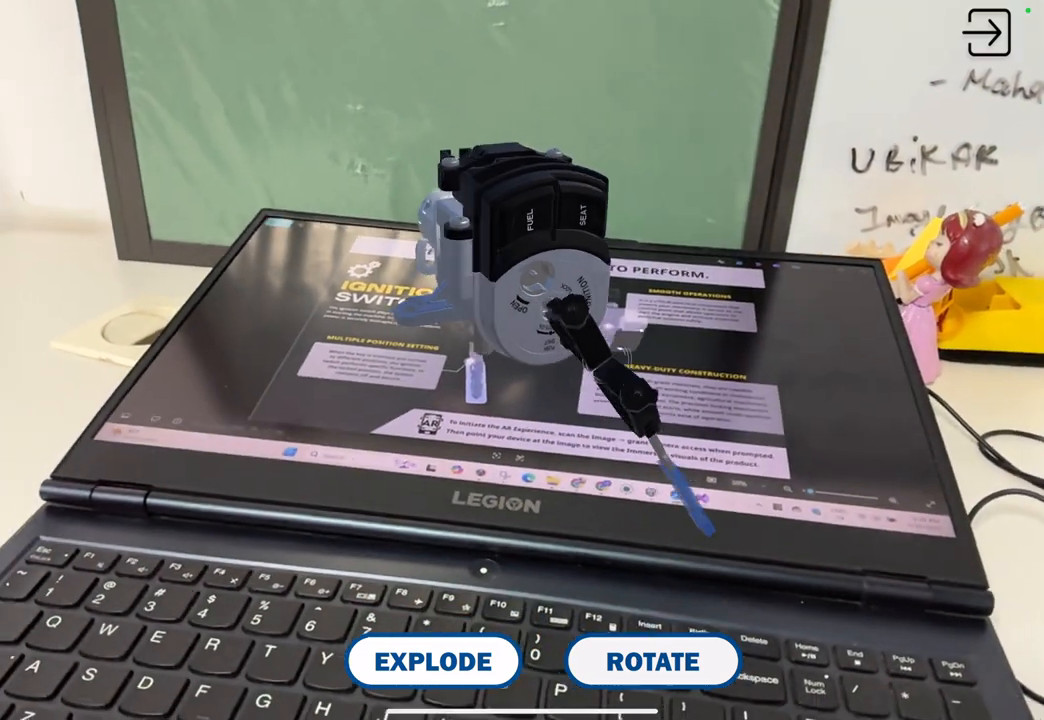
VR simulations and virtual laboratories give students hands-on experience in complex subjects such as science, engineering and healthcare. This leads to deeper understanding and better retention.
How to apply it
Start with the problem that costs the institution most. If admissions reach is the issue, begin with a virtual campus tour. If distance learners feel disconnected, start with a flagship event such as a convocation or fest. If practical teaching is limited by lab space or equipment, a virtual lab is the place to begin.
The same thinking applies to companies that train apprentices and technicians: virtual labs and simulations give hands-on practice on equipment that is expensive or hard to access.
Next step
If you are planning a virtual tour, event or VR lab for an institution or a training academy, talk to our team.
First published on the Metaverse911 blog.
More from the blog
 Blog · Industry stories
How Kotak Mahindra Bank engaged 35,000 employees in a virtual learning fair
How Kotak Mahindra Bank engaged 35,000+ employees with Learning-a-fair, a gamified virtual learning event that won a Brandon Hall award, and what to copy.
Read the post Blog · Industry stories
How Adani Realty let homebuyers step inside homes still being built
How Adani Realty's Adaniverse let TEN BKC homebuyers explore their future homes in a virtual world while still under construction, built in just 30 days.
Read the post Blog · Industry stories
VR and AR in defence and aviation: showcases, safety training and gamified learning
How defence and aviation firms use VR and AR to showcase complex equipment, train staff safely for emergencies and make training more engaging with games.
Read the post
Frequently asked questions
How do universities use virtual campus tours?
Universities use virtual campus tours so prospective students can explore facilities, meet faculty and see campus life without leaving home. Because the tours work from anywhere and for people with limited mobility, institutions can reach a wider and more diverse pool of applicants. A virtual campus tour is a good starting point when admissions reach is the main problem.
How did BITS Pilani hold a virtual convocation?
BITS Pilani held a virtual convocation for 6,600 WILP students, with personalised entry, lifelike avatars, virtual stages and AI-based avatars. It is one of the examples discussed in a LinkedIn Live session with the co-founders of ibentos, showing how institutions use virtual events to help distance learners connect with their peers and faculty.
What did IIT Kanpur run in the metaverse?
IIT Kanpur ran its annual cultural fest in the metaverse, powered by ibentos. The virtual fest included startup showcases, virtual campus tours and performances. It shows how institutions use virtual events to engage students, alongside lectures, seminars, workshops and career fairs held in virtual spaces that encourage active participation.
How can immersive technology support university admissions?
Institutions use virtual environments for interactive application portals, virtual interviews, information sessions and orientation programmes. AI-based avatars can guide prospective students, answer their questions and explain admission requirements. Combined with virtual campus tours, this helps universities reach students who live far from campus and cannot easily visit.
Can virtual labs help training academies as well as universities?
Virtual labs and VR simulations give students hands-on practice in complex subjects such as science, engineering and healthcare, which leads to deeper understanding and better retention. The same approach works for companies that train apprentices and technicians, because virtual labs give practice on equipment that is expensive or hard to access. The Metaverse911 team can help plan a VR lab.